
Attorneys are not automatically entitled to HIPAA’s patient copy-fee limits. When you request records directly using a client authorization, state law typically governs what the provider can charge — and those state schedules often permit fees that HIPAA forbids for patient access requests. Here is what to do immediately:
- Classify the request first. Determine whether you are requesting as the patient, as a HIPAA-recognized personal representative, or as a third-party attorney. That classification controls which fee rules apply under 45 CFR 164.524©(4) and HHS OCR guidance.
- Ask for an itemized fee schedule with a statutory citation. Any provider charging more than copying labor, supplies, and postage owes you a written explanation tied to the applicable state statute.
- Document everything and dispute promptly. Delayed disputes are harder to win. Preserve request dates, authorization copies, and every invoice. Attorney Assistant’s retrieval and invoice-audit workflows are built around exactly this documentation chain.
Key Takeaways
HIPAA’s patient fee limits rarely apply to attorney-initiated medical record requests; state law controls most attorney requests, and classifying the request correctly before submission is the single most important cost-control step.
| Point | Details |
|---|---|
| Classification controls fees | Patient, personal representative, and attorney requests each trigger different fee rules; misclassification leads to unwinnable disputes. |
| HIPAA permits narrow charges | Allowed costs are labor, supplies, postage, and agreed summaries only; search, retrieval, and system fees are forbidden for patient access requests. |
| State law governs attorney requests | Provider location determines the applicable state fee schedule; confirm the current statute before every request. |
| Vendor costs run $40–$75 per request | In-house labor averages roughly $76 per request; complex multi-provider cases can exceed $1,200 in combined fees. |
| Attorney Assistant centralizes retrieval | Attorney Assistant’s retrieval and invoice-audit services reduce unbudgeted costs and give firms a documented audit trail per case. |
Table of Contents
- When do HIPAA fee rules actually apply to attorney requests?
- What can a provider actually charge under HIPAA?
- How do state fee schedules differ from HIPAA, and which one controls?
- What are the three allowed fee-calculation methods?
- What do law firms actually pay for medical record retrieval?
- How can firms reduce retrieval costs without cutting corners?
- What enforcement risks come with improper fee practices?
- How should you request records and document fees step by step?
- Do litigation requests cost more than treatment requests?
- How does EHR system variability affect fees and access times?
- What mistakes do firms make when disputing excessive fees?
- What do state laws require attorneys to tell clients about record costs?
- How do insurance requirements affect medical record costs in legal cases?
- What most firms get wrong about medical record costs
- Attorney Assistant helps firms control retrieval costs and delays
- Sources
- FAQ
When do HIPAA fee rules actually apply to attorney requests?
The short answer: rarely, and only in specific circumstances. The longer answer requires a decision tree.
HHS OCR has explicitly distinguished attorney-initiated requests from patient access requests. When a patient requests their own records, HIPAA’s cost-based fee limits under 45 CFR 164.524©(4) apply. When a patient directs that copies be sent to a third party — including an attorney — those same HIPAA limits still apply, because the request originates with the patient. But when an attorney submits a request directly using a signed HIPAA authorization, the provider is responding to a third-party request, and state law usually governs.
The personal representative question trips up a lot of firms. HIPAA does allow a personal representative to stand in for the patient and receive the same fee protections. But an attorney is not automatically a personal representative. That status requires legal authority — a healthcare power of attorney, a guardianship order, or similar instrument — not just a signed release. OCR has confirmed this distinction, and it matters because misclassifying your request as a personal-representative request can expose you to a provider’s refusal or a higher fee dispute you cannot win.
Here is the practical decision flow:
- Patient requests directly → HIPAA fee limits apply; provider may charge only cost-based fees.
- Patient directs records to attorney → HIPAA limits still apply; the request is patient-initiated.
- Attorney requests with authorization (third-party) → State fee schedule typically governs; HIPAA patient limits do not apply.
- Attorney requests via subpoena → State procedural rules and the provider’s obligations under those rules govern; HIPAA fee limits do not apply.
- Attorney qualifies as personal representative → HIPAA limits apply, but qualification requires documented legal authority, not just a retainer agreement.
Statistic callout: OCR’s Right of Access enforcement initiative, launched in 2019, has resulted in dozens of settlements and civil money penalties — primarily targeting providers who overcharged patients or delayed access. Attorney requests are not the focus of that enforcement, but firms that misclassify requests and then file OCR complaints on behalf of clients may find their complaints dismissed on jurisdictional grounds.
The provider’s physical location determines which state fee schedule applies, not the client’s home state or the firm’s office location. A Chicago firm requesting records from a Houston hospital follows Texas fee rules.
What can a provider actually charge under HIPAA?
For requests that fall under HIPAA’s patient access rules, the fee structure is narrow. HHS OCR guidance is explicit: covered entities may charge a reasonable, cost-based fee that covers only:
- Labor for copying or creating the deliverable (staff time to pull, copy, or transmit records)
- Supplies for paper copies or requested portable media (a USB drive if the patient specifically asks for one)
- Postage, if the patient requests mailed delivery
- Preparation of an agreed summary or explanation, if the patient requests that instead of the full record
That is the complete list. Everything else is forbidden for patient access requests. Specifically, providers cannot charge for:
- Search or retrieval time
- Verification of the request
- System maintenance or infrastructure costs
- Capital costs (equipment depreciation, software licensing)
- General overhead
- Per-page fees for electronic records held in an EHR system
The per-page prohibition for electronic records is where most disputes start. A provider charging $0.75 per page for a PDF pulled from an EHR is applying a paper-era fee structure to a digital delivery. HHS has stated that per-page fees for electronic copies are generally not reasonable under HIPAA’s cost-based standard, because the marginal labor to produce an electronic copy from an existing EHR is minimal.
Pro Tip: When you receive an invoice for a patient-directed request, ask the provider to provide a written breakdown of each line item tied to the allowable categories in 45 CFR 164.524©(4). If a line reads “retrieval fee,” “processing fee,” or “system access fee,” it is not a permissible charge for patient access requests. Request removal in writing and cite the regulation.
For attorney-initiated third-party requests, the calculus shifts. State statutes often explicitly authorize per-page fees, search fees, certification fees, and rush charges. Those charges are legitimate for attorney requests even though they would be impermissible for patient access requests under HIPAA.
How do state fee schedules differ from HIPAA, and which one controls?
HIPAA sets a federal floor for patient access. State law that is more protective of patients controls for patient requests — a state that caps fees lower than HIPAA’s cost-based standard wins. But for attorney-initiated third-party requests, state law typically governs without HIPAA’s patient-access limits as a ceiling.
California, for example, has historically maintained a low per-page cap for medical record copies, with specific statutory limits that apply to different request types. Texas authorizes per-page fees, search fees, and certification fees for third-party requests, with amounts set by statute and adjusted periodically. Florida has its own fee schedule under state health records law. The amounts, permitted line items, and update cycles vary enough that you cannot assume one state’s rules apply in another.
State attorney general offices and state health department websites publish the current fee statutes and tables. Always confirm the current version — fee schedules are amended by legislation and sometimes by administrative rule, and an outdated cap can cause you to overpay or to dispute a fee that is actually valid.
Practical steps for every request:
- Confirm the provider’s state before submitting the request.
- Pull the current state fee statute or table from the attorney general or health department website.
- Ask the provider to cite the specific statute on the invoice.
- Note the effective date of the statute version the provider cites — older versions may have lower caps.
- If the provider is in a state that allows search/retrieval fees for third-party requests, budget for them. Do not assume HIPAA prohibits them for your request type.
LegalClarity’s analysis of state-authorized fee categories for attorney requests confirms that search/retrieval, certification, and rush charges are common in state schedules — charges that HIPAA forbids for patient access but permits for third-party requests under state law. Classifying your request correctly before you submit it is the only way to know which fees are disputable.
What are the three allowed fee-calculation methods?
For requests that do fall under HIPAA’s patient access rules, providers may calculate fees using one of three methods:
Method A: Actual costs. The provider calculates the real labor time, supply cost, and postage for the specific request. This is the most defensible method but also the most administratively intensive.
Method B: Average-cost schedule. The provider uses a documented schedule of average costs for similar requests. The schedule must be based on actual cost data and updated periodically. This is the most common approach for large health systems.
Method C: $6.50 flat fee for electronic copies. For electronic copies requested by individuals under the patient access right, HHS has confirmed that providers may charge a flat fee of up to $6.50 — no itemization required. This is a simplification option, not a universal cap.
The $6.50 flat fee is the number most attorneys have heard about and the one most frequently misapplied. It applies only when an individual (the patient) requests an electronic copy under the HIPAA right of access. It is not a cap on attorney requests. A provider is not required to offer it to attorneys, and an attorney cannot demand it as the applicable rate for a third-party request.
When patients use an EHR patient portal’s View/Download function to pull their own records, the marginal copying labor approaches zero — which is one reason Health IT guidance encourages portal-based access as a cost-reduction tool. If your client can access and download their own records through a portal and then provide them to you, the provider’s copying fees are bypassed entirely.
What do law firms actually pay for medical record retrieval?
Vendor pricing for standard attorney requests typically runs in a moderate price range per request, based on industry reporting. In-house retrieval, when firms handle requests with internal staff, carries its own cost that varies widely depending on complexity, follow-up cycles, and the number of providers involved.
Statistic callout: Industry analyses indicate that in-house retrieval labor costs per request, considering paralegal time, follow-up calls, and invoice review, commonly exceed vendor charges for the same task.
Costs escalate in predictable patterns:
- Multi-provider files. A personal injury case with records from an ER, two specialists, a physical therapist, and a pharmacy involves five separate requests, five separate invoices, and five separate follow-up cycles.
- Imaging and radiology. Radiology records — especially CD-format imaging — often carry separate fees and longer turnaround times than standard chart records.
- Off-site storage. Records stored at a third-party archive rather than the provider’s active system trigger retrieval fees from the storage vendor, which the provider passes through.
- Rush processing. Expedited requests routinely add $20–$50 or more per request, sometimes per provider.
- Certification and notarization. Some states require certified copies for litigation use, adding a per-document fee.
Three scenario estimates for a personal injury firm:
- Small case (2 providers, standard turnaround): modest vendor fees plus internal review time.
- Mid-size case (5 providers, one imaging request): moderate vendor fees plus potential internal labor costs.
- Complex case (10+ providers, off-site storage, rush): higher combined fees before any internal labor.
Frequent invoice surprises include delayed billing (invoices arriving weeks after delivery, complicating client billing), incorrect fee schedules applied (a provider using a higher-tier state schedule when a lower one applies), and add-on “processing” or “handling” fees that appear nowhere in the applicable state statute.
How can firms reduce retrieval costs without cutting corners?
The firms that control retrieval costs well share a few operational habits that have nothing to do with negotiating harder.
Process levers that work:
- Batch requests by case stage. Submit all provider requests for a case at the same time rather than piecemeal. This reduces rush fees and consolidates follow-up labor.
- Standardize authorization forms. A single, pre-approved authorization template that includes all required patient identifiers, date ranges, and format specifications reduces provider rejections and re-requests.
- Use EHR portal access when available. When a client can download their own records through a patient portal, the provider’s copying fees disappear. Build this step into your intake checklist.
- Centralize invoice auditing. Assign one person or workflow to review every medical record invoice against the applicable state fee schedule before payment. Most overcharges go uncontested simply because no one checks.
- Dispute overcharges in writing with a statute citation. A written dispute referencing the specific statutory cap and requesting a corrected invoice resolves most overcharges without escalation.
Vendor selection criteria:
- Does the vendor provide a fee breakdown tied to the applicable state statute?
- Does the vendor audit provider invoices and dispute overcharges on your behalf?
- Is pricing flat-rate or pass-through? Pass-through pricing means the vendor’s margin sits on top of whatever the provider charges, with no incentive to dispute.
- What is the SLA for standard and expedited requests?
- Does the vendor maintain an audit trail of request dates, transmittal confirmations, and invoice history?
Pro Tip: Schedule a monthly calendar-driven batch for all pending record requests rather than processing them as they come in. Firms that batch requests reduce rush fees significantly and give paralegals predictable workload blocks instead of constant interruptions.
Attorney Assistant’s medical record retrieval services include centralized retrieval, invoice auditing, and SLA-driven follow-up — the operational infrastructure that makes batching and dispute management systematic rather than ad hoc.
What enforcement risks come with improper fee practices?
OCR’s Right of Access enforcement initiative has made improper fee practices a documented enforcement priority. The focus is on providers who overcharge patients or obstruct patient access — not on attorneys — but firms that misclassify requests and then file OCR complaints on behalf of clients may find those complaints dismissed, and firms that advise clients incorrectly about their rights create their own exposure.
Statistic callout: OCR has resolved over 45 Right of Access cases through settlements and civil money penalties since launching its enforcement initiative in 2019, with individual penalties ranging from a few thousand dollars to tens of thousands. The enforcement record is public and searchable on the HHS website.
Concrete mitigation steps for your firm:
- Classify every request before submission and document the classification rationale.
- Retain a copy of the signed authorization with every request file.
- Keep itemized invoices and note the date received.
- Dispute overcharges within 30 days of receiving the invoice — most state statutes and provider policies have informal dispute windows.
- Train paralegals on the difference between patient access requests and attorney third-party requests so they do not inadvertently cite HIPAA protections that do not apply.
On subpoenas: when records are requested via subpoena rather than authorization, the provider’s obligations shift. HIPAA permits disclosure in response to a valid subpoena with certain procedural safeguards. Fee rules under a subpoena are governed by state procedural law and the court’s rules, not HIPAA’s patient access fee limits. Providers may charge for the cost of compliance, and those charges are typically higher than standard copy fees.
If a provider improperly denies access or charges fees that violate the applicable rules, HHS OCR’s complaint process is the administrative pathway for patient access violations. For attorney third-party requests governed by state law, the dispute pathway is typically a written demand citing the state statute, followed by a complaint to the state health department or attorney general if the provider does not correct the invoice.
How should you request records and document fees step by step?
A clean request prevents most fee disputes before they start. Here is the workflow:
Required elements in every authorization/request:
- Full patient name, date of birth, and at least one additional identifier (address or last four of SSN)
- Specific date range for records requested
- Description of records needed (e.g., “all treatment records, including imaging, from January 1, 2023 through December 31, 2024”)
- Format requested (electronic preferred; specify PDF or portal download)
- Release-to address (firm name, address, and secure fax or email)
- Patient signature and date
- Expiration date or event for the authorization
Sample fee-dispute email language:
We received your invoice dated [date] in the amount of $[amount] for records requested on [date] for patient [name]. We have reviewed the applicable fee schedule under [State] [Statute citation] and find that the following charges are not authorized for third-party attorney requests: [list specific line items]. We request a corrected invoice reflecting only the permitted charges under [statute]. Please respond within 14 business days.
Documentation log for every request:
- Date request submitted and method (fax, mail, portal)
- Date authorization signed and version used
- Date of any follow-up contact and name of person contacted
- Date records received
- Date invoice received and amount
- Date invoice reviewed against state fee schedule
- Date of any dispute letter sent
- Date of corrected invoice or resolution
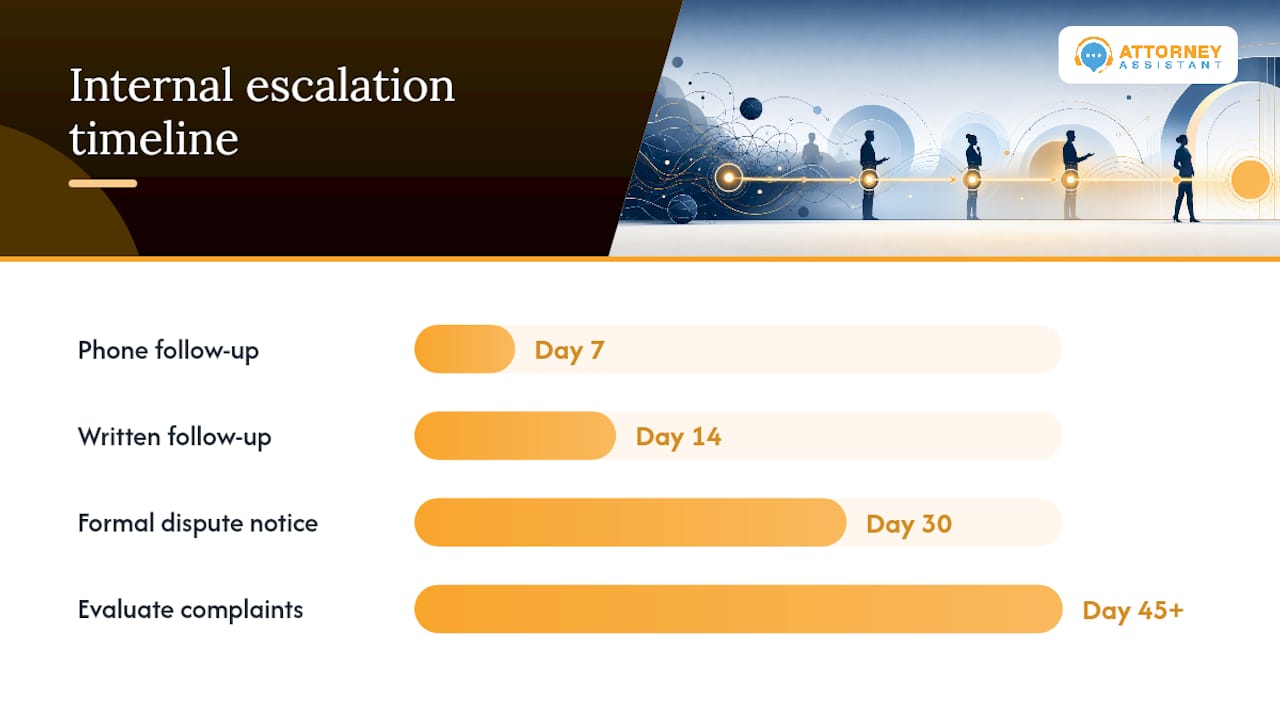
Internal escalation timeline:
- Day 7: If no acknowledgment, follow up by phone and document the contact.
- Day 14: Send written follow-up citing the applicable state response deadline.
- Day 30: If records not received and no valid reason given, send formal dispute or escalation notice.
- Day 45+: Evaluate whether an OCR complaint (for patient access violations) or a state health department complaint is appropriate.
For client billing, retain every itemized invoice and log the total retrieval cost per case. The medical billing itemization playbook from Attorney Assistant covers how to present these costs to clients accurately and avoid disputes at settlement.
Do litigation requests cost more than treatment requests?
Yes, and the gap is often significant. When records are requested for treatment purposes — one provider sending records to another — the transaction is typically covered by a treatment exception under HIPAA, and fees are minimal or nonexistent. The receiving provider is not paying; the exchange happens within the care continuum.
For litigation, the dynamic is different. The requesting party is an attorney or a vendor acting on the attorney’s behalf, which means the provider is responding to a third-party request outside the treatment relationship. State fee schedules for third-party requests routinely authorize higher per-page rates, search fees, and certification fees that do not apply to treatment-purpose exchanges. Some states explicitly distinguish “litigation copy” fees from standard copy fees, with the litigation rate running materially higher.
Certification adds another layer. Records used in litigation often need to be certified as authentic business records to satisfy evidentiary requirements. That certification step — a custodian of records affidavit or a notarized certification — carries its own fee, sometimes $25–$75 per document, and is not required for treatment-purpose transfers.
The practical implication: budget separately for litigation-purpose requests. Do not assume the fee a provider charged for a prior treatment-purpose exchange is the fee they will charge when your authorization arrives.
How does EHR system variability affect fees and access times?
Not all EHR systems are equal in how they handle third-party record requests, and the differences translate directly into cost and delay. Large health systems running Epic or Cerner typically have dedicated release-of-information (ROI) departments with standardized workflows and predictable turnaround times. Smaller practices on older or less integrated systems may handle requests manually, which increases both labor time and error rates.

Research on health information access confirms that retrieval complexity — records spread across multiple systems or stored off-site — drives both time and cost in ways that are difficult to predict from the outside. A single patient’s records may exist in three separate EHR systems if they changed providers or if the practice was acquired and systems were not fully merged.
Interoperability gaps create specific problems for attorneys. A provider may have records in an older system that cannot export to PDF without manual intervention, triggering higher labor fees. Off-site storage of paper records from before the EHR transition adds retrieval fees from the storage vendor. And some EHR systems generate records in formats (HL7, CCDA) that require conversion before they are usable, which some providers charge for.
The practical workaround: ask at the time of request whether the records are in an active EHR system or in off-site storage, and whether electronic delivery is available. If the provider cannot deliver electronically, ask whether the patient can access records through a portal and provide them directly. Portal-based access bypasses the ROI department entirely and eliminates most copying fees.
What mistakes do firms make when disputing excessive fees?
The most common mistake is disputing without a statute citation. A letter that says “this fee seems too high” gives the provider nothing to respond to. A letter that says “this $1.50 per-page charge exceeds the $0.25 per-page cap under [State] Health Code § [number], effective [date]” forces a specific response.
Other frequent pitfalls:
Disputing the wrong fee category. Attorneys sometimes dispute search fees on attorney-initiated requests, citing HIPAA’s prohibition. But HIPAA’s search-fee prohibition applies to patient access requests, not third-party attorney requests. If the state statute permits search fees for attorney requests, the dispute will fail.
Missing the dispute window. Some providers have informal 30-day dispute windows after which they treat invoices as accepted. State statutes may also set timelines. Waiting until settlement to dispute a two-year-old invoice is rarely successful.
Failing to preserve the authorization. If a provider claims the authorization was defective and the request was therefore a more expensive “non-standard” request, you need the original authorization with its date and signature to refute that claim.
Paying first, disputing later. Once an invoice is paid, the practical leverage for a refund is much lower. Review invoices before payment and hold disputed amounts pending resolution.
Not escalating systematically. A single dispute letter that goes unanswered is not a dead end. The escalation path runs from written dispute to state health department complaint to, in egregious cases, a bar complaint if the provider’s conduct rises to obstruction. Most overcharges resolve at the first written dispute when the statute is cited correctly.
The litigation retrieval guide from Attorney Assistant covers the full dispute escalation workflow, including documentation standards for each stage.
What do state laws require attorneys to tell clients about record costs?
Most state rules of professional conduct require attorneys to keep clients reasonably informed about the status of their matter and to explain matters sufficiently for clients to make informed decisions. Medical record retrieval costs fall squarely within that obligation in contingency-fee cases, where the client ultimately bears those costs out of settlement proceeds.
Several states go further. Some state bar ethics opinions specifically address the duty to disclose anticipated litigation costs, including record retrieval fees, before incurring them. Florida, for example, requires written fee agreements in contingency cases to address costs, and Florida family law fee rules illustrate how courts scrutinize cost disclosures in fee disputes. Even where no specific rule addresses record costs, the general duty of communication covers them.
Practically, this means:
- Include an estimate of medical record retrieval costs in the initial engagement letter or fee agreement.
- Update the client when costs exceed the estimate materially.
- Provide an itemized cost statement at settlement showing each retrieval expense.
- Retain documentation sufficient to support the cost statement if the client disputes it.
Firms that handle this well avoid fee disputes at settlement. Firms that do not often find clients challenging retrieval costs as excessive precisely because no one explained them upfront.
How do insurance requirements affect medical record costs in legal cases?
In personal injury and workers’ compensation cases, insurance carriers often have their own requirements for medical records that affect both what records must be obtained and who pays for them. Defense counsel may request records directly, triggering their own retrieval costs. Some carriers require certified copies for claim processing, adding certification fees. And in cases involving Medicare or Medicaid, the obligation to identify and satisfy liens requires obtaining records from those programs as well, which carries its own administrative cost.
Subrogation and lien resolution add a layer of record-cost complexity that many firms underestimate. Identifying all applicable liens requires records from the insurer, the provider, and sometimes CMS. Each of those requests carries a fee, and the timeline for lien resolution can extend the case significantly.
On the reimbursement side, some insurance carriers will reimburse reasonable record retrieval costs as part of a settlement or judgment. Whether those costs are recoverable depends on the jurisdiction, the type of case, and the specific policy language. In cases where costs are recoverable, maintaining itemized documentation of every retrieval expense is the only way to support a reimbursement claim.
Workers’ compensation cases often have specific statutory provisions governing who pays for medical record retrieval and at what rate. Those provisions vary by state and sometimes by the stage of the proceeding. Confirm the applicable workers’ comp statute before submitting retrieval requests in those cases.
What most firms get wrong about medical record costs
The operational mistakes that inflate medical record costs are almost always the same: no one owns the process, requests go out piecemeal, and invoices get paid without review.
When retrieval is decentralized — each paralegal managing their own requests with no shared system — the firm has no visibility into total retrieval spend, no leverage to negotiate with vendors, and no audit trail to support client billing. The result is higher costs, delayed settlements when records arrive late, and paralegal time consumed by follow-up calls that should never have been necessary.
The fix is operational, not legal. Centralize the request workflow, standardize the authorization forms, build invoice review into the process before payment, and assign clear ownership for disputes. Firms that do this consistently spend less on retrieval and close cases faster. The legal framework covered in this article gives you the rules; the operational controls are what make those rules work in practice.
Attorney Assistant helps firms control retrieval costs and delays
Medical record retrieval is one of the most consistent sources of unbudgeted cost and delay in personal injury firms. Attorney Assistant handles centralized retrieval, invoice auditing against applicable state fee schedules, batching, and SLA-driven follow-up — so your paralegals are not chasing providers and your invoices are reviewed before they get paid.
The medical record retrieval service is built for contingency-fee firms that need predictable costs and documented audit trails. If you want to see how it fits your current workflow, join a virtual webinar where we walk through the retrieval and invoice-audit process in detail. No sales pitch — just the operational specifics so you can decide whether it solves the problem you actually have.
Sources
This article is general information, not a substitute for advice from a qualified lawyer. Consult a qualified legal professional about your own circumstances before acting on anything here.
FAQ
Does HIPAA’s $6.50 flat fee apply to attorney record requests?
No. The $6.50 flat fee is available only for electronic copies requested by individuals under the HIPAA right of access. Attorneys submitting third-party requests with a signed authorization are not entitled to that rate, and providers are not required to offer it.
What fees can a provider charge an attorney for medical records?
For attorney-initiated third-party requests, state law governs. State schedules commonly authorize per-page copying fees, search or retrieval fees, certification fees, and rush charges — categories that HIPAA forbids for patient access requests but permits for attorney requests under applicable state statutes.
How do I dispute an inflated medical record invoice?
Send a written dispute citing the specific state statute and the fee cap it sets, identifying each impermissible line item by name and amount, and requesting a corrected invoice within 14 business days. Pay only the undisputed portion while the dispute is pending.
When does HIPAA’s patient fee limit protect an attorney’s client?
When the patient directs the provider to send records to the attorney, the request is still patient-initiated and HIPAA’s cost-based fee limits apply. The attorney’s fee protection comes from the patient’s right, not the attorney’s status.
How can firms reduce total medical record retrieval costs?
Batch requests by case stage, standardize authorization forms, use EHR patient portal access when available, and audit every invoice against the applicable state fee schedule before payment. Centralizing these functions — either in-house or through a service like Attorney Assistant — reduces both per-request costs and paralegal time spent on follow-up.
Recommended
Related Articles

1st Dollar Coverage in Law Firm Retainers: A Practical Guide
Understand 1st dollar coverage in legal and insurance contexts. Learn how it shapes intake, retainer strategy, firm revenue, and risk.

24 7 Phone Answering Service: Law Firm Guide
Discover how a 24 7 phone answering service can help your law firm capture every lead and provide round-the-clock client support. Learn best practices here.

White Glove Support for Law Firms
Discover how white glove support transforms law firm intake and operations. Learn the metrics, staffing models, and workflows that actually sign cases.