Why Track Missed Calls: A Law Firm Manager's Guide

TL;DR:
- Law firms can recover significant revenue by tracking and responding to missed calls.
- Implementing rapid follow-up processes and measuring call data reveals hidden intake losses.
Tracking missed calls converts an invisible revenue leak into measurable, recoverable revenue. Every unanswered call is a potential client who called your firm, got nothing, and is now calling someone else. The importance of tracking missed calls goes beyond phone etiquette — it shifts your intake conversion from a percentage of answered calls to a percentage of every lead your marketing spend generated.
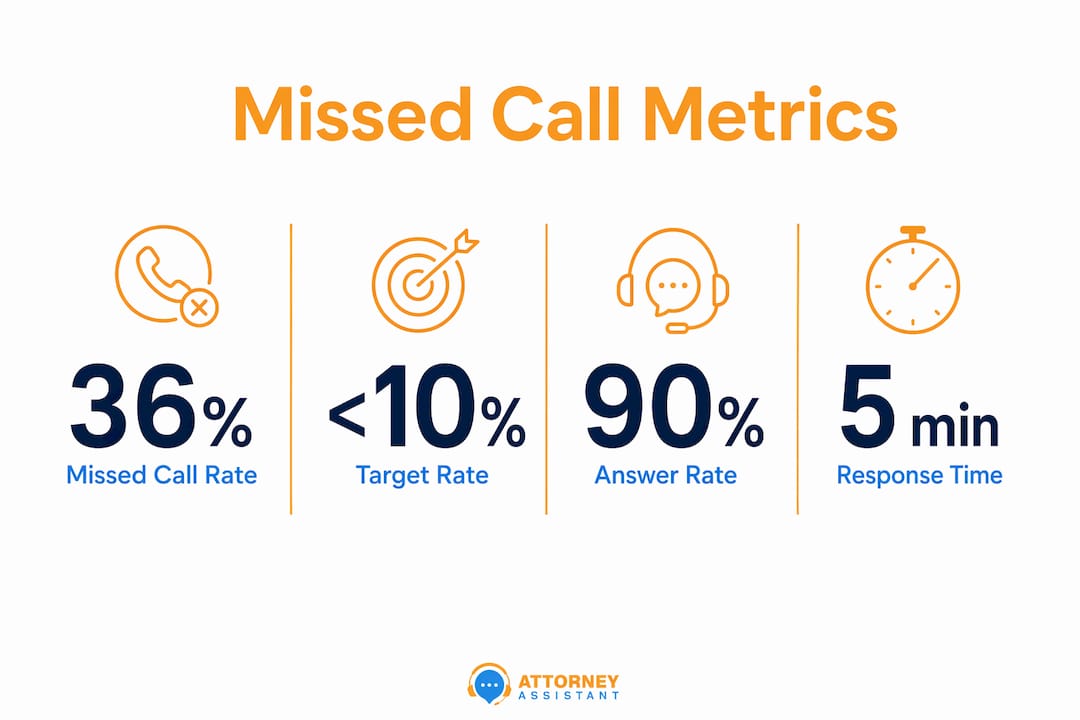
- Lost-case math: Law firms miss approximately 36% of all incoming calls, and 34% of those callers never try to reach the firm again.
- Speed-to-lead: Firms that fail to respond within 5 minutes frequently lose the lead to a competitor who picked up.
- Coverage gap: Most firms have no answer path after 5 PM or on weekends, when a significant share of legal inquiries arrive.
First KPI to measure: Divide missed calls by total inbound calls this week. That number is your missed call rate, and it is almost certainly higher than you think.
Table of Contents
- Why tracking missed calls reveals your real revenue loss
- Key metrics every law firm should measure for missed calls
- Why law firms miss calls: root causes you can fix
- How to track missed calls and log them into your intake workflow
- Missed-call follow-up playbook: timed steps and message templates
- How to estimate lost revenue and calculate ROI for a missed-call solution
- U.S. legal and ethical considerations when tracking calls
- 30/60/90 day roadmap to stop losing cases to missed calls
- Real results from tracking and following up on missed calls
- What to do this week and when to get outside help
- Key Takeaways
- The firms that measure win
- Attorney Assistant fixes the intake gap your marketing budget can’t
- Useful sources
- FAQ
Why tracking missed calls reveals your real revenue loss
Your call-tracking dashboard probably shows a healthy conversion rate. The problem is what it is measuring. Most dashboards report conversions on answered calls only, which hides the full picture. Reconciling calls generated against calls answered is the only way to find your real conversion rate across all leads.
A mid-size personal injury practice handling hundreds of inbound calls monthly at a substantial missed-call rate loses a large number of potential consultations. Even a small percentage of those lost callers signing on with the firm would represent a significant amount of annual gross revenue lost before any file is opened. Research puts that annual leakage at $200K–$400K for a practice of that size. The marketing budget that generated those calls is also wasted on leads that never got a response.
Key metrics every law firm should measure for missed calls
Tracking missed calls for business impact requires more than a raw count. These five metrics tell the full story:
| Metric | Formula | Target Benchmark |
|---|---|---|
| Missed call rate | Missed calls ÷ total inbound calls | Below 10% |
| Answer rate | Answered calls ÷ total inbound calls | Above 90% |
| Time-to-first-response | Minutes from missed call to first outreach | Under 5 minutes |
| Callback completion rate | Completed callbacks ÷ missed calls logged | — |
| Call-to-case conversion | Signed cases ÷ total inbound calls | Varies by practice area |
The most commonly overlooked metric is call-to-case conversion calculated on total inbound calls, not just answered ones. Answered-call conversion rates look strong because the denominator excludes every caller who never got through. Fix the denominator and the number drops fast — which is exactly the signal managers need to justify investment.
Pro Tip: Run both conversion rates side by side in your monthly report. The gap between them is the dollar value of your missed-call problem.
Why law firms miss calls: root causes you can fix
Most missed calls trace back to one of three categories:
Operational gaps
- Single receptionist covering all lines with no backup
- No after-hours answer path (voicemail only, or no voicemail at all)
- Lunch breaks and court appearances with zero coverage
Technical failures
- Legacy landlines that do not expose call events to any software
- No VoIP or webhook integration, so missed calls are invisible to the CRM
- Poor routing rules that send overflow calls to a full voicemail box
Process breakdowns
- No written callback rule (who calls back, within what window)
- No CRM logging requirement for missed calls
- Low accountability — staff assume someone else handled it
To diagnose which cause is dominant, run a 10-minute audit: pull last week’s call log, count unanswered calls by time of day, and check whether any CRM record exists for each one. If the CRM is blank, your problem is technical or process-based. If records exist but no callback happened, it is a people problem.
Pro Tip: Check your missed-call volume between 5 PM and 9 AM. If it is more than 20% of your total, after-hours coverage is your highest-priority fix.
How to track missed calls and log them into your intake workflow
Three approaches, in order of complexity:
| Method | How it works | Best for |
|---|---|---|
| Manual audit | Staff reviews call log daily and logs missed calls in a spreadsheet | Solo or 2-attorney firms |
| VoIP event capture | Phone system fires a webhook on missed call; CRM creates a task automatically | Firms with VoIP already in place |
| Full automation | Webhook → SMS within 30–60 seconds → CRM task → escalation timer | Firms ready to enforce speed-to-lead |
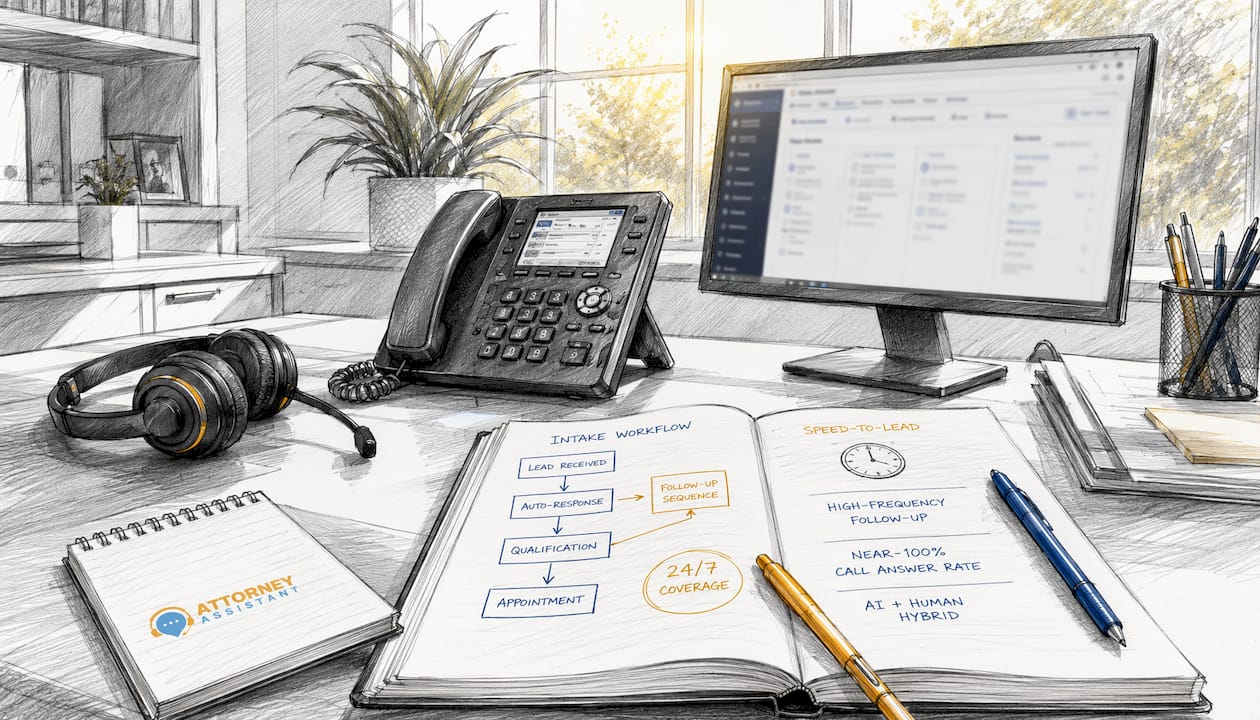
The full automation path is the one that moves the needle. A VoIP-to-SMS-to-CRM workflow reduces the window between missed call and follow-up from hours to seconds, and firms running sub-5-minute follow-up convert at 7–10x the rate of firms responding after 4 hours.
Capture these data elements on every missed call: caller number, timestamp, which line was called, and the campaign or source that drove the call (UTM or tracking number). Without source data, you cannot tell which marketing channel is generating leads you are failing to answer.
Traditional landlines do not expose call events programmatically, so manual logging is the only option until you switch to VoIP. That switch is usually the first technical step in a lead management upgrade.
Missed-call follow-up playbook: timed steps and message templates
Speed is the variable that matters most. Most legal callers do not leave voicemail and contact multiple firms simultaneously. The first firm to respond wins.
Timed sequence:
- 0–60 seconds: Automated SMS to the caller’s number. Keep it short and compliant.
- Under 5 minutes: First human callback attempt by intake staff.
- 30 minutes: Second callback attempt if no answer; log outcome in CRM.
- 2 hours: Escalation flag in CRM if no contact made; supervisor reviews.
- 24 hours: Final outreach attempt; mark lead status and close the loop.
SMS template (first touch): “Hi, this is [Firm Name]. We just missed your call and want to help. We’ll call you back shortly — or reply here if you prefer to text. [Firm Name] | [Phone Number]”
Voicemail script (first callback): “Hi, this is [Name] calling from [Firm Name]. We missed your call earlier and want to make sure we connect. Please call us back at [Number] or reply to the text we sent. We’re available now.”
Assign ownership clearly: intake staff own steps 1–3, a supervisor owns the escalation at step 4, and an attorney reviews any lead that reaches step 5 without contact. Log every attempt in the CRM with a timestamp.
How to estimate lost revenue and calculate ROI for a missed-call solution
ROI formula:
Recoverable revenue = (Total inbound calls × Missed call rate × Conversion rate when answered × Average fee × Firm fee share)
Worked example — personal injury practice:
| Variable | Value |
|---|---|
| Missed call rate | 36% |
| Annual recoverable revenue | $400K (gross potential) |
Even recovering 5% of that — 9 cases per year — is $135,000. An intake automation or co-managed follow-up service typically costs a fraction of that. The payback period on most implementations is under 60 days.
Speed amplifies the math. Moving from a 4-hour average response to under 5 minutes does not just recover a few leads — it can multiply conversion across the entire missed-call pool.
U.S. legal and ethical considerations when tracking calls
Call tracking and recording in the United States is governed by a patchwork of state laws, and the rules matter before you flip any switch.
Compliance checklist for intake teams:
- Identify which states your callers are likely calling from, not just where your firm is located.
- Add a consent disclosure to your phone greeting in all-party consent states: “This call may be recorded for quality and training purposes.”
- Store call recordings separately from privileged case notes; use encrypted storage.
- Log metadata (timestamp, caller ID, duration) in the CRM; keep privileged content out of unencrypted SMS threads.
- Update intake scripts to include SMS consent language before sending automated texts (TCPA compliance).
- Review your data retention policy — most firms should not retain recordings beyond 90 days unless required for a specific matter.
This article is general information, not legal advice. Confirm the recording and consent rules that apply to your firm’s specific states and practice areas with qualified counsel.
30/60/90 day roadmap to stop losing cases to missed calls
| Phase | Actions | Owner | KPI |
|---|---|---|---|
| 30 days | Pull baseline missed-call rate; implement manual daily log; set callback rules in writing; add SMS consent to phone greeting | Firm manager | Missed call rate established |
| 60 days | Switch to VoIP if not already; connect webhook to CRM; automate SMS first-touch; run daily missed-call review | Operations lead | Time-to-first-response under 5 min |
| 90 days | Build performance dashboard; enforce SLAs; launch after-hours coverage; run ROI payback review | Managing partner | Call-to-case conversion on total calls |
Firms that measure response time improve it. The 30-day baseline is not optional — you cannot manage what you have not measured. Use free intake tools to run the baseline without building anything from scratch.
Real results from tracking and following up on missed calls
The before/after numbers from firms that implement missed-call tracking are consistent:
- After connecting call events to automated SMS and CRM logging, one firm’s missed-call reply rate rose to 31% and consultations from missed calls reached 14%.
- Firms that enforce sub-5-minute follow-up convert at 7–10x the rate of firms that respond after 4 hours.
- 34% of missed callers never call back — meaning the window to recover them is measured in minutes, not days.
Nicole has worked with law firms across practice areas on intake failures and follow-up gaps. The pattern is consistent: firms that start measuring missed calls always find the number is worse than they assumed, and the revenue recovery from fixing it is faster than they expected. More detailed case studies and operational templates are available on the Attorney Assistant blog.
What to do this week and when to get outside help
Three actions to take in the next seven days:
- Pull your call log and calculate your missed call rate for the past 30 days.
- Send a test call to your own firm at 6 PM on a Friday. Note exactly what happens.
- Write a one-page callback rule: who calls back, within what window, and how to log it.
When to consider outside help: persistent miss rates after 30 days, no path to VoIP/CRM integration, or no coverage for after-hours leads. Look for a partner that is operations-first (not a staffing vendor), commits to measurable KPIs, and works inside your existing workflows rather than replacing them.
Key Takeaways
Missed calls are a measurable revenue leak, and tracking them is the first step toward recovering cases your firm is already generating but failing to convert.
| Point | Details |
|---|---|
| Missed call rate benchmark | Law firms miss approximately 36% of inbound calls; 34% of those callers never try again. |
| Revenue at stake | A mid-size PI practice can lose $200K–$400K annually from missed and delayed leads. |
| Speed-to-lead multiplier | Sub-5-minute follow-up converts at 7–10x the rate of a 4-hour response. |
| Start with measurement | Calculate your missed call rate this week; you cannot manage what you have not measured. |
| Attorney Assistant | Provides co-managed intake, automated follow-up, and speed enforcement to recover missed-call revenue. |
The firms that measure win
Most law firm managers I work with assume their missed-call problem is minor. Then they pull the actual numbers. A missed call rate of approximately 36% is close to the industry average, and it means more than a third of your marketing budget is generating leads that never get a response.
The firms that close the gap are not doing anything exotic. They measure first, set a callback rule, automate the first SMS touch, and then enforce speed. That sequence, done consistently, produces results within 30 days. The firms that do not measure keep spending on marketing and wondering why growth stalls.
Run the Friday evening test this week. Call your own firm at 6 PM and see what happens. Whatever you experience is what your potential clients experience. That single experiment tends to be more persuasive than any benchmark.
Attorney Assistant fixes the intake gap your marketing budget can’t
Most firms that come to Attorney Assistant have the same problem: solid marketing, a real volume of inbound calls, and a conversion rate that does not reflect either. The leads are there. The follow-up is not.
Attorney Assistant handles the operational layer — speed-to-lead enforcement, automated SMS first-touches, CRM task creation, and co-managed intake workflows — so your team responds faster and signs more of the cases already coming in. The approach is built around your existing systems, not a replacement for them.
When you book a discovery call, the first step is an audit of your current missed-call leakage: how many calls you are missing, when they happen, and what a conservative recovery estimate looks like for your practice. From there, you get a 30/60/90 plan with specific KPIs. If you want to start before the call, the free intake tools let you run the baseline measurement today. Ready to see the numbers? Book a call and we will walk through your firm’s intake gap together.
Useful sources
| Source | What it covers |
|---|---|
| Legal Client Intake Statistics 2026 | Missed-call rate benchmarks and caller behavior data for law firms |
| Law Firm Intake: The Hidden $200K Revenue Leak | Revenue leakage estimates and response-time measurement guidance |
| Missed Call Follow-Up Automation Benchmarks | Automation architecture, conversion uplift data, and case examples |
| Call Tracking for Law Firms | Speed-to-lead benchmarks and SMS follow-up tactics |
| The Unanswered Call Conversion Gap | How answered-call reporting hides real conversion rates |
| Missed Calls Are Costing Law Firms Millions | Caller behavior: why missed callers move on without leaving voicemail |
| Attorney Assistant Blog: Missed Call Solutions | Before/after intake examples and operational templates |
| Attorney Assistant: Free Intake Tools | Baseline measurement tools for the 30-day audit |
FAQ
Why should law firms track missed calls?
Every missed call is a potential client who may never call back. Law firms miss approximately 36% of inbound calls, and tracking them converts that invisible loss into recoverable revenue.
What is a good missed call rate for a law firm?
Target a missed call rate below 10% and an answer rate above 90%. Rates above approximately 36% indicate that the problem is widespread and urgent; rates above 20% typically suggest a coverage or routing problem that a policy fix alone will not solve.
How quickly should a law firm follow up on a missed call?
Send an automated SMS within 60 seconds and attempt a human callback within 5 minutes. Firms that respond within 5 minutes convert at 7–10x the rate of firms that wait 4 hours.
Can Attorney Assistant help with missed-call follow-up?
Yes. Attorney Assistant provides co-managed intake workflows that enforce speed-to-lead, automate first-touch SMS, and log every missed call in your CRM so nothing falls through.
Is call recording legal for law firms in the United States?
Federal law allows one-party consent recording, but 11 states require all-party consent. Add a disclosure to your phone greeting and confirm the rules for every state your callers are likely calling from.
Recommended
Related Articles

Preferred Method of Contact for Law Firm Intake
Discover how to capture and use the preferred method of contact in legal intake to improve conversions, ensure compliance, and streamline law firm operations.

1st Dollar Coverage in Law Firm Retainers: A Practical Guide
Understand 1st dollar coverage in legal and insurance contexts. Learn how it shapes intake, retainer strategy, firm revenue, and risk.
24 7 Phone Answering Service: Law Firm Guide
Discover how a 24 7 phone answering service can help your law firm capture every lead and provide round-the-clock client support. Learn best practices here.