
A new caller reaches a busy personal injury firm and asks the question that sounds simple until three people start interpreting it differently: “Who pays for the first consultation?” The intake specialist knows the consultation is usually free, but isn't sure whether the firm also covers records, follow-up calls, and the work required to decide whether the matter is worth signing. A partner, already between hearings, asks whether the firm is taking the first-dollar risk or expecting the prospective client to carry it.
That conversation happens in different clothing across practice areas. It may concern a retainer that hasn't been signed, a records request made before liability is clear, or a lead that consumes several follow-up attempts and never answers. Most firms have a default position on those costs, but they haven't named it. That silence creates inconsistent scripts, awkward invoices, and revenue leakage that rarely appears as a line item.
Table of Contents
- The Moment a Lead Asks Who Pays First
- What 1st Dollar Coverage Actually Means
- How 1st Dollar Coverage Changes Retainer and Intake Strategy
- First Dollar vs Deductible Style Coverage
- Where First Dollar Arrangements Show Up in Real Practice Areas
- An Intake Team Playbook for First Dollar Conversations
- Revenue, Risk, and the Operational Cost of Going First Dollar
- Why First Dollar Coverage Is Not Automatically Client Friendly
The Moment a Lead Asks Who Pays First
The intake specialist puts the caller on hold. The partner asks whether the firm can absorb the first round of work. Someone in operations checks an old engagement letter. Someone else says the firm has “always handled it that way,” which is often how policies are born and how nobody can later explain them.
The underlying question is who absorbs the first dollar of cost or risk. In a law firm, that first dollar might be attorney time, a consultation, a records fee, a background search, a medical lien review, or the labor involved in calling a prospect back several times. The amount may be modest. The operational consequences aren't.
A firm that absorbs those initial costs can make it easier for a qualified prospect to move forward. It can also attract matters that consume time without producing a signed engagement. A firm that passes the first layer to the client protects its margin, but may lose people before the relationship begins. Neither position is automatically correct. The problem is allowing each intake specialist, attorney, or practice group to improvise.
The hidden cost of an unstated policy
The same confusion appears when a prospective client asks what happens if the retainer isn't signed. Does the firm provide the initial work anyway? Does the client owe anything? Does the answer change if the firm has already ordered records or scheduled a consultation?
Those questions need a consistent answer before the call arrives. Otherwise, the firm may promise a first-dollar experience in an advertisement and deliver a deductible-style experience in the engagement letter. The caller hears “no upfront cost.” The billing team later sees unpaid work. Everyone is technically following a different version of the same policy.
Operational rule: If the firm hasn't defined who pays first, the intake team will define it one call at a time.
A useful working question for every intake process is simple: What does the firm absorb before the client, insurer, or another responsible party contributes? Once that answer is explicit, the firm can write better scripts, draft clearer retainers, and measure whether the policy produces useful matters or merely more activity.
What 1st Dollar Coverage Actually Means
1st dollar coverage means the responsible payer begins covering an eligible cost from the first dollar, without requiring the insured or customer to satisfy a deductible first. In insurance, the insurer reimburses covered losses or benefits from the start of the insured event. The policyholder may still face copayments, coinsurance, exclusions, network restrictions, limits, and other conditions. Investopedia's explanation of first-dollar coverage captures the central distinction: the insurer starts reimbursing covered losses or benefits without a deductible, but the policy doesn't necessarily pay every dollar of every bill.
Working definition: First-dollar coverage changes when payment begins. It doesn't automatically determine how much the payer will ultimately cover.
Health insurance makes the mechanism easy to see. Under a conventional deductible plan, the enrollee generally pays the full price of many covered services until the deductible is satisfied. Under a first-dollar design, the plan's normal copay or coinsurance formula applies to the first covered service instead. “No deductible” therefore doesn't mean “no out-of-pocket cost.”
The same sequence applies to legal operations. A firm may absorb the initial consultation, early follow-up, or first records request before the client pays anything or before a settlement, insurer, or other source of recovery funds the work. That doesn't mean the firm has promised unlimited free services. The engagement letter still needs to define scope, exclusions, reimbursement rights, limits, and what happens if the matter doesn't proceed.
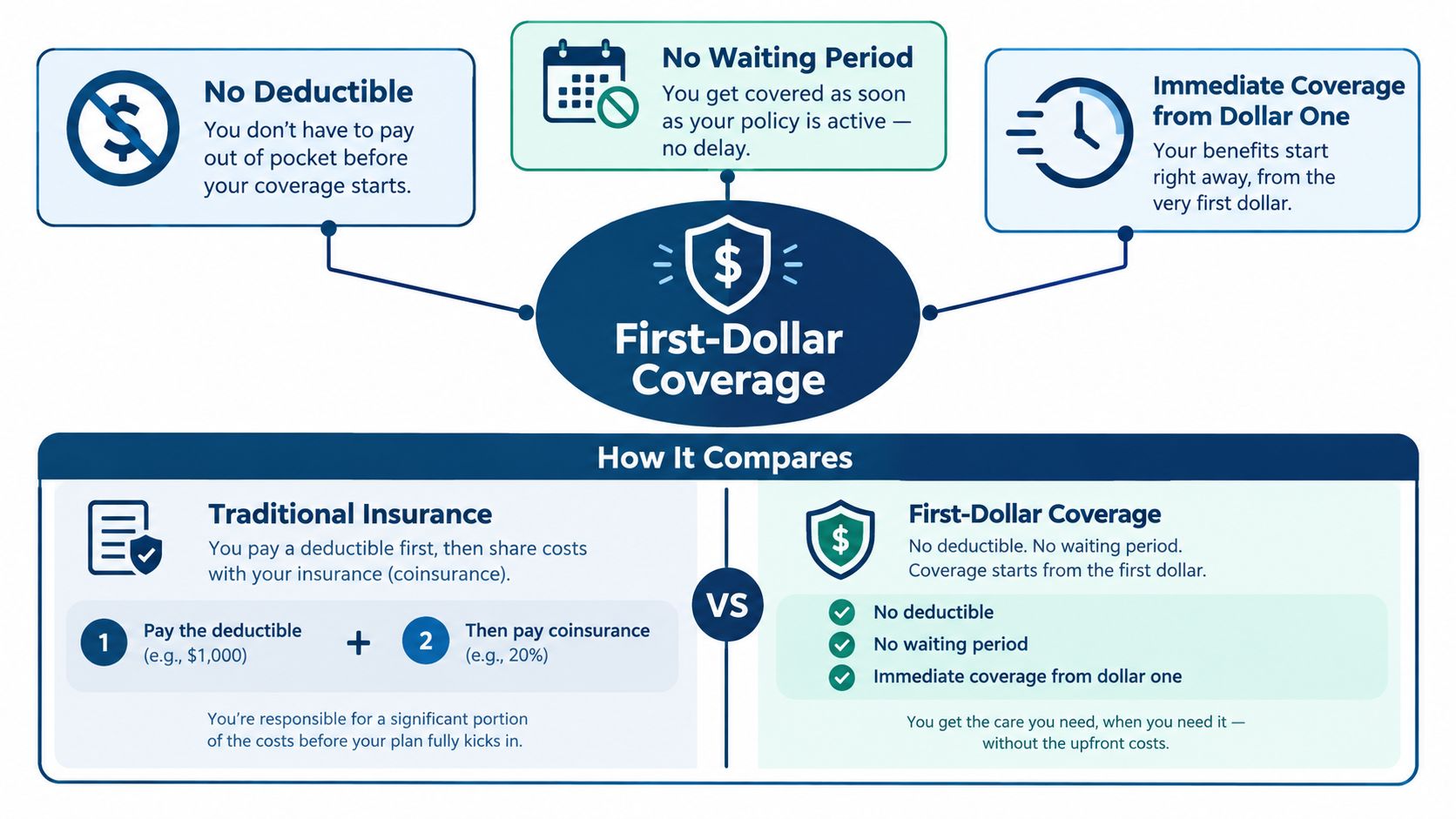
For an intake leader, the practical translation is straightforward. Ask which benefit or service is first-dollar, identify the point at which the client becomes responsible, and document any remaining cost-sharing rule. A first-dollar consultation may coexist with a fee for records. A first-dollar case evaluation may coexist with a limited scope. The label is only useful when the underlying sequence is clear.
How 1st Dollar Coverage Changes Retainer and Intake Strategy
A legal-services version of first-dollar coverage usually means the firm accepts the first layer of time, expense, or operational risk. That choice reaches beyond pricing. It affects the promise made during intake, the language in the engagement letter, and the work the firm must perform before a matter becomes revenue.
Start with the retainer. If the firm covers an initial consultation, say what that includes. If it will request records before signing, specify which records, under what conditions, and whether the client owes the cost if the engagement never begins. If the firm will conduct follow-up without an upfront payment, define the follow-up window or the event that ends it.
Three places the policy becomes real
- Retainer language: State whether the initial service is covered, what remains outside scope, and whether the client must reimburse expenses if the matter doesn't proceed.
- Intake scripts: Give specialists approved wording for consultations, follow-up, signing, and requests for additional work. “No upfront fee” can mean several things, and callers won't choose the interpretation most favorable to the firm's margins.
- Case opening: Decide who authorizes records retrieval, expert review, filing fees, or other early work when liability and collectability remain uncertain.
A first-dollar posture needs a first-dollar script. A deductible posture needs a deductible script. A hybrid model needs both, with a clear handoff. Intake specialists shouldn't discover the firm's policy by asking a partner in the middle of a live call.
The most common drafting mistake is a mismatch between public language and the engagement letter. Marketing says the firm absorbs initial costs. The retainer preserves a deductible, reimbursement clause, or narrow service limit that the caller never heard. The firm may have sound contractual language, but the intake experience has already created a different expectation.
Practical rule: The intake promise and the engagement letter should describe the same payment sequence.

Liability insurance offers a useful warning. A deductible may operate as reimbursement owed by the policyholder to the insurer rather than as a condition that prevents the insurer from defending or paying a third party. In other words, calling something first-dollar doesn't establish that the insured has zero cash exposure. The liability coverage analysis available through Law.com illustrates why firms should read payment, defense, reimbursement, and retention language together.
The same discipline belongs in a firm's client intake best-practices process. Before each call, the specialist should know which services are covered from the first dollar, what triggers client responsibility, and when an attorney must approve an exception.
First Dollar vs Deductible Style Coverage
The choice isn't between generous firms and stingy firms. It's a choice about where the firm wants the first layer of cost and uncertainty to sit.
With first-dollar coverage, the firm absorbs more early work. The caller experiences fewer barriers, and the firm may have a better chance of converting a matter that would otherwise stall. The trade-off is that the firm funds more consultations, follow-up, and case-opening activity, including work on matters that never become engagements.
Deductible-style coverage protects the firm from that initial layer. The client or another responsible party carries the early cost before the firm contributes. That can preserve margins and discourage low-commitment inquiries, but it also creates friction at the precise moment when the relationship is still fragile.
| Dimension | First-Dollar Coverage | Deductible-Style Coverage |
|---|---|---|
| Revenue stability | More early work is exposed to write-off, but a smoother path may support matter conversion | Initial exposure is lower, but payment friction can reduce signed matters |
| Client experience | Fewer upfront barriers and clearer immediate support | More responsibility sits with the client before firm resources begin |
| Firm risk | The firm carries early time, expense, and collection risk | The client or another payer carries the first layer |
| Operational complexity | Requires tracking covered scope, exceptions, and utilization | Requires clear collection steps and consistent explanations |
| Best operational fit | Firms with reliable intake, staffing, and case-opening controls | Firms prioritizing strict margin protection or limited early involvement |
The hybrid is often the honest answer
Many firms don't operate at either extreme. They may provide a first-dollar consultation, then apply a deductible-style rule to records retrieval or specialized review. Another firm may absorb follow-up until the prospective client receives an engagement letter, then require reimbursement for work outside the agreed scope.
That model can work well, but only if the firm names the transition. A hybrid arrangement isn't confusing because it has two stages. It's confusing when the caller hears only the first stage and the retainer reveals the second.
The right posture depends on practice area, cash flow, matter economics, and staffing capacity. A growing firm may choose to absorb early risk for high-value matters while applying tighter limits to low-probability inquiries. A boutique practice may prefer a paid consultation because attorney time is the scarce resource. The decision should be deliberate, measurable, and visible to the people answering the phone.
Where First Dollar Arrangements Show Up in Real Practice Areas
In personal injury, the first-dollar decision often appears before anyone uses that phrase. A firm may cover the consultation, request initial medical records, review liability facts, and make several follow-up calls before deciding whether to sign. That approach removes friction for the caller, particularly when the person can't afford to fund early case investigation. It also creates a workload that grows quickly when intake volume rises.
The intake team needs a qualification standard, not merely a friendly promise. Specialists should collect accident details, treatment status, insurance information, deadlines, and contact preferences before authorizing work. Records staff need a defined request process, and attorneys need a clear threshold for deciding whether the firm continues funding the matter.
Medical records and liens can make the distinction especially visible. A firm that absorbs early retrieval work should connect the promise to a controlled medical lien management process, rather than treating each request as an informal favor. Under a deductible posture, the specialist must explain what the client pays before the firm orders anything.
Family law
A family law firm that offers a first-dollar consultation may attract callers who are comparing several attorneys and are highly sensitive to initial cost. The offer can fill the calendar quickly. It can also consume attorney time with matters that need structured triage before they reach a consultation slot.
The intake process should identify urgency, court dates, existing orders, opposing-party information, and the type of relief sought. A first-dollar consultation works better when the firm defines its purpose, limits the time commitment, and routes matters according to complexity. Without that structure, the firm has subsidized a meeting rather than created a predictable intake path.
Estate planning
An estate planning practice may use first-dollar positioning through a flat-fee engagement. The client hears one predictable price instead of an hourly meter beginning at the first conversation. That can reduce sticker shock, but the firm must define scope with unusual care. Changes to the family structure, additional entities, tax questions, or repeated revisions can turn a tidy package into an unplanned project.
The intake team should explain what the flat fee includes, identify facts that require attorney review, and flag requests outside the standard package. First-dollar pricing only protects the client experience when the boundary around the service is just as clear as the price.
An Intake Team Playbook for First Dollar Conversations
A first-dollar policy works at the call level, not just in a partner's pricing memo. Intake specialists need a repeatable process that tells them what to say, what to record, and when to stop making assumptions.
Confirm the posture before the call
The specialist should know whether the matter receives a first-dollar consultation, a paid consultation, a covered follow-up cycle, or a hybrid treatment. The answer may vary by practice area, lead source, jurisdiction, matter type, or attorney availability.
A short internal reference should identify:
- Covered first layer: Consultation, follow-up, records, review, or another defined service.
- Client responsibility: Fees, expenses, deposits, reimbursement, or work outside scope.
- Approval threshold: The point at which an attorney or operations lead must authorize additional work.
- End point: A signed engagement, declined matter, expiration of follow-up, or another documented event.
Use language that explains the boundary
A specialist might say, “The firm is absorbing the cost of the initial consultation and the agreed follow-up process. If you move forward, the engagement letter will explain what the firm covers and what you may owe for work outside that scope.”
For a hybrid model, clarity matters even more: “The consultation is covered from the first dollar. If the firm needs to order records before the engagement begins, we'll explain that cost and obtain the required approval first.”
Those sentences aren't legal advice, and they shouldn't replace the engagement letter. They give the caller an accurate expectation while preserving the attorney's role in defining the relationship.
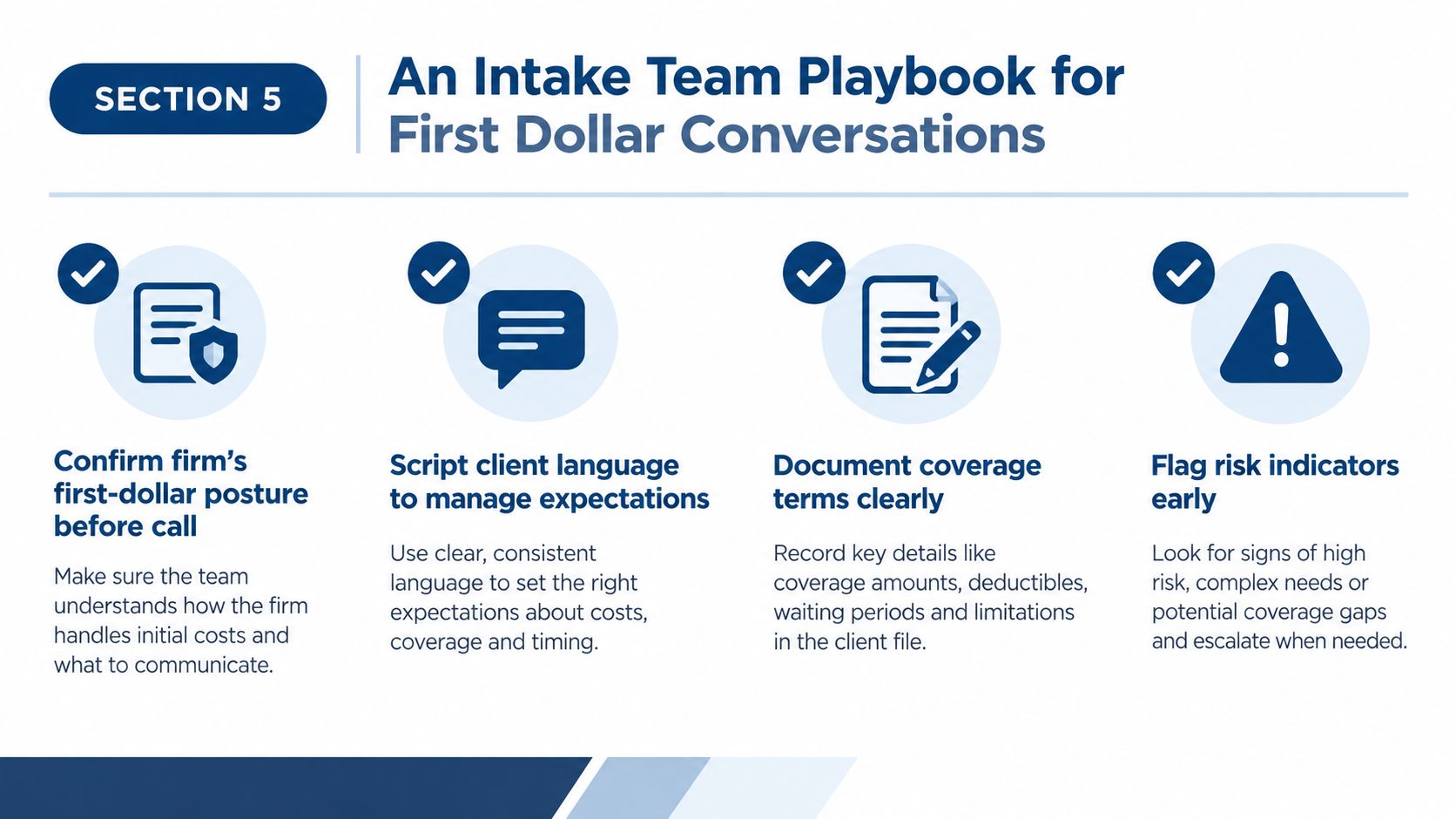
Document the promise
Record the coverage posture, the services discussed, the caller's understanding, and any exception approved during the call. The note should be visible to the attorney, case-opening staff, and billing team. Verbal commitments are where first-dollar arrangements become expensive. They disappear from memory, then reappear as disputed invoices.
Escalate when the caller asks for work outside the defined scope, seeks a guarantee about fees, presents unusual urgency, or describes a payment arrangement the script doesn't address. Improvisation feels helpful in the moment. It creates policy later, usually the expensive kind.
A first-dollar posture also requires capacity. If the firm attracts more inquiries but can't answer promptly, complete follow-up, open files, or retrieve records, the policy creates demand the operation can't serve. Twenty-four-hour coverage and dedicated case-support staff can make the difference between a defined first-dollar process and a queue of promises nobody has time to keep.
Revenue, Risk, and the Operational Cost of Going First Dollar
First-dollar coverage is an operations decision disguised as a client-experience decision. The firm chooses to carry the early risk, then has to price for it, monitor utilization, and staff the work that follows.
Health insurance provides a useful parallel. The RAND Health Insurance Experiment found that 86.8% of people assigned to free care used medical services, compared with 78.8% of people facing a 25% coinsurance rate, an 8.0-percentage-point difference. The RAND findings summarized by the Kaiser Family Foundation show that removing cost sharing changes behavior, not merely the timing of payment.
Legal services don't follow the same utilization pattern automatically, but the operational lesson is relevant. Remove an upfront barrier and more people will proceed far enough to request a consultation, continue a follow-up cycle, or ask the firm to open a file. That can support growth when the firm has the capacity to evaluate and serve the additional matters.
Capacity is part of the price
A firm adopting first-dollar coverage should watch for:
- Longer intake queues: More people accept the first step, increasing demand on the people who schedule and qualify matters.
- Expanded follow-up work: Prospects who face less initial friction may require more structured contact before they decide.
- Case-opening bottlenecks: Records, file setup, conflict checks, and document collection can become the limiting stage.
- Attorney displacement: Lawyers may end up reviewing early-stage work that trained support staff could prepare.
The firm doesn't need to reject first-dollar coverage because it creates work. It needs to treat that work as part of the cost of the model. A first-dollar promise without staffing is not a growth strategy. It's an invitation to create a more crowded inbox.
The firm that goes first dollar must also decide who carries the work from dollar one.
That may mean narrowing the covered service, creating approval checkpoints, or assigning dedicated staff to intake and case support. More leads only help when the operation can absorb them without pushing attorneys away from legal work.
Why First Dollar Coverage Is Not Automatically Client Friendly
First-dollar coverage sounds client-friendly because it removes an immediate barrier. It can still carry higher fees, narrower scope, lower limits, or more exclusions than a deductible-style arrangement. In insurance, the value of removing the deductible is commonly balanced through other plan terms. Legal retainers follow the same economic logic.
Marketplace data makes the pressure visible. Average deductibles rose from $2,759 in 2025 to $3,786 in 2026, a 37% increase, while bronze-plan enrollment rose from 30% to 40%; bronze deductibles averaged more than $7,000 per person. KFF's analysis of 2026 Marketplace enrollment, premiums, and deductibles shows why buyers may accept more upfront exposure when affordability becomes the dominant concern.
A legal flat-fee arrangement can create the same tension. The client likes the predictable first-dollar experience until the request falls outside scope, requires additional revisions, or triggers a limit in the engagement letter. The firm then faces a choice between absorbing unplanned work and enforcing a boundary the client didn't understand.
Evaluate the model the way you would evaluate any coverage purchase: premiums or fees, limits, exclusions, reimbursement rules, and the payer's ability to honor the promise. First-dollar coverage can be a strong design choice. It isn't a substitute for clear scope, disciplined intake, or enough people to do the work.
Attorney Assistant provides Frontline, a 24/7 live intake team for answering, qualifying, following up with, and signing appropriate matters, plus Staffline, dedicated full-time legal support professionals who work inside your firm's systems. If your first-dollar strategy is creating more intake, records, or case-opening work than your current team can absorb, visit Attorney Assistant to evaluate where additional operational capacity fits.
Related Articles

24 7 Phone Answering Service: Law Firm Guide
Discover how a 24 7 phone answering service can help your law firm capture every lead and provide round-the-clock client support. Learn best practices here.

10 Business Finance Course Options for Law Firms
Compare 10 business finance course options by level, format, workload, and law-firm relevance, then choose the right fit for your role and goals.

How to Call Answer Phone for Your Law Firm
Learn how to call answer phone professionally at your law firm. A practical guide to building 24/7 intake, scripting, and follow-up that signs cases.