Client Follow-Up Strategy for Law Firms: 2026 Guide

TL;DR:
- A client follow-up strategy is an intentional communication plan that improves conversion and retention through timely, personalized outreach. Most law firms neglect follow-up, losing many potential clients due to poor routines and inconsistent contact. Implementing structured cadences, responding promptly, and tracking every touchpoint can significantly boost long-term client relationships.
A client follow-up strategy is a structured, intentional communication process designed to maintain contact with prospects and clients at defined intervals to improve conversion rates and long-term retention. Most law firms treat follow-up as an afterthought. That gap is expensive. Over 80% of businesses lose potential clients due to poor follow-up routines. That single statistic explains why firms with similar lead volume produce wildly different revenue outcomes.
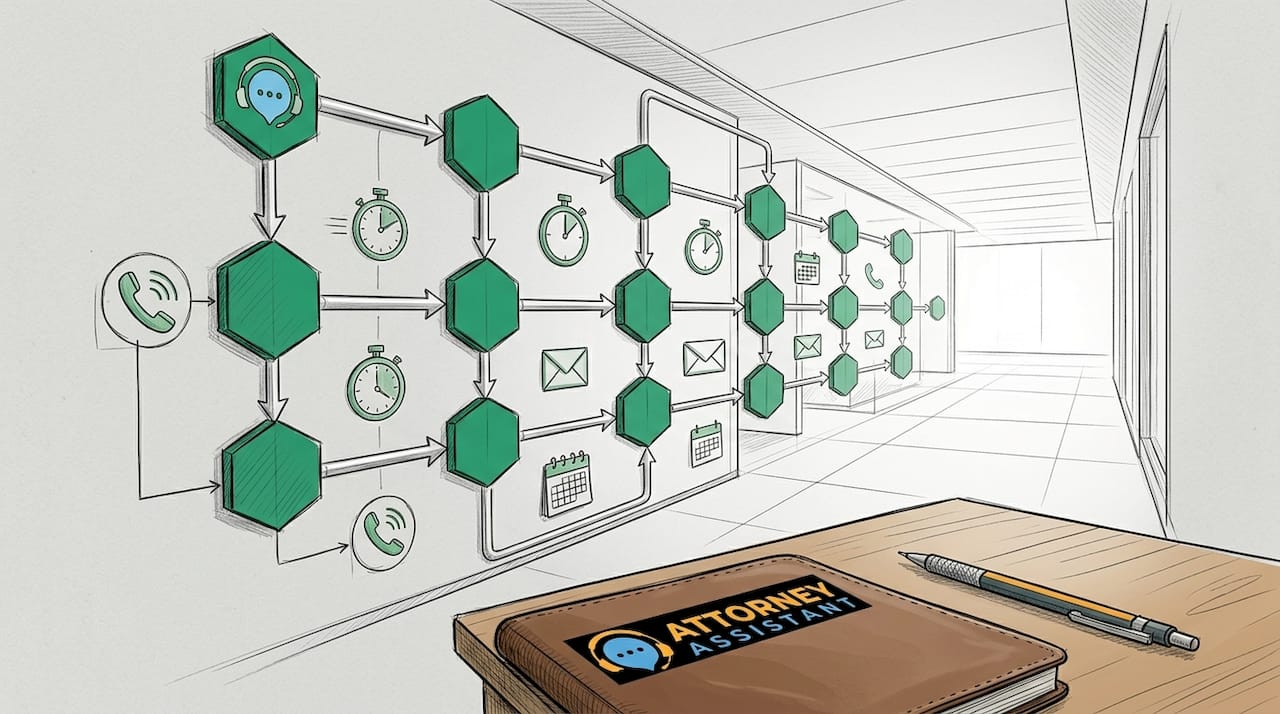
The industry standard for legal intake is clear: respond within 4 hours of an initial inquiry and follow up after meetings or proposals within 24 hours. Missing those windows does not just slow conversion. It signals to the prospect that your firm is not attentive. A deliberate follow-up system, built around timing, personalization, and consistent cadence, separates firms that grow from firms that wonder where their leads went.
What is a client follow-up strategy in legal practice?
An effective client follow-up strategy in legal practice combines four core elements: speed, personalization, value delivery, and a structured cadence. Each element carries weight on its own. Together, they create a communication system that converts prospects and retains clients.
Speed of response
The first touchpoint sets the tone for the entire relationship. Firms that respond within 4 hours of an inquiry convert at significantly higher rates than those that wait a day or more. After a meeting or proposal, a follow-up within 24 hours reinforces professionalism and keeps momentum alive. Waiting longer gives the prospect time to contact another firm.
Personalization and value delivery
Generic follow-up messages fail because they signal that the firm views the client as a number. Every touchpoint should reference the client’s specific situation, goals, or concerns discussed in prior conversations. Value-first follow-ups that include relevant case updates, answers to open questions, or useful resources position attorneys as trusted partners rather than vendors chasing a signature.
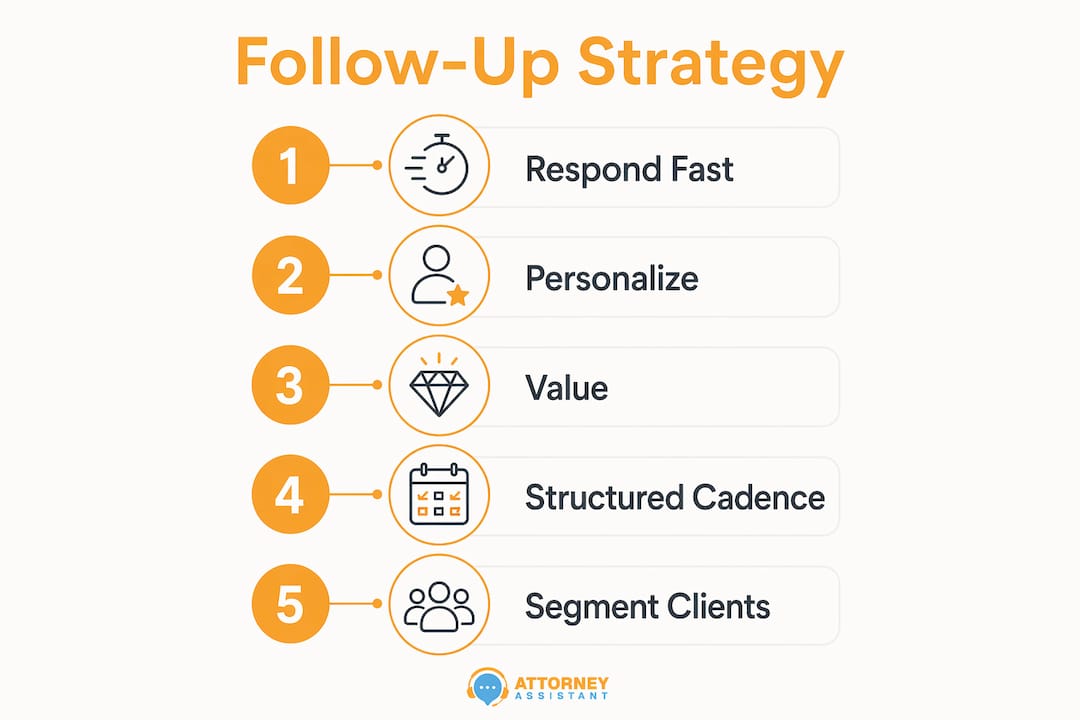
Structured cadence
A proven follow-up cadence uses touchpoints at 3, 7, 14, and 21 days after the initial contact, then shifts to monthly or quarterly maintenance outreach. This schedule keeps your firm present without overwhelming the prospect. It also creates a paper trail of genuine engagement that builds credibility over time.
- Day 1: Confirm receipt of inquiry and set expectations for next steps.
- Day 3: Send a personalized message referencing the prospect’s specific legal concern.
- Day 7: Deliver a value-added resource such as a relevant FAQ, case summary, or checklist.
- Day 14: Check in with an open-ended question about where the prospect stands in their decision.
- Day 21: Make a final direct outreach before transitioning to long-term passive nurturing.
Pro Tip: Write your follow-up messages in advance and load them into your CRM as scheduled tasks. This removes the temptation to skip a touchpoint during a busy week.
How to tailor follow-up cadences for different client statuses
Not every client deserves the same follow-up frequency. Segmenting follow-up cadence by client status prevents two costly mistakes: neglecting active clients who need regular updates and over-contacting past clients who feel pressured. The right cadence depends on where the person sits in your client lifecycle.
| Client status | Recommended cadence | Primary goal |
|---|---|---|
| Active matter | Weekly updates, same-day responses | Maintain trust and reduce inbound calls |
| New prospect | 3, 7, 14, 21 days then monthly | Convert to signed engagement |
| Stalled prospect | Bi-weekly for 60 days then quarterly | Re-engage without pressure |
| Past client | Quarterly or biannual check-in | Generate referrals and repeat work |
Active clients need the most consistent contact. A weekly status update, even a brief one, reduces the number of “just checking in” calls your staff receives. It also demonstrates that your firm is managing the matter proactively, which directly affects client satisfaction and referrals.
Prospects in the 3-7-14-21 day window are the highest-priority segment for conversion. After day 21 with no response, shift to a monthly passive nurture sequence. Do not abandon the contact entirely. Legal needs are often time-sensitive and unpredictable. A prospect who went quiet in march may have an urgent need in september.
Past clients represent one of the most underused assets in a law firm. A quarterly check-in, a brief note about a relevant legal development, or a holiday message keeps the relationship warm. Clients who feel remembered are far more likely to return and to refer others. Understanding what clients expect from a lawyer helps frame these touchpoints around genuine value rather than self-promotion.
What are best practices and common pitfalls in law firm follow-up?
The most common follow-up failure in law firms is reactive communication. Firms wait for the client to call instead of reaching out first. Reactive follow-up signals desperation and damages the professional relationship. Institutionalizing follow-up cadence inside a CRM with automated reminders removes the dependency on individual memory and good intentions.
Best practices that consistently improve follow-up outcomes:
- Use open-ended questions. Asking “What questions do you have about the next steps?” surfaces hesitations that a yes/no question would miss.
- Keep messages short. Three to four sentences is the target. Long emails signal that you need the client more than they need you.
- Reference prior conversations. Mentioning a detail from your last call shows the client they are not receiving a mass message.
- Avoid following up on consecutive days. Back-to-back messages read as pressure, not care.
- Track every touchpoint. If it is not logged in your CRM, it did not happen for operational purposes.
Clients are sensitive to tone. A follow-up that reads as desperate or transactional will push a prospect away faster than no follow-up at all. The goal is to communicate genuine interest in solving the client’s problem, not urgency about closing a deal.
Pro Tip: Before sending any follow-up message, ask yourself: “Does this give the client something useful, or does it only serve the firm?” If the answer is the latter, rewrite it.
The firms that win long-term treat follow-up as an ongoing investment in the relationship. Proactive communication that includes transparent reporting and genuine problem-solving reinforces commitment to clients in a way that reactive outreach never can.
How do Quarterly Business Reviews and client feedback improve follow-up?
Quarterly Business Reviews, commonly called QBRs, are structured sessions that connect your firm’s service delivery directly to the client’s outcomes and goals. QBRs are strategic touchpoints that significantly increase retention by involving senior leadership and aligning future priorities. They transform follow-up from a series of check-in messages into a formal partnership review.
An effective QBR agenda covers four areas:
- Results review. Present what the firm accomplished during the quarter, tied to the client’s stated goals.
- Challenges and adjustments. Discuss any issues openly and explain how the firm addressed them.
- ROI summary. Show the client the measurable value delivered, whether that is resolved disputes, protected assets, or reduced legal exposure.
- Forward planning. Co-create priorities for the next quarter so the client feels ownership over the relationship.
Client feedback protocols reinforce the QBR process between formal sessions. Net Promoter Score surveys sent after matter milestones give you quantitative data on satisfaction. Executive follow-up calls after a survey response below a threshold show clients that feedback produces action, not just acknowledgment.
Transparency is the single most underused retention tool in legal practice. Clients who understand what their firm is doing and why rarely leave. Clients who feel left in the dark look for alternatives, even when the legal work is excellent.
Linking follow-up to transparency builds the kind of loyalty that generates referrals. A client who trusts your communication process will recommend your firm before a client who only trusts your legal expertise.
Key Takeaways
A structured client follow-up strategy built on speed, personalization, and consistent cadence is the most direct path to higher conversion and stronger retention in legal practice.
| Point | Details |
|---|---|
| Respond within 4 hours | Initial inquiry responses within 4 hours maximize conversion potential for law firms. |
| Use the 3-7-14-21 cadence | Follow up at days 3, 7, 14, and 21 before shifting to monthly passive nurture. |
| Segment by client status | Active clients need weekly updates; prospects and past clients require different frequencies. |
| Lead with value, not urgency | Every touchpoint should give the client something useful, not just prompt a decision. |
| Institutionalize in your CRM | Automated reminders remove reliance on memory and keep follow-up consistent across the firm. |
The follow-up gap most law firms refuse to acknowledge
I have worked with enough law firms to recognize a pattern. The intake call goes well. The attorney is confident. Then nothing happens for five days because everyone assumed someone else sent the follow-up. By the time the firm reaches out, the prospect has already signed with another firm.
The uncomfortable truth is that most follow-up failures are not technology problems. They are accountability problems. Firms invest in advertising, in websites, in SEO, and then let leads expire because no one owns the follow-up process. Adding more leads to a broken system does not fix revenue. It just accelerates the leak.
What actually works is treating follow-up as a firm-wide operational standard, not a personal habit. That means defined ownership, written cadences, CRM entries made at the time of contact, and a weekly review of open follow-up tasks. Automation handles the scheduling. A real person handles the message quality.
The firms I have seen grow consistently are not the ones with the most leads. They are the ones where every lead gets a response within hours and every prospect hears from the firm at least five times before the file closes. That discipline, more than any marketing spend, is what fills a docket. If you want to understand how client communication affects conversion, the data is unambiguous: speed and consistency win.
— Nicole
How Attorney Assistant handles follow-up for law firms
Law firms that struggle with follow-up gaps rarely lack effort. They lack systems. Attorney Assistant builds and manages the intake, follow-up, and administrative workflows that keep leads from going cold and clients from feeling ignored.
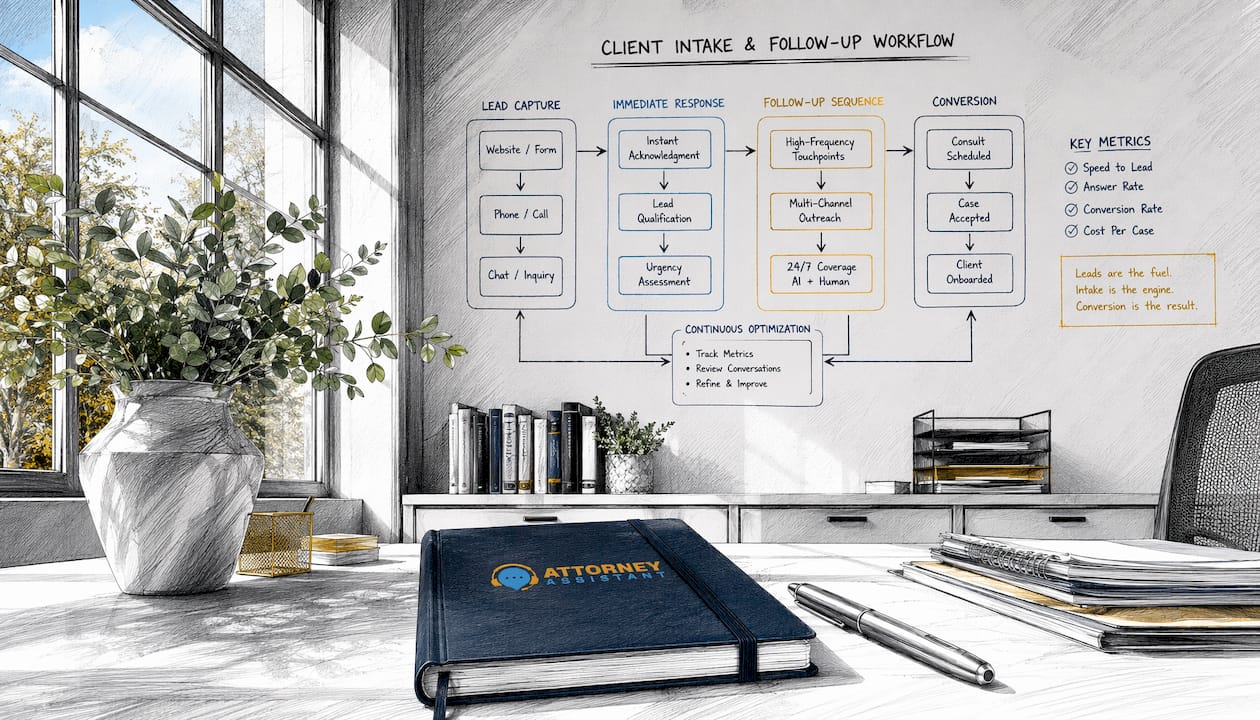
Attorney Assistant’s lead follow-up services cover the full cycle from first inquiry to signed engagement, including timed outreach, CRM task management, and consistent communication on behalf of your firm. Firms that work with Attorney Assistant respond faster, convert more of the leads they already have, and reduce the internal chaos that comes from untracked follow-up. If you want to see how it works for your practice, book a call with the team.
FAQ
What is a client follow-up strategy?
A client follow-up strategy is a structured communication plan that defines when, how, and why a firm contacts prospects and clients after an initial interaction. The goal is to maintain engagement, build trust, and improve conversion rates.
How soon should a law firm follow up with a new inquiry?
Law firms should respond to initial inquiries within 4 hours and send a follow-up after meetings or proposals within 24 hours. Missing these windows significantly reduces the likelihood of converting the prospect.
What is the best follow-up cadence for legal prospects?
The most effective cadence for new prospects uses touchpoints at days 3, 7, 14, and 21, then transitions to monthly passive outreach. This schedule keeps the firm present without creating pressure.
How does follow-up differ for active clients versus past clients?
Active clients need weekly updates and same-day responses to maintain trust during an open matter. Past clients benefit from quarterly or biannual check-ins focused on relationship maintenance and referral generation.
Why do most law firms fail at client follow-up?
Most law firms fail at follow-up because no single person owns the process and there is no system to enforce it. Embedding follow-up tasks in a CRM with automated reminders is the most reliable fix for inconsistent outreach.
Recommended
- Client Follow-Up Workflow for Law Firms: 2026 Guide | Attorney Assistant
- What Is Lead Follow-Up for Law Firms: 2026 Guide | Attorney Assistant
- Law firm lead management: convert more clients in 2026 | Attorney Assistant
- Boost client intake: top communication strategies for law firms | Attorney Assistant
Related Articles
The Role of Follow-Up in Client Conversion: 2026 Guide
Discover the crucial role of follow-up in client conversion. Learn how effective outreach can boost your sales and secure more clients.

Client Follow-Up Workflow for Law Firms: 2026 Guide
Discover how to create an effective client follow-up workflow for your law firm. Boost engagement and convert leads effortlessly!

Client retention for law firms: Boost loyalty and profits
Learn how personal injury law firms can boost client retention, increase profits by up to 95%, and build lasting loyalty with proven strategies for 2026.