More leads will not fix a missed call. The standard advice on law firm lead generation is to buy more visibility, run more ads, and add another channel. That's sensible only if someone answers the resulting inquiries, returns missed calls promptly, and follows up when a prospect doesn't immediately book.
Before buying more inquiries, check whether your intake can handle the ones you already get. In its survey of 3,000 U.S. legal-service consumers, Scorpion's 2025 Legal Consumer Insights Report found that 72% would move on if they didn't hear back within 24 hours. A better landing page won't fix an unattended inbox.
Buying rule: Choose tools by what happens after the inquiry arrives, not just by how convincingly someone promises to generate it.
The options below serve different jobs. Some sell inquiries, some build marketing channels, and one supplies the people who answer, qualify, and follow up. Compare them on ownership, response speed, follow-up responsibility, and your firm's ability to carry a signed matter forward. The best choice isn't necessarily another lead source. Sometimes it's someone who calls the existing leads back.
Table of Contents
- 1. Services - Frontline
- 2. Legal Brand Marketing
- 3. Martindale-Avvo LeadVolume
- 4. LegalMatch
- 5. CaseHunter
- 6. Grow Law
- 7. FindLaw
- How the Seven Lead Sources and Intake Options Compare
- Match Your Lead Sources to What Your Intake Can Absorb
1. Services - Frontline
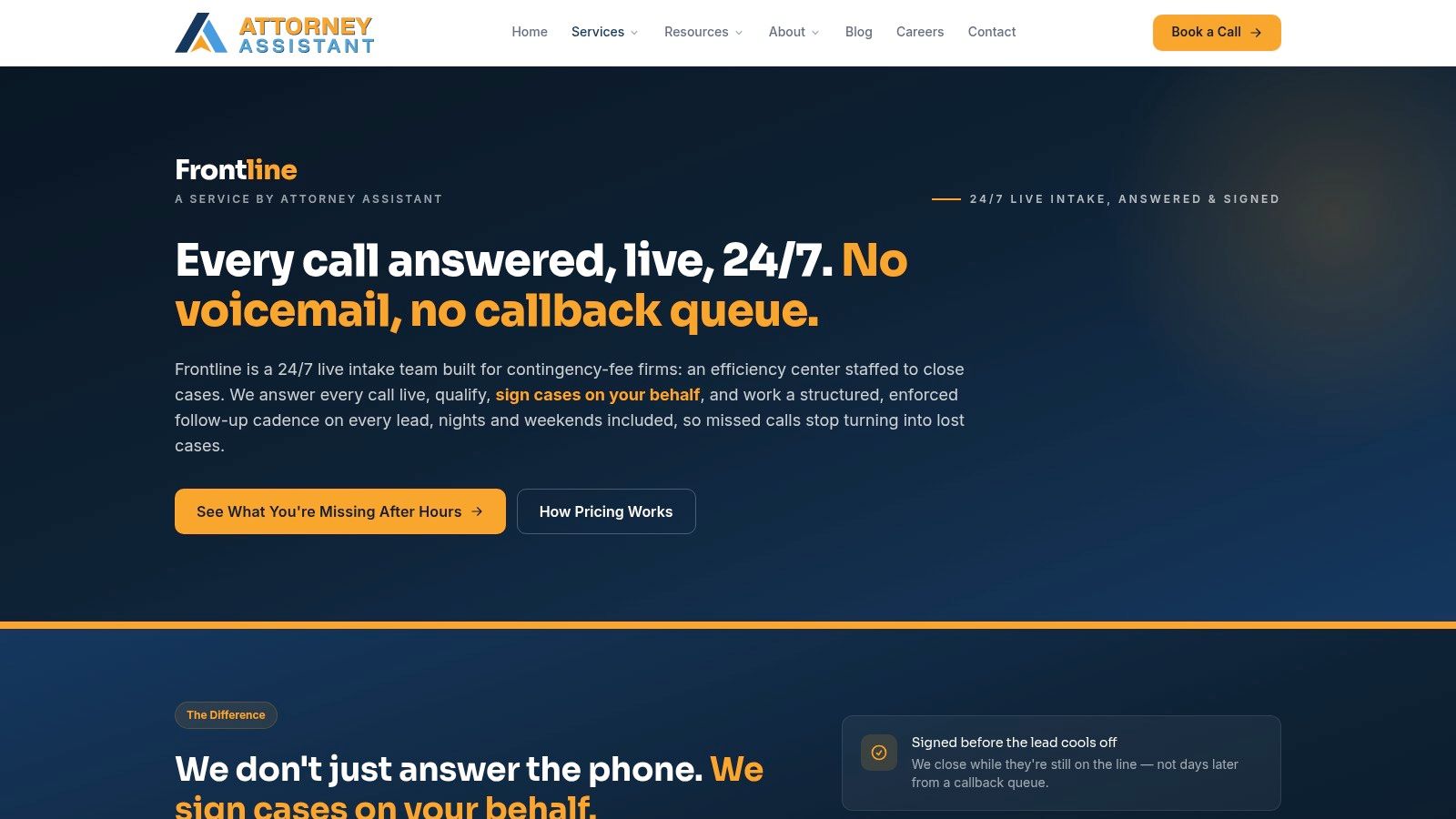
A new inquiry has value only if someone takes responsibility for it. Frontline is Attorney Assistant's 24/7 live intake service, with call answering, lead qualification, outbound follow-up, warm transfers, appointment setting, and support for contract or retainer signing under the firm's direction.
That makes it an intake option, not a lead source. It suits firms whose marketing already brings inquiries but whose staff cannot respond and follow up consistently. A message in the queue is not a next step for a prospective client.
What works and what needs planning
- Strength: Live coverage and structured follow-up assign responsibility between an inquiry arriving and a prospect taking action.
- Commercial model: Frontline includes 75 monthly credits and bills for completed actions rather than idle time. Terms are month to month, with no setup fees.
- Trade-off: Activity above the included credits is billed as an overage. Estimate costs against the actions your inquiries require, not just the number of calls.
- Scope: Frontline handles intake. For ongoing operational work, Staffline provides dedicated, full-time virtual assistants assigned exclusively to one firm. Their work can include case administration, records, CRM upkeep, and other legal support tasks.
Before starting, define what qualifies as a suitable matter, when an attorney must review it, and who receives the signed file. Attorney Assistant is not a law firm and does not provide legal advice or exercise legal judgment.
Track more than calls answered. Qualified conversations, appointments kept, completed retainers, and usable handoffs show whether intake is turning inquiries into work the case team can absorb. A firm that cannot handle the added matters may move its bottleneck from the phone queue to the case queue.
Frontline handles the inquiry. Staffline can support the operations behind it. The firm still sets the rules and keeps legal decisions in its own hands.
2. Legal Brand Marketing
An exclusive inquiry is useful. An exclusive inquiry sitting unread in your CRM is merely private.
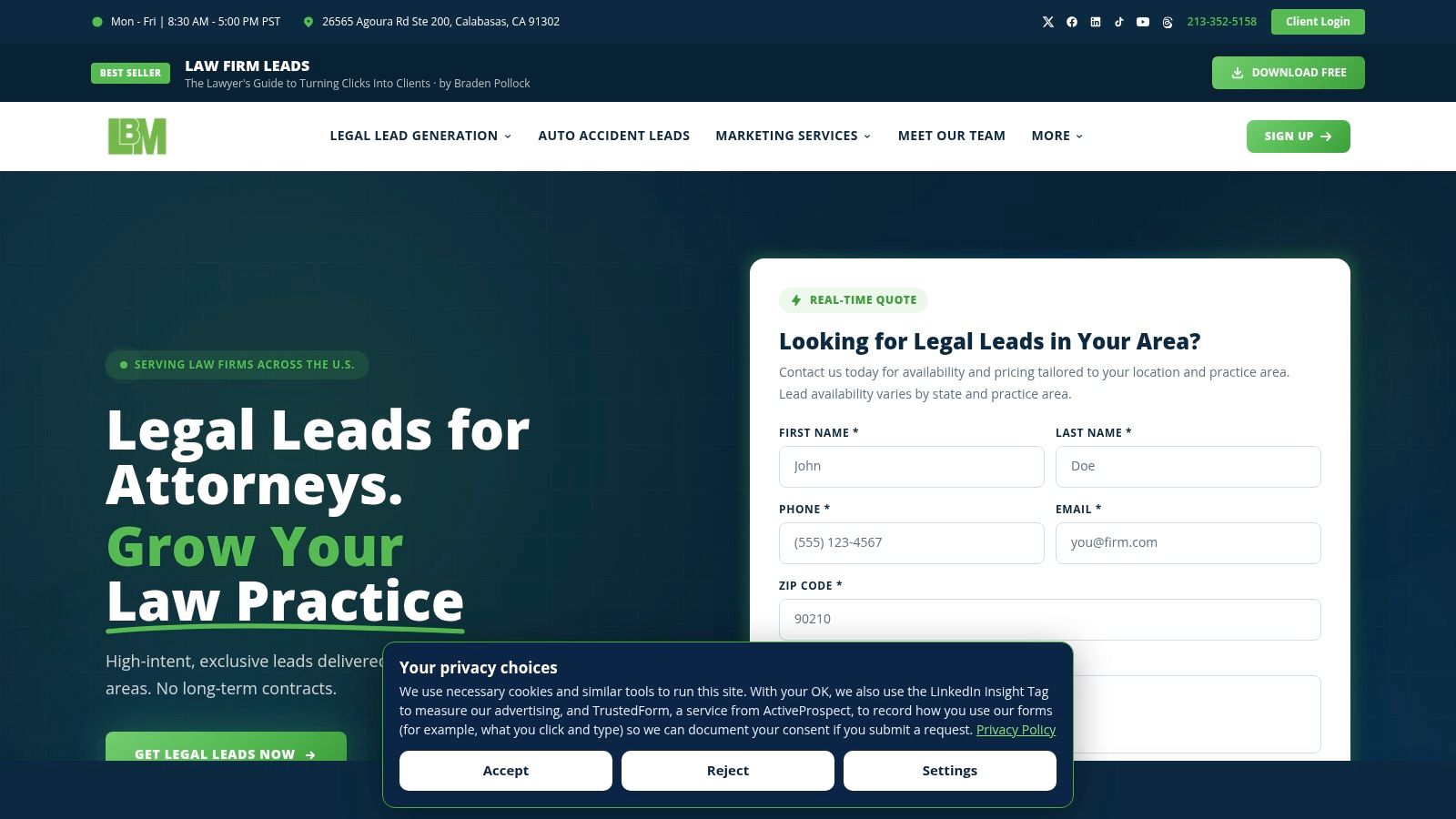
Legal Brand Marketing, a brand of Leads.net LLC, offers inbound legal leads across more than 40 practice areas, with geographic and practice-area targeting. The provider describes its leads as exclusive and offers real-time delivery to an inbox, CRM, or call center.
Its advertised capabilities include phone verification, duplicate checks, and a lead-return process. The pay-per-lead program advertises no long-term contract, but pricing varies by geography, practice area, and lead type rather than appearing as a public rate card.
Best for an intake team ready to act
This is a reasonable option for testing additional demand without building an entire advertising program. It can suit a niche practice or a multi-practice firm, provided incoming inquiries route to someone who knows the relevant qualification rules.
- Confirm exclusivity: Get the definition in writing, including whether it applies to the original inquiry, later resale, and affiliated distribution.
- Define a valid lead: Separate bad contact information, wrong geography, duplicate inquiries, and genuine prospects whose matters aren't suitable.
- Assign response ownership: Decide who calls immediately, who covers absences, and who owns unresolved follow-up.
The main trade-off is straightforward: you're buying inquiries, not follow-up capacity. Real-time delivery helps only when your team acts on it.
Also consider what the prospect sees after receiving your call. A coherent website, recognizable firm identity, and clear practice positioning support that conversation. These law firm brand-building recommendations help connect purchased demand with a firm the prospect can understand and evaluate.
Judge the test by qualified matters retained, not by how quickly the provider fills your inbox.
3. Martindale-Avvo LeadVolume
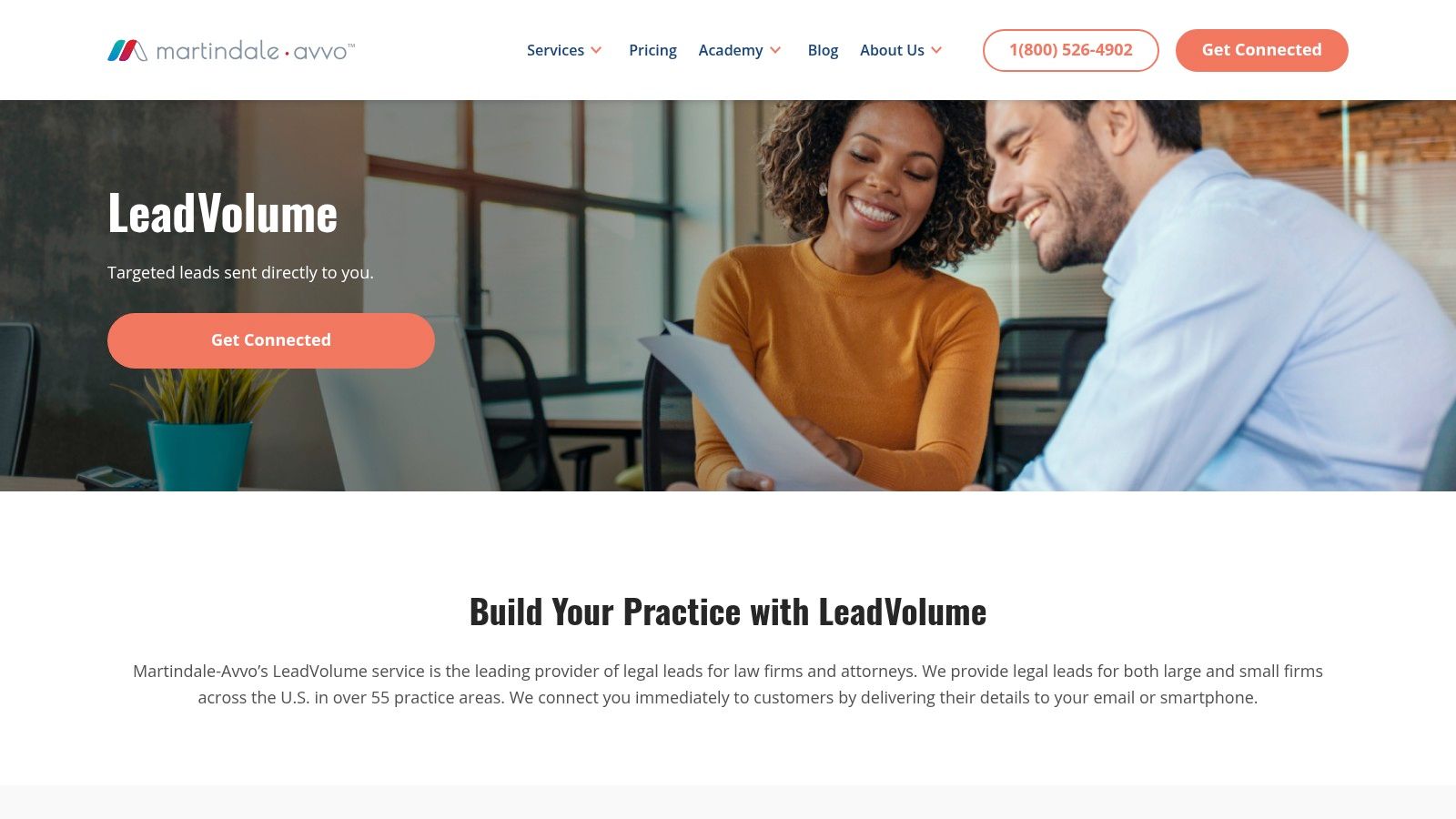
LeadVolume offers access to a legal-media network rather than an owned marketing channel. Its network includes Avvo, Lawyers.com, and Nolo, with targeting by location and practice area.
The Martindale-Avvo LeadVolume program reports coverage across more than 55 practice areas and offers delivery by email, text, phone, or CRM. The company describes the pay-per-lead program as stoppable at any time, while pricing requires a quote.
Those delivery choices are useful when the firm already has a defined intake workflow. They're less useful when every notification creates a small jurisdictional dispute between reception, marketing, and the associate who happened to answer.
A provider's valid lead and your firm's desirable case are not necessarily the same thing.
Examine the definition before the invoice
The provider doesn't reimburse leads it considers valid merely because the firm later finds them low quality. Before committing, clarify qualification criteria, dispute procedures, exclusivity, and how many firms may receive an inquiry.
Evaluate suitability separately from responsiveness. A correctly delivered inquiry can still involve an unprofitable matter, an unavailable jurisdiction, or facts outside your acceptance criteria.
Record those distinctions in your CRM:
- Contact outcome: Reached, unreachable, or declined further contact.
- Matter fit: Appropriate practice area, geography, and firm-defined case criteria.
- Commercial outcome: Consultation held, retainer sent, signed, or declined.
That structure helps you distinguish a weak source from weak intake. For a broader acquisition framework, use these strategies for generating high-quality legal marketing leads.
Best fit: A firm that wants targeted network inquiries and can evaluate them using its own retained-matter results, rather than accepting the provider's lead count as the final verdict.
4. LegalMatch
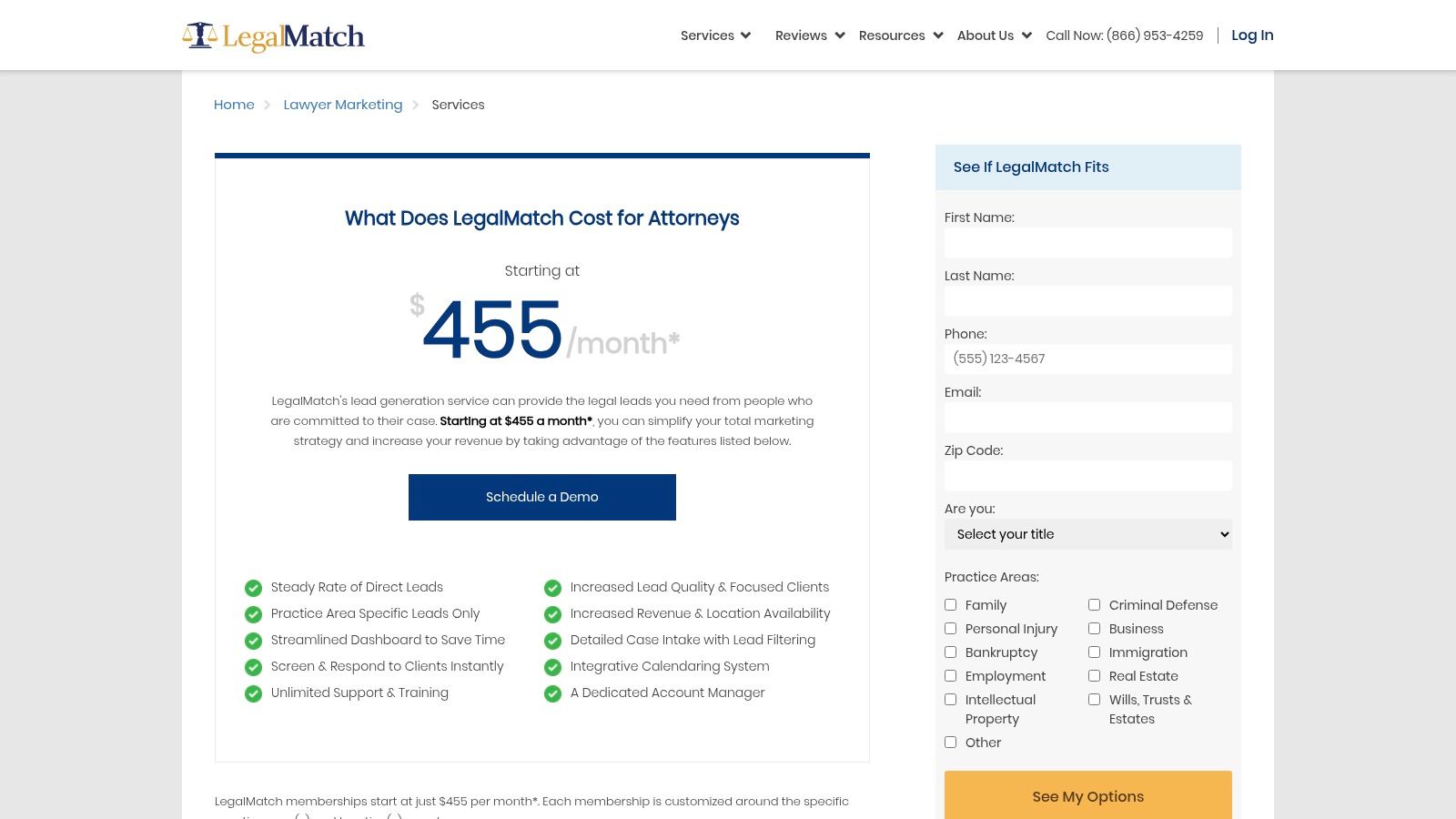
Say a prospective client describes a legal issue through a matching platform. Your attorney can review it, assess the apparent fit, and respond. That's a different workflow from receiving a live inbound call, and it needs its own owner.
LegalMatch connects people seeking legal help with participating attorneys based on legal issue and location. Attorneys can maintain profiles and review and respond to inquiries through the platform; the company offers a demo, and its brochure describes a guest-pass preview option.
The appeal is relevance before contact. A firm can assess the kinds of inquiries available rather than buying broad exposure and hoping the right person responds.
Preview the work, not just the interface
Use the demo or preview to inspect actual inquiry characteristics available to your market. Look for useful factual detail, geographic fit, and whether the information supports a meaningful initial response.
- Strength: Issue and location matching can be more relevant than untargeted advertising.
- Limitation: Membership pricing and contract terms aren't publicly listed. Establish the commitment, renewal provisions, and cancellation process before signing.
- Competition question: Confirm how many attorneys may receive or respond to the same matter.
- Operational requirement: Assign someone to review opportunities and move suitable prospects into your intake process promptly.
Don't confuse a preliminary description with a qualified case. Conflicts, missing facts, expectations, and attorney review still need attention.
A defined lead qualification process helps staff gather consistent information without drifting into legal advice. It also prevents attorneys from repeatedly reviewing matters the firm would never accept.
Best fit: A practice willing to actively review and respond to matched inquiries. Less suitable for a firm expecting the platform itself to conduct persistent follow-up or deliver signed clients.
5. CaseHunter
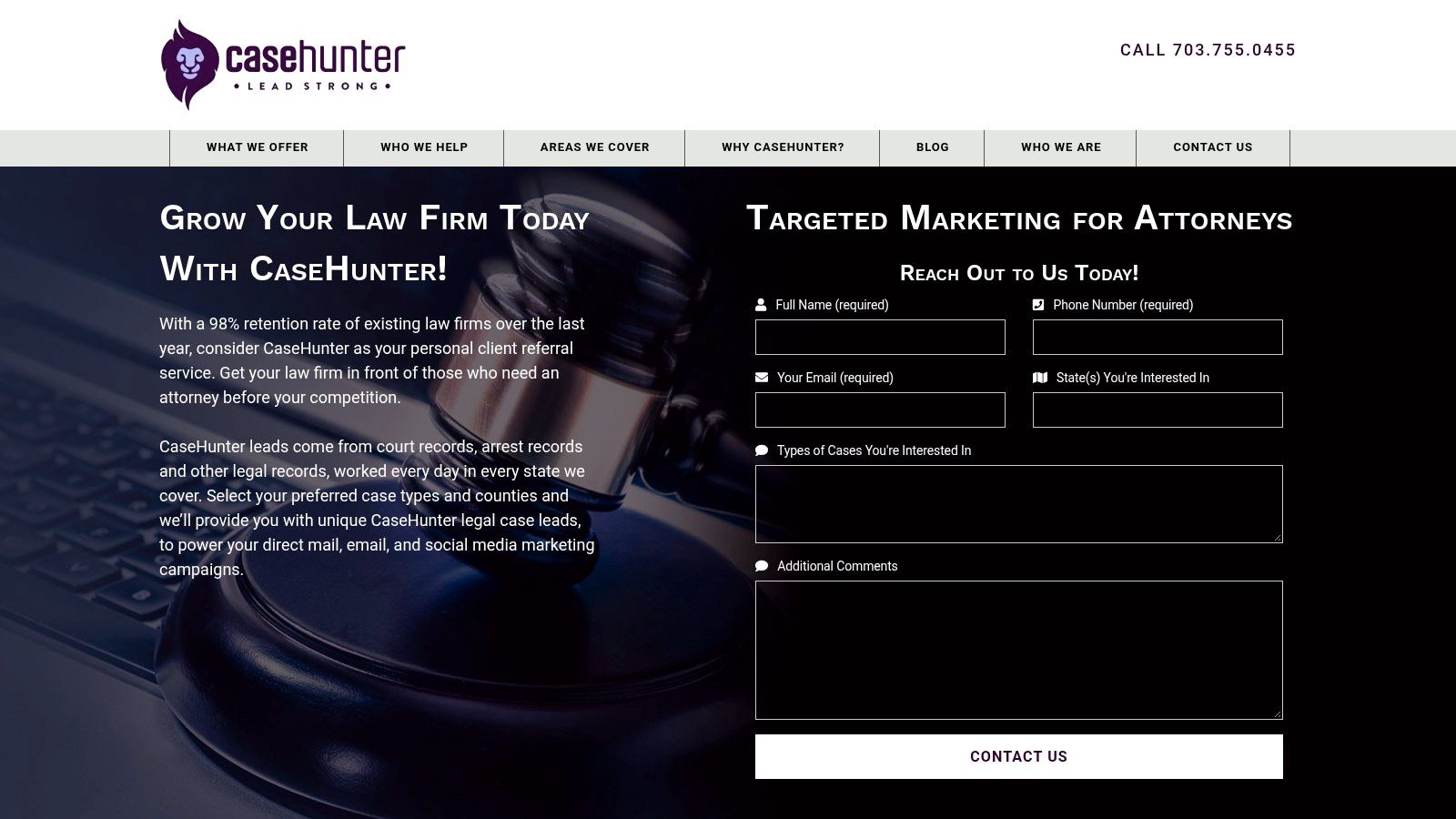
Direct mail belongs in a different conversation from search advertising. The recipient may call because a letter arrived, not because they searched for your firm and decided to contact it.
CaseHunter provides legal leads and direct-mail marketing using court-related data and targeted outreach. Its offerings include CaseHunter Mail for leads and CaseHunter Mail 360 for a broader campaign, with targeting by practice area and geography.
The service describes subscription tiers based on monthly lead volume and month-to-month billing. Pricing requires a quote and depends on state, county, volume, and mailing materials; coverage depends on court systems and available records.
Operational test: Before mailing, make sure the person answering can explain why the recipient received the letter and what happens next.
The reporting deserves attention
CaseHunter's reporting includes incoming-call activity, call timing, and unanswered calls. That makes it useful for examining the handoff between campaign response and actual contact, not merely counting pieces mailed.
The strengths and constraints are distinct:
- Channel diversification: Direct mail adds a route beyond search and social advertising.
- Targeting fit: Court- and location-based targeting may suit practices aligned with the available records.
- Coverage limits: Don't assume every desired court, county, or matter type is available.
- Professional responsibility: Have the responsible attorney review targeting, copy, handling procedures, and applicable advertising and solicitation rules.
Use a campaign identifier in the CRM and preserve it through consultation and retention. If the recipient calls later through your main number, staff should still capture the mailing as the source.
Best fit: A practice with a clear relationship between available court information and the matters it accepts. It's less attractive when the firm lacks response coverage or cannot explain the outreach clearly.
6. Grow Law
Grow Law is an agency, not a direct lead marketplace. It offers paid advertising, SEO, websites, and analytics for firms that want to build and measure their own acquisition pipeline.
Grow Law lists Local Services Ads management starting at $1,150 per month, excluding ad spend, and its PPC offering includes Growth Portal reporting for pipeline and lead outcomes. That starting price is a reference for a specific service, not a quote for a complete marketing program.
This approach makes sense when the firm wants coordinated campaigns, landing pages, and reporting rather than individual purchased inquiries. The trade-off is ongoing management expense, separate advertising spend, and time to build and refine campaigns.
Make the reporting a shared responsibility
A portal can show pipeline outcomes only if someone supplies accurate outcomes. Your CRM cannot report a signed client if the record still says awaiting callback.
In Hennessey Digital's lead-form response benchmark, 28% of firms responded within five minutes in the 2024 U.S. legal-market study. That's a useful reminder to assess response execution alongside campaign performance.
- Marketing responsibility: Targeting, ads, landing pages, tracking, and channel recommendations.
- Firm responsibility: Response ownership, qualification, consultation availability, and accurate case dispositions.
- Shared responsibility: Reviewing why inquiries fail to become appropriate retained matters.
Ask how reports distinguish duplicate contacts, existing clients, poor-fit inquiries, and retained matters. Confirm access to campaign accounts, tracking assets, and reporting exports as part of the engagement.
Best fit: A firm ready to invest in its own marketing infrastructure and maintain the intake discipline that makes attribution useful. If nobody can update lead outcomes, buy less dashboard and fix that job first.
7. FindLaw
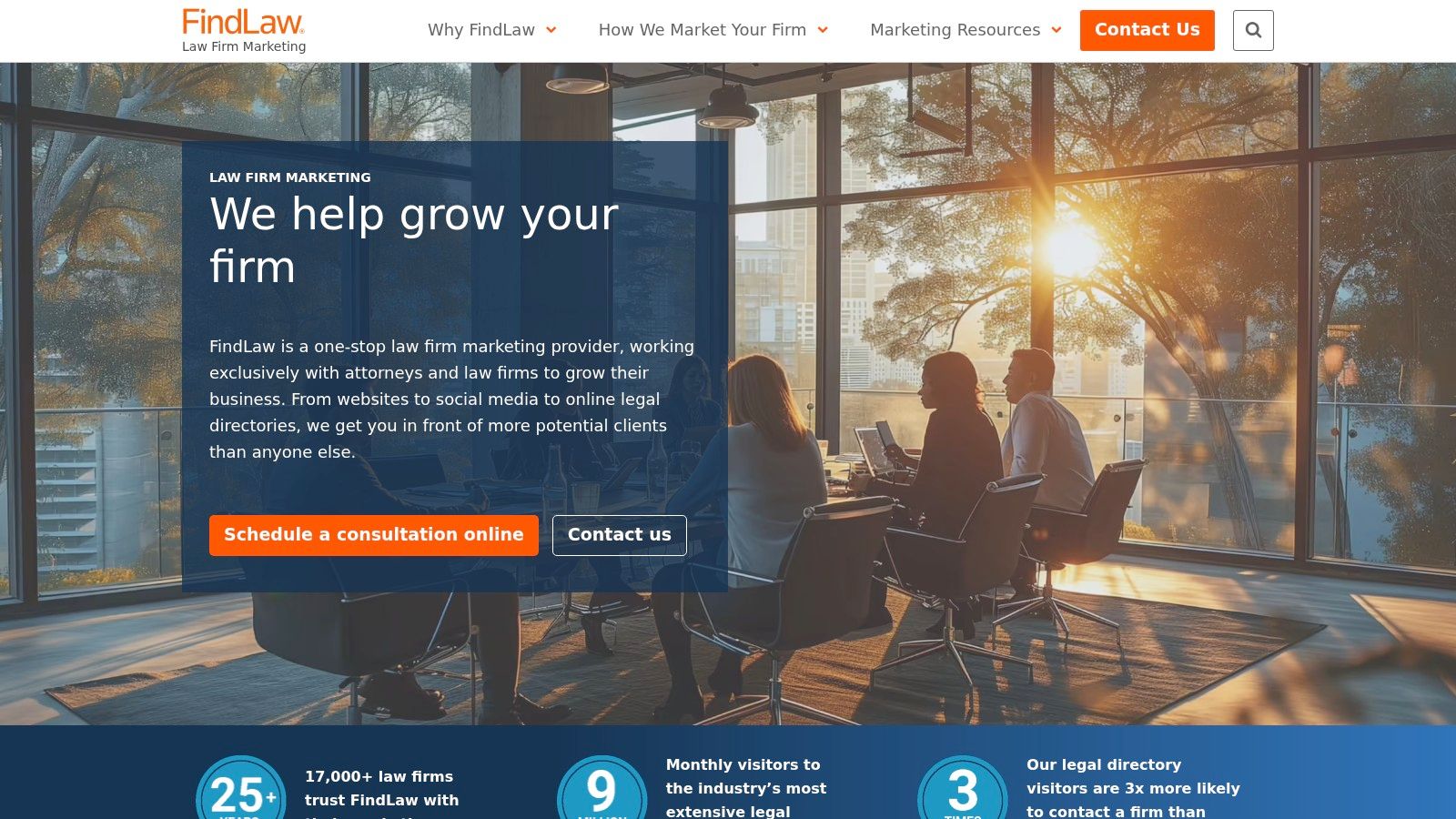
A consolidated marketing provider can simplify vendor management. It can also make it harder to see which component earns its place unless the firm insists on channel-level reporting.
FindLaw offers websites, SEO, PPC, directory advertising, content, and lead or contact service options. Its Legal Network Advertising product supports audience and geographic targeting across sites including FindLaw.com, SuperLawyers.com, LawInfo.com, and Abogado.com, with INSIGHT analytics for performance tracking.
The strength is breadth. A firm can coordinate multiple marketing activities through a legal-focused provider rather than separately managing each component.
Buy the scope you can use
Pricing generally requires a consultation or proposal. A broad package may make sense for a growing practice, but it may exceed what a solo firm needs or can operationally absorb.
- Useful reach: Legal-content and directory sites provide opportunities to reach people researching legal matters.
- Language alignment: Abogado.com provides a Spanish-language marketing channel. Make sure intake and subsequent communication can support the audience the campaign attracts.
- Measurement requirement: Separate exposure, inquiries, qualified consultations, and retained matters.
- Contract question: Confirm lead-sharing arrangements, reporting access, deliverables, and what remains available when the engagement ends.
Provider-selected case studies can help explain how a program works, but they don't establish what your firm will achieve. Directory exposure also doesn't establish exclusivity or guarantee signed cases.
Give each channel a source identifier and preserve it when someone moves from a directory profile to your website or calls your main number. Otherwise, several vendors may claim the same client while your staff tries to remember where the conversation started.
Best fit: A firm seeking coordinated legal marketing across multiple channels, with enough internal oversight to challenge the reports and enough intake capacity to handle the response.
How the Seven Lead Sources and Intake Options Compare
| Item | Model | Pricing Disclosure | Best For | Built-In Follow-Up |
|---|---|---|---|---|
| Services - Frontline | Managed, action-based intake service | 75 monthly credits included; extra actions may incur charges | 24/7 lead response and intake support | Yes; includes qualification, follow-up, transfers, and scheduling |
| Legal Brand Marketing | Pay-per-lead campaigns | Pricing requires a quote | Targeted inbound leads across practice areas | No; firm handles follow-up |
| Martindale-Avvo LeadVolume | Pay-per-lead advertising | Pricing requires a quote | Targeted inquiries through a legal-media network | No; firm handles follow-up |
| LegalMatch | Attorney-client matching platform | Membership pricing not published | Location- and issue-based client inquiries | Platform supports attorney responses; follow-up is firm-managed |
| CaseHunter | Court-data-based leads and direct mail | Pricing requires a quote | Direct-mail campaigns in markets with relevant court records | No; firm manages response handling |
| Grow Law | Legal marketing agency | Local Services Ads management from $1,150/month; ad spend extra | Building and measuring an ongoing marketing pipeline | No; firm handles incoming inquiries |
| FindLaw | Multi-channel legal marketing | Pricing requires a consultation or proposal | Coordinated legal advertising, SEO, websites, and analytics | No; lead follow-up is not specified as included |
Match Your Lead Sources to What Your Intake Can Absorb
Choose the lead source your intake can handle this month, not the one with the most persuasive pitch. Before adding volume, map where inquiries stall: unanswered calls, slow callbacks, incomplete qualification, and prospects who never hear from anyone again.
Don't assume the answer is more automation or another attorney. Start with a named owner for every inquiry and a documented next action. A lead marked open without an owner is not being managed. It's being stored.
Define the handoffs before increasing spend
Use your existing inquiries to test the process:
- At arrival: Record the source, inquiry time, assigned owner, and first contact attempt.
- During qualification: Apply practice-specific criteria, capture essential facts, and escalate conflicts or legal questions to the firm.
- After contact: Schedule the next step during the conversation whenever appropriate, rather than promising someone will be in touch.
- When contact fails: Use a documented, consent-aware follow-up sequence across appropriate channels, with clear stop conditions.
- After signing: Assign file opening, records requests, calendaring, and client communication so acquisition doesn't create a case-support backlog.
Compare providers using cost per appropriate signed matter, not cost per inquiry alone. Include intake effort and distinguish declined cases, conflicts, no-shows, referrals, and unsigned retainers. Don't compare conversion rates when the underlying definitions differ.
Set follow-up frequency according to urgency, client preferences, consent, and the nature of the matter. Persistent doesn't mean indiscriminate. A prospect who declines contact shouldn't become a recurring calendar event.
More signed cases are useful only when the firm can serve them properly.
Law firm lead generation works best when acquisition, intake, and case support operate as connected responsibilities. Before expanding a campaign, confirm that staff can handle both the next inquiry and the work that follows a successful retainer.
Our free intake audit identifies where operational gaps may be leaking revenue. We begin by examining your intake process, follow-up gaps, and administrative workflows, so the recommendation addresses the actual bottleneck rather than adding headcount. Call +1 (215) 337-2677 to talk through where inquiries stall and what your team needs to handle them consistently.
Attorney Assistant provides 24/7 live intake, structured lead follow-up, and dedicated legal support staff to help firms capture opportunities and carry the resulting workload. Visit Attorney Assistant to request your free intake audit and identify what needs fixing before you pay for more inquiries.
Related Articles

Legal Intake Software: How It Works and When to Add People
Legal intake software captures, qualifies, and tracks new matters. See the workflow it supports, the features worth paying for, and where live intake fits.

Missed Call Text Back for Law Firm Intake
A missed call text back tells the caller you saw them, then hands the lead to live intake. See the timing, the first message, and the TCPA line.

Speed to Lead for Law Firms: How Fast Is Fast Enough
Speed to lead is how fast your firm answers new inquiries. Learn what to measure, how to cut response times, and where intake breaks down.