The Role of Follow-Up in Client Conversion: 2026 Guide
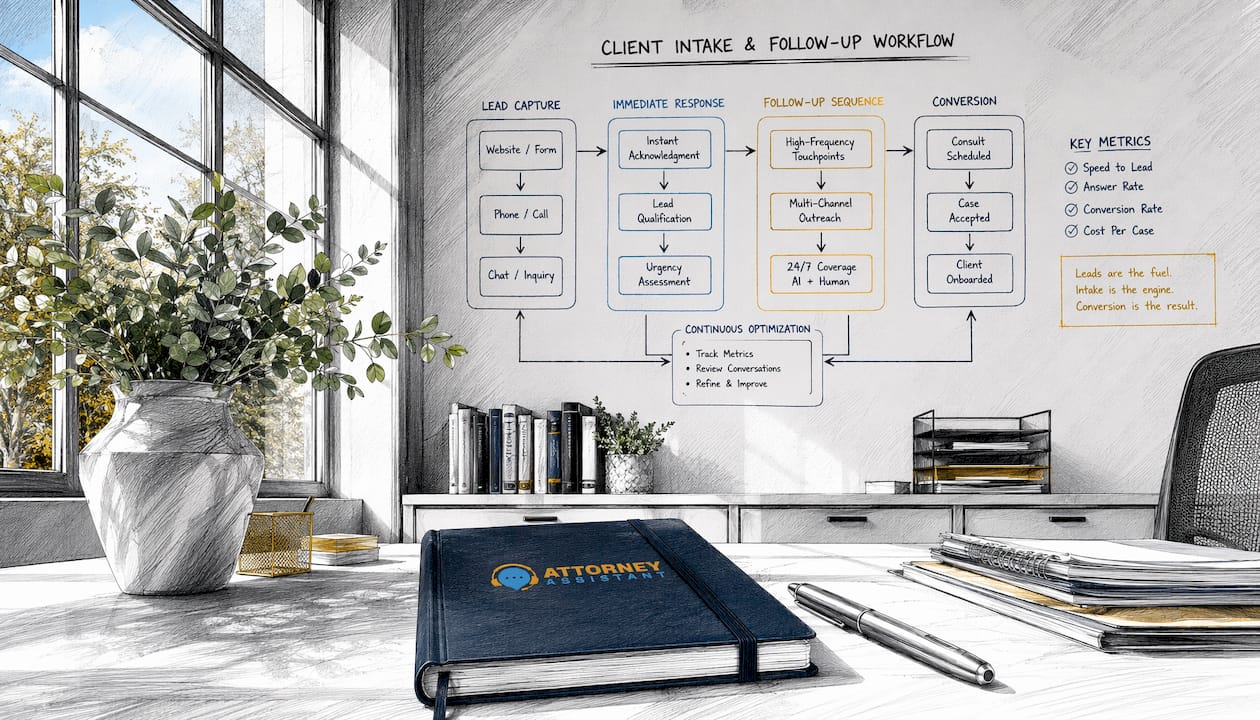
Follow-up is the single most controllable variable in client conversion. A large majority of sales require multiple follow-up contacts to close, yet 44% of professionals give up after just one attempt. That gap is where revenue disappears. For law firms specifically, the problem compounds fast: leads arrive, get one call or email, and then go cold while the prospect signs with someone else — underscoring the value of Law Firm SEO Services | Earn Trust & Win More Cases. Follow-up is not about being persistent for its own sake. It is about staying present during the window when a prospect is still deciding, and giving them a reason to choose you.
Effective follow-up works through three mechanisms:
- Trust signaling: Consistent outreach tells prospects you are organized and invested before they hire you.
- Timing alignment: Most prospects are not ready to commit on day one. Follow-up keeps you visible when they are.
- Conversion recovery: Prospects who do not respond immediately are not lost. They are waiting for the right touchpoint.
The firms that convert the most leads are rarely the ones spending the most on marketing. They are the ones with a system that ensures no prospect goes quiet without a deliberate response.
Why client follow-up drives higher conversion rates
The decision to hire a professional, especially a lawyer, rarely happens in a single conversation. Prospects gather information, compare options, and weigh the stakes. Without follow-up, your firm disappears from that process the moment the first call ends.
Silence reads as disinterest. When a prospect reaches out and hears nothing for 48 hours, they do not assume you are busy. They assume you do not need their business. Inconsistent follow-up damages brand perception and signals disorganization, two things that kill trust in a field where trust is the entire product.
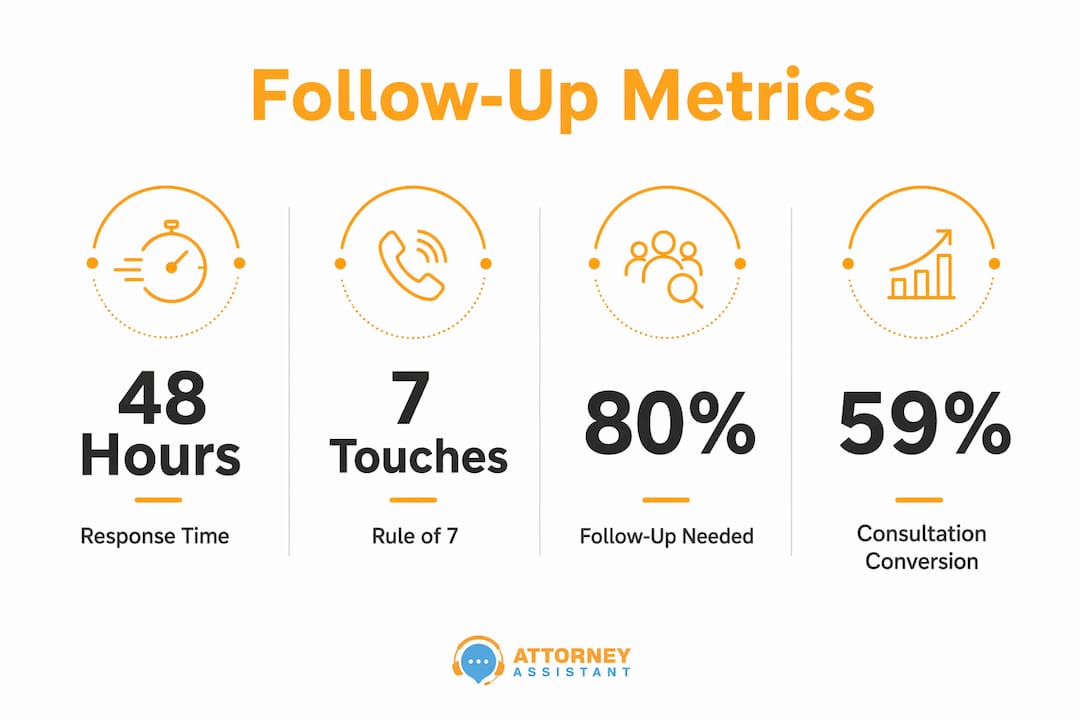
The psychology behind this is well documented. People need repeated exposure to a message before acting on it. Studies show 80% of sales require between 5 and 8 follow-up contacts to convert. That is not a reason to spam anyone. It is a reason to build a structured sequence that delivers value across multiple touchpoints over time.
The operational case is equally clear. Companies that follow up within an hour are 9 times more likely to qualify a lead than those who wait. Follow-up increases conversion rates by 20–30% on average across industries. For law firms, where a single signed case can be worth thousands of dollars, even a modest improvement in follow-up consistency translates directly to revenue.
Key benefits of structured follow-up:
- Keeps your firm visible during a prospect’s full decision window
- Builds credibility through repeated, professional contact
- Recovers prospects who were interested but distracted
- Reduces cost per acquisition by converting existing leads rather than buying new ones
- Signals reliability, which directly influences whether a prospect trusts you with their legal matter
Effective client follow-up techniques and best practices
Speed is the first differentiator. Harvard Business Review research found that firms responding to inquiries quickly are much more likely to convert a prospect than those who wait. Set up an automated acknowledgment for every new inquiry so prospects know immediately they have been heard, even before a human response follows.
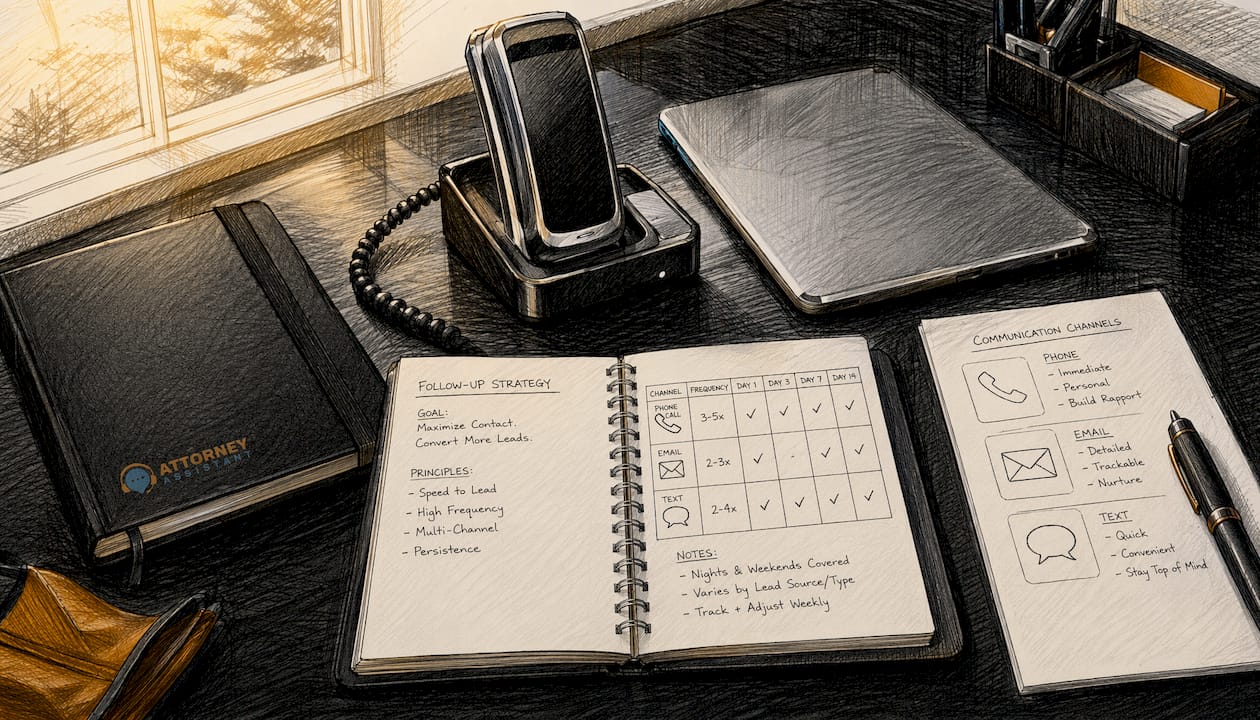
After that initial contact, cadence matters more than volume. A practical sequence looks like this: a personal phone call and email on day one, a second call or email with a relevant resource on day three, a personalized check-in referencing the prospect’s specific situation on day seven, and a final nurture touchpoint on day fourteen. Prospects who go uncontacted for more than 48 hours drop sharply in conversion probability, so front-loading the sequence is not optional.
Personalization is what separates follow-up that converts from follow-up that gets ignored. Personalized follow-ups that reference the exact pain point a client shared on a previous call earn callbacks at a far higher rate than generic check-ins. “Just following up” is not a message. Referencing the custody concern, the contract dispute, or the specific question they asked is.
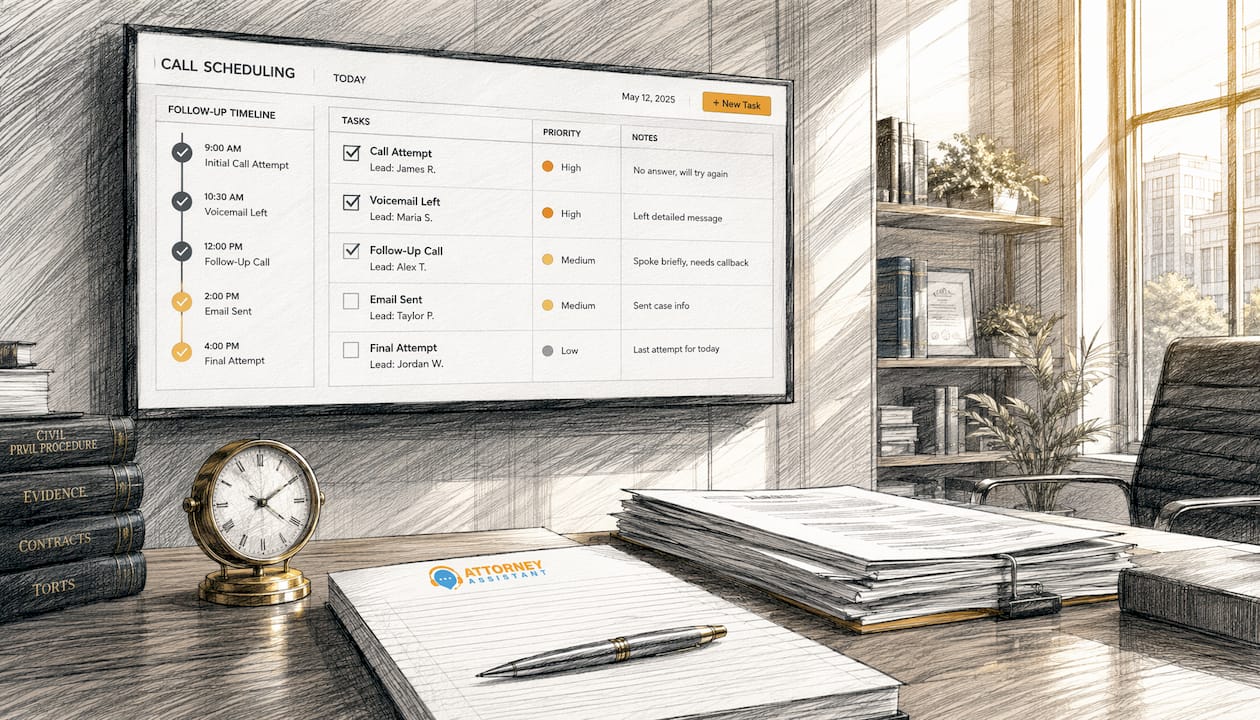
Pro Tip: After every live conversation, create a task with a specific time, a specific reason, and the exact detail the prospect shared. “Call back at 9 AM about Tyler’s custody concern, specifically the medical decision” books more consults than “follow up later.”
Best practices for effective follow-up:
- Respond within minutes, not hours, to every new inquiry
- Use a defined cadence with specific touchpoints, not ad hoc outreach
- Personalize every message with the prospect’s name and their stated concern
- Deliver value in each touchpoint: a resource, an answer, a relevant insight
- Use a CRM to automate reminders and log every interaction
- Score follow-up touchpoints with the same rigor you apply to first calls
- Never close a conversation without scheduling the next step
Which communication channels work best for follow-up?
No single channel reaches every prospect. Some people answer calls and ignore email. Others read texts immediately but let voicemails sit for days. A multi-channel follow-up approach using calls, emails, texts, and automated messages tailored to client preferences consistently outperforms single-channel sequences. 50% of organizations using multi-channel follow-up report higher conversion rates than those relying on one channel alone.
Here is how each channel performs in practice:
- Phone calls: The highest-intent channel. Follow-up calls lead to a 39% higher close rate than emails alone. Use calls for initial outreach and for any touchpoint where you need a real conversation.
- Email: Best for delivering value, sharing resources, and confirming next steps. Personalized subject lines and specific references to the prospect’s situation dramatically improve open and response rates.
- Text/SMS: Ideal for time-sensitive follow-ups and appointment confirmations. Texts get read faster than emails, but they require a lighter touch. Use them to confirm, remind, or prompt a call.
- Voicemail: Useful when a call goes unanswered, but only if the message is specific. A generic voicemail seven days after a serious conversation does not land. Reference the exact detail that makes the callback worth their time.
- Social media/LinkedIn: Appropriate for professional contexts where the prospect is active. Works better for warm leads than cold outreach.
The most effective sequences mix channels deliberately. Start with a call, follow with an email that reinforces the conversation, use a text to confirm the next appointment, and switch channels if one goes quiet. Meeting a prospect where they actually are communicates adaptability.
How do you measure whether your follow-up is actually working?
Tracking follow-up without a framework produces noise, not insight. The metrics below give you a clear picture of where your process is working and where leads are leaking out.
| Metric | Definition | Target benchmark |
|---|---|---|
| Initial response time | Time from first inquiry to first human contact | Under 5 minutes for hot leads |
| Follow-up attempts per conversion | Average touches needed before a prospect signs | 5–8 for most service sales |
| Response rate by channel | Percentage of outreach that generates a reply | Track per channel to find your best performer |
| Consultation-to-retainer rate | Percentage of consultations that result in a signed agreement | Varies by practice area; track trends over time |
| Conversion rate by follow-up sequence | Percentage of leads that convert after a structured sequence vs. no sequence | Companies with structured processes show 30% higher conversion |
| Lead age at conversion | How many days after first contact a prospect signs | Reveals how long your nurture window actually is |
A CRM system is the only reliable way to track these metrics at volume. Manual tracking on spreadsheets or sticky notes produces gaps, and gaps mean lost leads. A CRM automates reminders, logs every interaction, and surfaces the daily follow-up queue so nothing slips through.
Priority metrics to watch first:
- Initial response time, because speed is the highest-leverage variable
- Follow-up attempts per conversion, because it tells you how persistent your team actually needs to be
- Consultation-to-retainer rate, because it isolates the post-consultation gap most firms ignore
Common follow-up mistakes that kill conversion rates
Most follow-up failures are not random. They follow predictable patterns, and each one has a direct fix.
- Giving up too early. 44% of salespeople quit after one attempt, but most deals close after five or more touches. One email is not a follow-up strategy.
- Generic messaging. “Just checking in” signals that you have nothing to say. Every message needs a specific reference to the prospect’s situation and a reason to respond.
- Delayed first response. A lead that waits 48 hours for contact has already started evaluating other options. Speed in the first hour matters more than any other variable.
- Inconsistent cadence. Following up twice in one week and then going silent for three weeks is worse than a steady, predictable sequence. Inconsistency reads as disorganization.
- No system at all. When follow-up lives in someone’s memory, it fails at volume. Staff make mistakes, priorities shift, and prospects disappear without anyone noticing.
- Repeating the same message. Sending the same voicemail or email five times trains prospects to ignore you. Each touchpoint needs a new angle, a new resource, or a new question.
- Failing to track engagement. If you do not know how many times you have contacted a prospect or which channel they responded to, you cannot manage the process. CRM-based tracking produces measurably more follow-up touches than manual methods.
Sloppy or inconsistent follow-up does not just lose individual leads. It damages the firm’s reputation with every prospect who experiences it.
How law firms can fix their follow-up and recover lost revenue
Law firms face a specific version of this problem. Prospects reaching out for legal help are often under stress, weighing a serious decision, and comparing multiple firms simultaneously. Trust is the primary currency in legal services, and prospects often take hours, days, or weeks to decide. That decision window is exactly where most firms go quiet.
The revenue impact is concrete. A review of 10,000 consultations at Sterling Lawyers found that only 59% of consultations were booked on the first call, with over 20% scheduled after the second week. That data alone shows why treating unbooked consultations as closed files is a costly mistake. Firms without a structured follow-up process lose a significant share of their potential revenue. Even a basic system produces a 10–20% revenue lift almost immediately.
The operational fix requires more than good intentions. It requires a system with named owners, defined cadences, and daily accountability. Attorney Assistant builds exactly that inside law firms: assigning a specific agent to every prospect who has not yet booked, treating unbooked consultations as active pipeline rather than closed files, running daily dashboard reviews, and coaching intake teams on follow-up execution. The goal is to make consistent follow-up a function of process, not memory or motivation.
Law-specific challenges that require operational solutions:
- Stressed prospects who need reassurance, not pressure
- Complex decision windows that extend days or weeks past the initial consultation
- High staff turnover that breaks follow-up continuity without a documented system
- Attorneys who avoid follow-up because they fear seeming pushy, when prospects actually interpret silence as disinterest
Pro Tip: Run short follow-up role-plays daily, not just full intake simulations. Agents who practice specific scenarios, like following up on a custody concern seven days after first contact, convert at higher rates than those who only train on initial intake calls.
Attorney Assistant’s lead follow-up services are built around this operational model. The firms that grow past the $1M–$2M plateau are not the ones buying more leads. They are the ones converting the leads they already have.
How to segment clients for more targeted follow-up
Not every prospect deserves the same follow-up sequence. Treating a hot inbound lead the same as a cold inquiry from three weeks ago wastes effort and misses the conversion window for both.
Segmentation starts with lead temperature. Hot leads, those who reached out in the last 24 hours and expressed clear intent, need immediate, high-frequency contact. 30% of leads followed up with immediately convert, compared to 5% after 30 days. Warm leads, those who engaged but did not commit, need a value-driven nurture sequence over 2–4 weeks. Cold leads, those who went quiet after initial contact, belong in a longer-term sequence with lower frequency and a different angle.
Practice area also shapes the right approach. A family law prospect going through a divorce needs empathy and reassurance in every touchpoint. A business client evaluating contract work responds better to efficiency and specificity. Segmenting by practice area lets you tailor the tone, the resources you share, and the urgency of the sequence.
Other useful segmentation variables:
- Lead source: Referrals convert faster and need fewer touches than cold web leads.
- Consultation status: Prospects who attended a consultation but did not sign need a different sequence than those who never booked.
- Engagement history: A prospect who opened three emails but never replied is warmer than one who has not opened anything. Adjust the channel and message accordingly.
- Decision timeline: Some prospects are ready to move in days. Others have a constraint, a pending insurance decision, a family conversation, that pushes their timeline out. Knowing this lets you space follow-up appropriately rather than burning the relationship with daily contact.
Structured intake systems that capture this data at the first contact make segmentation automatic rather than manual.
Real examples of follow-up driving conversion
The Sterling Lawyers case is the clearest documented example in legal services. After reviewing their consultation data, the firm found that a structured follow-up system, built around named agents, CRM discipline, and daily dashboard reviews, recovered a material portion of the leads that had previously gone quiet after the first call. The key insight was that up to 75% of revenue came after the first conversation, not from it. Firms without a process to capture that post-conversation window were quietly handing revenue to competitors.
The post-consultation follow-up sequence is where the recovery happens. Firms implementing a three-touchpoint follow-up within 72 hours of an unsigned consultation recover 15–25% of those prospects. The sequence works because it removes the friction that stops prospects from signing: unanswered questions, lingering doubts, and the simple fact that no one called them back.
A practical example of what that sequence looks like in execution: within two hours of an unsigned consultation, the intake coordinator sends a personalized email summarizing the conversation and including a direct link to the retainer agreement. Within 24 hours, a personal call addresses any outstanding objections. Within 72 hours, a value-add touchpoint, a relevant article, a client testimonial, or a case explainer, reinforces confidence in the firm’s ability to handle the matter. That three-step sequence costs almost nothing to run and directly recovers cases that would otherwise be written off.
The broader pattern holds across industries. Businesses using sequential follow-up sequences generate twice the revenue from leads compared to those without a structured process. The mechanism is the same whether you are selling legal services or anything else: persistence, personalization, and timing convert prospects that a single touchpoint never would.
How Attorney Assistant helps law firms close the follow-up gap
Most law firms do not have a follow-up problem because their attorneys are bad at their jobs. They have one because follow-up was never built into the operational structure of the firm. It lives in someone’s memory, or a spreadsheet, or a good intention that gets buried under billable work.
Attorney Assistant fixes the operational layer. We handle intake, follow-up cadences, CRM discipline, and daily accountability so your team converts the leads already coming in. If your firm is spending on marketing but not seeing the cases to match, the gap is almost certainly in client conversion, not lead volume.
Book a call with Attorney Assistant to see exactly where your firm is leaking revenue and what a structured follow-up system looks like in practice. Visit Attorney Assistant’s lead follow-up service to learn more.
Key Takeaways
Consistent, personalized follow-up is the highest-ROI activity a law firm can implement, converting leads that a single touchpoint never reaches.
| Point | Details |
|---|---|
| Follow-up volume required | 80% of sales require 5–8 follow-up contacts; 44% of professionals quit after one attempt. |
| Speed drives conversion | Firms responding within an hour are nearly 7 times more likely to convert a prospect than those who wait. |
| Post-consultation recovery | A three-touchpoint follow-up within 72 hours recovers 15–25% of prospects who did not sign at the consultation. |
| Segmentation improves results | Hot leads followed up immediately convert at 30%; that rate drops to 5% after 30 days without contact. |
| Structured process beats memory | Firms without a structured follow-up process lose a significant share of their potential revenue. |
FAQ
Why is client follow-up important for conversion?
Follow-up keeps your firm visible during a prospect’s full decision window, which can span days or weeks. Without it, silence reads as disinterest, and prospects move to whoever stayed in contact.
What is the rule of 7 in follow-up?
The rule of 7 holds that prospects need to encounter your message roughly 7 times before taking action. In practice, research shows 80% of sales require between 5 and 8 follow-up contacts to convert, which aligns with the principle.
What is the purpose of a follow-up in sales?
Follow-up maintains engagement after initial contact, removes objections, delivers value, and moves a prospect through their decision process until they are ready to commit.
What is the 2-2-2 rule in sales follow-up?
The 2-2-2 rule is a follow-up cadence where you contact a prospect two days after the initial meeting, two weeks later, and two months after that. Definitions vary across sales teams, but the core principle is spacing touchpoints to stay present without overwhelming the prospect.
How does follow-up affect law firm revenue specifically?
Firms without a structured follow-up process lose a significant share of their potential revenue. Even a basic system produces a 10–20% revenue lift almost immediately, making follow-up one of the fastest ways to improve return on marketing spend.
Recommended
Related Articles

Client Follow-Up Strategy for Law Firms: 2026 Guide
Learn what is client follow-up strategy for law firms in 2026. Improve conversions and retention with effective communication techniques. Discover more!

10 Business Finance Course Options for Law Firms
Compare 10 business finance course options by level, format, workload, and law-firm relevance, then choose the right fit for your role and goals.
10 Good VoIP App Options for Law Firms in 2026
Compare 10 good VoIP app options for small and mid-sized law firms, including security, integrations, pricing, mobile use, and desk-phone readiness.