What is intake conversion? A personal injury firm's guide

TL;DR:
- Most personal injury firms have low intake conversion rates, which significantly limit revenue growth. Improving response time, qualification clarity, and follow-up processes can quickly increase signed clients without extra marketing spend. Focusing on operational success in intake processes is essential to maximize lead conversion and firm profitability.
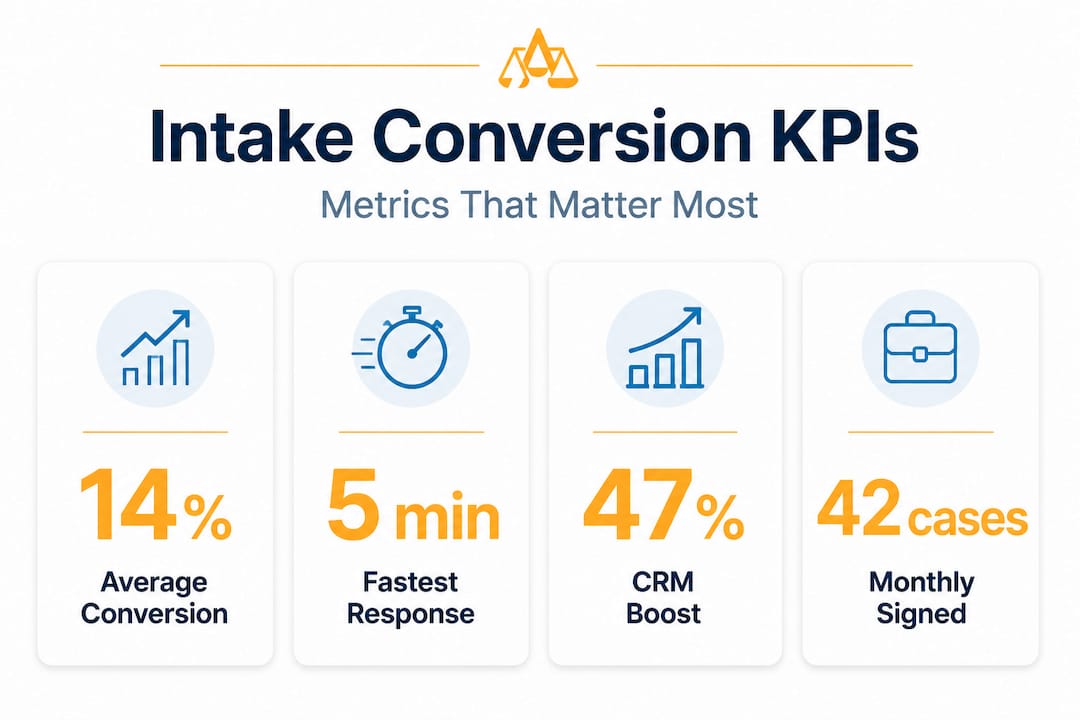
Most personal injury law firms are spending thousands every month on marketing and getting a steady stream of leads. But here is the uncomfortable reality: the average law firm converts just 14% of those inquiries into signed clients, while top-performing firms hit 40 to 50%. That gap is not a marketing problem. It is an intake problem. Understanding what is intake conversion, where it breaks down, and how to fix it is the single highest-return investment you can make in your firm’s growth right now.
Table of Contents
- What is intake conversion and why it matters
- The core factors driving intake conversion success
- Key intake metrics to track for improving conversion
- Optimizing intake processes to boost conversion rates
- Common intake pitfalls and how to avoid them
- Why focusing solely on lead volume misleads many personal injury firms
- How Attorney Assistant helps firms master intake conversion
- Frequently asked questions
Key Takeaways
| Point | Details |
|---|---|
| Intake conversion defined | Intake conversion is the rate at which inquiries become signed clients after intake, critical for firm growth. |
| Response speed matters | Responding to leads within 5 minutes increases conversion likelihood by 21 times compared to slower responses. |
| Process alignment drives conversion | Clear qualification criteria and consistent follow-up fix most conversion issues more than marketing effort. |
| Track key intake KPIs | Monitor qualified lead win rate, response speed, and lead loss rate to identify and fix conversion leaks. |
| Effective intake increases revenue | Optimizing intake processes can boost signed cases without increasing marketing spend, improving profitability. |
What is intake conversion and why it matters
To fully grasp why intake conversion is vital, let’s clarify what it actually means and where it fits into client acquisition.
Intake conversion is the percentage of leads that become signed clients after moving through your firm’s intake process. Think of it as your firm’s ability to turn interest into revenue. A lead calls in, fills out a web form, or sends a message. Intake conversion measures what happens next: whether that person ends up signing a retainer or disappearing.
This metric is not just about how many calls you answer. It is a cumulative reflection of several things happening inside your operation:
- How fast you respond to new inquiries
- How well you qualify cases against your firm’s criteria
- How consistent your follow-up is across multiple days and touchpoints
- How compelling and empathetic your intake conversations feel to a frightened or injured potential client
Low intake conversion is a silent revenue killer. If your firm receives 200 qualified leads per month and converts 14% of them, you are signing 28 clients. If you improved that rate to 35%, you would sign 70 clients from the exact same leads. That difference requires zero additional ad spend. Understanding intake performance explained is where most firms find their biggest untapped growth.
The importance of intake conversion is especially acute in personal injury. Clients are emotionally charged, often shopping multiple firms simultaneously, and ready to sign quickly if the experience feels right. Delay, confusion, or a cold interaction, and they are gone.
The core factors driving intake conversion success
Now that we understand what intake conversion is, let’s explore core drivers behind successful conversion at your firm.
Speed-to-lead is, without question, the most researched and most impactful factor. Leads contacted within 5 minutes are 21 times more likely to convert than those contacted after 30 minutes. That is not a rounding error. That is an entirely different outcome based on a 25-minute window. In personal injury, potential clients are often reaching out in the immediate aftermath of an accident or injury. The firm that calls first wins. Period.
The second major driver is lead qualification clarity. Low conversion rates in PI firms are usually caused by process misalignment rather than lack of effort, such as unclear case criteria leading to inconsistent qualification. When your intake team is not 100% sure what a “good case” looks like for your firm, they either reject cases they should pursue or waste time on cases that will never sign.
Here is a straightforward ranking of what influences intake conversion most:
- Speed to first contact: Aim for under 5 minutes during business hours. Under 30 minutes for after-hours.
- Qualification consistency: Use a written case criteria checklist your intake team follows on every call.
- Follow-up sequences: A structured multi-day follow-up can recover 20% or more of leads who did not respond to the first contact.
- Call handling quality: Tone, empathy, and active listening convert skeptical prospects into clients.
- Consultation scheduling: Offering immediate scheduling during the intake call reduces the gap where leads go cold.
What influences intake conversion most is often not what firms expect. Many assume it comes down to the attorney’s reputation or the firm’s advertising. The real work happens in the 10 minutes after a lead submits a form. Focus on improving response time and you will see results faster than any marketing campaign can deliver.
Pro Tip: Build a 5-day follow-up sequence for every lead that does not convert on the first contact. Text, email, and call at staggered intervals. Many personal injury clients take 48 to 72 hours to commit. Following up consistently after lead qualification best practices are applied will recover cases your competition has already written off.
Key intake metrics to track for improving conversion
Tracking these key metrics offers the clarity you need to pinpoint conversion issues and make practical improvements.
You cannot fix what you cannot see. Most PI firms track lead volume and signed cases. Very few track what happens in between, which is exactly where conversion is won or lost. According to the 3 Number Rule, the three intake KPIs that actually measure operational health are the qualified lead to signed rate, speed to first meaningful response, and lead loss rate.
Here is what each means in practice:
| Metric | What it measures | Why it matters |
|---|---|---|
| Qualified lead to signed rate | % of suitable leads that sign a retainer | Shows true intake win rate, not inflated by unqualified leads |
| Speed to first meaningful response | Minutes between inquiry and live human contact | Directly tied to conversion probability |
| Lead loss rate | % of qualified leads that leave without signing | Reveals where and why revenue is disappearing |
- Qualified lead to signed rate removes noise. Counting unqualified leads in your conversion rate flatters the numbers and hides real problems.
- Speed to first meaningful response should be tracked per hour of day, so you can identify time gaps (lunch breaks, evenings) where leads fall through.
- Lead loss rate is the most actionable metric. When you know how many qualified leads leave without signing, you can calculate exactly what recovery is worth in revenue.
Firms that start tracking these intake performance KPIs consistently find one or two specific gaps that account for the majority of their lost revenue. Fix those gaps first. The data tells you exactly where to look.
Pro Tip: If you do not know your lead loss rate, start by auditing the last 30 days of inquiries. Compare how many qualified leads came in versus how many signed. That single number will tell you more about your firm’s growth potential than your monthly marketing report.
Optimizing intake processes to boost conversion rates
With the key metrics measured, you can apply these proven strategies to optimize your intake and close more cases.
The most effective intake conversion strategies tend to fall into three categories: people, process, and technology. You need all three working together.

Live 24/7 intake is the single biggest structural change most firms can make. Replacing automated voicemails with live 24/7 intake reduces the one-in-three hang-up rate and improves brand perception. One in three callers who reach a voicemail simply hang up. They do not leave a message. They call the next firm. A live voice at any hour signals professionalism and availability, two qualities personal injury clients are actively weighing.
CRM tools are the infrastructure layer. Firms using CRM systems convert 47% more leads than firms tracking manually. Manual tracking fails because humans forget, get busy, or make errors. A CRM ensures every lead gets the same follow-up sequence, every time, without anyone having to remember.
Here is how to build a stronger intake process step by step:
- Assign a dedicated intake role. Do not have attorneys handling intake calls. Their time is worth more elsewhere, and intake requires a specific skill set.
- Create PI-specific scripts that acknowledge the client’s situation with empathy before moving to case facts.
- Set up automated CRM reminders for follow-up at 24, 48, and 72 hours post-inquiry.
- Use multi-channel intake (phone, text, chat, web form) so leads can reach you however they prefer.
- Schedule the consultation during the first call whenever possible. Do not leave it as a “we’ll call you to schedule” situation.
Here is a comparison of reactive versus proactive intake approaches:
| Intake approach | Response time | Follow-up | Conversion impact |
|---|---|---|---|
| Reactive (voicemail, callback next day) | Hours or days | Inconsistent | Low, 10-20% range |
| Proactive (live answer, CRM-driven follow-up) | Under 5 minutes | Structured, multi-day | High, 35-50% range |
For more tactical guidance, see client intake best practices and legal intake tips to build systems that hold up under volume.
Common intake pitfalls and how to avoid them
Avoiding these pitfalls helps maintain steady conversion and maximizes the value of every lead coming through your intake.
Even firms with solid intake systems lose cases to avoidable errors. Poor call handling, delayed follow-up, lack of empathy, and weak coaching are the most common causes of lost leads. Knowing what they look like in practice helps you catch them before they cost you clients.
- Missed calls and voicemail dependency: One in three callers hangs up when they hit voicemail. That lead may never call back.
- Inconsistent qualification: When every intake specialist uses different criteria to evaluate cases, the client experience is unpredictable and your case quality suffers.
- Not tracking “no-hire” reasons: If you are not recording why qualified leads chose not to sign, you are flying blind on how to recover them.
- Lack of empathy in intake: Personal injury clients are scared and in pain. An intake call that feels like a bureaucratic checklist will not convert. Feeling heard is often what tips the decision.
- No coaching or call review process: Your intake team’s performance will drift over time without regular feedback based on real call recordings.
“The firms that win in personal injury are the ones that treat intake like a client service function, not an administrative one.” This mindset shift changes how firms train, staff, and measure their intake operation.
The intake specialist benefits are clearest when you compare firms that treat intake as a dedicated discipline versus those that tack it onto a receptionist’s job description. The conversion gap is significant.
Why focusing solely on lead volume misleads many personal injury firms
Here is the perspective most marketing agencies will never share with you: more leads do not fix a broken intake. They make it worse.
When a firm with a 14% conversion rate doubles its lead volume, it doubles the number of people it fails to convert. The waste scales. The ad spend scales. The revenue does not scale proportionally because the problem was never supply. It was execution.
We see this regularly. A firm spends $30,000 a month on paid search, generating 300 leads. They sign 42 cases. A competitor spends $15,000, generates 150 leads, and signs 60 cases because their intake conversion rate is 40%. The second firm is generating more revenue at half the marketing cost.
Lead qualification importance and operational execution inside intake are where the real ROI lives. Marketers can put leads in the funnel. Only intake can pull them through. The firms that understand this distinction stop chasing volume and start mastering the process. They build intake around speed-to-lead importance, consistent qualification, and structured follow-up. That combination compounds over time in a way that ad spend alone never will.
The intake conversion process is a business function that deserves the same attention as your marketing budget. When intake and marketing work from the same data, you stop arguing about lead quality and start making decisions that actually grow the firm.
How Attorney Assistant helps firms master intake conversion
If what you have read here exposed gaps you recognize in your own firm, you are not alone. Most personal injury practices are leaving significant revenue on the table because intake is treated as a support function rather than a growth function.
Attorney Assistant works specifically with PI law firms to fix this. We build the measurement systems that identify exactly where your intake is leaking revenue. Our live intake specialists answer calls around the clock so you never lose another client to voicemail. Our lead follow-up services recover leads that went quiet before signing. And our intake and reception solutions give your firm the infrastructure to convert at the level top performers do. If you want to see these strategies in action, join our free Attorney Assistant virtual webinar and walk away with a practical plan you can implement immediately.
Frequently asked questions
What exactly is intake conversion in a law firm?
Intake conversion is the percentage of leads a law firm converts from initial inquiries into signed clients after the intake process is complete. The average firm converts only 14% of inquiries, while top performers reach 40 to 50%.
Why is fast response time crucial for improving intake conversion?
Speed is directly tied to conversion probability because leads contacted within 5 minutes are 21 times more likely to convert than those reached after 30 minutes, making immediate follow-up one of the highest-impact changes a firm can make.
What common operational issues reduce intake conversion in personal injury firms?
The most frequent culprits are unclear case qualification criteria, poor call handling, delayed follow-up, and intake conversations that lack empathy. Process misalignment, not effort, is usually the root cause.
Can using a CRM improve law firm intake conversion?
Yes. Firms using CRM systems convert 47% more leads than those tracking manually because CRMs enforce consistent follow-up sequences and eliminate the human error that causes leads to fall through the cracks.
What is the best way to reduce missed lead opportunities during intake?
Replacing voicemail with live 24/7 intake eliminates the one-in-three hang-up rate that costs firms qualified leads daily, while also signaling professionalism that helps build trust with prospective clients from the first contact.
Recommended
- Effective law firm intake process: boost client conversion | Attorney Assistant
- Master legal intake to boost PI case conversions by 40% | Attorney Assistant
- What is intake management? Streamline law firm client onboarding | Attorney Assistant
- How intake technology boosts PI firm conversions | Attorney Assistant
Related Articles

Client retention step by step for PI law firms
Master client retention step by step for your PI law firm. Learn to convert clients into advocates and boost referrals with proven strategies.

Role of intake call tracking: the personal injury firm's guide
Discover the role of intake call tracking for personal injury firms. Improve case attribution, maximize ad spend, and boost revenue today!

What is intake performance? Boost law firm conversions
Discover what intake performance is and how improving it can boost your law firm's conversions. Maximize client retention today!