What is intake performance? Boost law firm conversions

TL;DR:
- Effective intake performance ensures that personal injury firms convert more leads into signed clients, directly impacting revenue. Monitoring key metrics at each funnel stage and utilizing CRM systems with automation help optimize this process systematically. Focus on operational discipline, continuous improvement, and leveraging technology to maximize client acquisition and firm growth.
You could be running paid ads, buying leads from multiple sources, and still watching your caseload stagnate. The problem isn’t the top of your funnel. It’s what happens after the phone rings or the web form gets submitted. Intake performance is the measurable process that determines how many of your incoming leads actually become signed clients, and for most personal injury firms, it’s where real revenue is won or lost. This guide breaks down what intake performance means, how to measure it, and how to systematically improve it at every stage of your lead-to-client pipeline.
Table of Contents
- Defining intake performance for law firms
- Key stages and metrics in intake performance
- Systems and tools for maximizing intake outcomes
- Addressing edge cases and optimizing follow-up
- Intake performance benchmarks and continuous improvement
- Why intake performance is your law firm’s true growth engine
- Explore solutions to optimize your intake performance
- Frequently asked questions
Key Takeaways
| Point | Details |
|---|---|
| Intake is a staged process | Effective intake involves managing every step from first contact to signed client using clear stages. |
| Measuring matters most | Tracking response time, missed calls, and conversion rates reveals where to focus improvement efforts. |
| Systems close the gap | Well-implemented CRM and automation are key to ensuring every lead receives timely, persistent follow-up. |
| Edge cases impact success | After-hours inquiries and missed calls are common pitfalls but can be managed with the right process. |
| Continuous improvement drives growth | Monitor benchmarks and refine processes over time to boost case conversion and maximize return on lead spend. |
Defining intake performance for law firms
Intake performance is not just about answering phones promptly. It’s the overall effectiveness of every step between a prospect’s first contact and the moment they sign your retainer. Think of it as the full arc: a potential client reaches out, your team qualifies them, follows up, schedules a consultation, and closes the case. Each of those steps is a handoff, and each handoff is either executed or fumbled.
A common misconception in personal injury practices is that higher lead volume automatically leads to more signed cases. That logic only holds if your intake process converts at a consistent rate. If you’re converting 15% of your leads into signed clients and you double your lead volume, you’ll likely still convert around 15%, which means you’re spending more money to produce proportionally the same result. The real leverage is in improving that conversion rate first.
“Intake performance is only as strong as the weakest handoff in your funnel. A lead that doesn’t get followed up within hours is often a lead that signs with someone else.”
Managing intake well means treating it like a staged funnel with measurable handoffs between roles and systems. According to lead management best practices, firms that log every touchpoint in a CRM and use automation to move leads through stages consistently outperform those relying on manual tracking.
The stages of a PI intake funnel typically look like this:
- Inquiry received: Web form, inbound call, referral, or live chat
- Fast first contact: Responding within minutes, not hours
- Qualification: Screening for case type, liability, and damages using a defined script
- Follow-up: Multi-channel outreach over a defined cadence for unresponsive leads
- Consultation scheduling: Getting a confirmed appointment on the calendar
- Consult to sign: Converting the consultation into a retained client
For PI practice owners, converting injury leads depends on executing this sequence with speed and consistency. Firms that perform at the top of their market don’t rely on intuition. They run intake like a repeatable system with accountability at each step.
Key stages and metrics in intake performance
With a clear definition in place, it’s essential to understand the journey a lead takes and how to monitor performance at each point.
Tracking intake as a single number (say, your overall close rate) hides where the real problems are. A firm might have a solid lead-to-consultation rate but a terrible consult-to-sign rate. Or they might be booking consultations but losing leads in the qualification stage. Personal injury lead conversion rates vary dramatically by stage and lead source, which means evaluating performance by funnel stage rather than one aggregate number gives you far more actionable data.
Here’s how the key KPIs break down:
| Stage | Metric to track | Why it matters |
|---|---|---|
| Lead receipt | Total leads received by source | Identifies where volume is coming from |
| First contact | Response time (minutes) | Speed directly correlates with conversion |
| Qualification | Lead-to-appointment rate | Shows how well scripts and criteria are working |
| Scheduling | Appointment-to-consult show rate | Reveals no-show and drop-off patterns |
| Consultation | Consult-to-signed rate | Measures closing effectiveness |
| Follow-up | Missed call rate, after-hours coverage | Uncovers hidden leakage |
- Set a response time benchmark. Aim for under 5 minutes on new inquiries. Speed-to-lead has an outsized impact on whether a prospect engages or moves on.
- Track your missed call rate weekly. Even one missed call per day can represent thousands of dollars in lost case value over a month.
- Monitor your lead-to-appointment rate by source. Paid leads, referrals, and organic leads often convert at very different rates.
- Audit your consult-to-sign rate quarterly. If you’re getting consultations but not signing cases, the problem may be in how attorneys present the firm or handle objections.
- Review after-hours performance separately. Night and weekend inquiries are a separate category with unique coverage needs.
After-hours inquiries and missed calls are among the most common sources of hidden lead leakage in small and mid-sized PI firms. These don’t show up in your signed case count directly. They just quietly disappear.
Pro Tip: Pull your missed call data for the last 30 days and calculate the average case value at your firm. Multiply those numbers together and you’ll have a rough dollar figure for what poor after-hours coverage is costing you.

For a step-by-step look at how top firms build their intake pipeline, the effective intake process guide breaks it down stage by stage. You can also find practical guidance on structuring your follow-up system in this resource on law firm CRM tips.
Systems and tools for maximizing intake outcomes
Pinpointing intake problems is only part of the solution. The right systems and technology can close the gap between leads and clients.
A CRM (client relationship management) platform is the operational backbone of a well-run intake process. It gives your team a single place to log every call, note, email, and text. Without a CRM, intake lives inside individual staff members’ heads, which means when someone is out sick or leaves the firm, leads fall through. Logging every touchpoint in a CRM and using automation to trigger follow-up is one of the highest-leverage changes a PI firm can make.
Beyond CRM, automation fills in the gaps where human response is delayed or impossible. Consider what happens at 11 p.m. when someone fills out your web form after seeing your ad. Without automation, that lead sits untouched until morning. With automation, they receive an immediate acknowledgment text, a follow-up email, and a task is created in your CRM for a call in the morning. That one shift alone can meaningfully improve your lead-to-consult rate.
Here’s a practical breakdown of the core systems a high-performing PI firm should have in place:
| System | Function | Impact area |
|---|---|---|
| CRM platform | Lead logging, task creation, pipeline tracking | Pipeline visibility, accountability |
| Automated texting | Instant response to web inquiries | Speed-to-lead, after-hours coverage |
| Call tracking software | Records, routes, and logs inbound calls | Missed call monitoring |
| Scheduling tools | Self-serve consult booking | Reduces scheduling friction |
| SOPs (standard operating procedures) | Step-by-step intake scripts and escalation paths | Consistency, staff accountability |
Key capabilities to look for when upgrading your intake stack:
- Automatic lead entry from web forms and ads
- Triggered follow-up sequences by lead status
- Call recording and routing to the right intake staff
- Dashboard reporting by funnel stage and lead source
- Integration between your CRM and scheduling platform
Intake automation strategies are worth exploring in detail if you’re still relying on manual processes for any part of your follow-up cadence.
Pro Tip: Start with SOPs before adding more technology. Automating a broken process just makes the problems happen faster. Document your ideal intake flow first, then build systems around it.
Addressing edge cases and optimizing follow-up
Even with robust systems, unaddressed exceptions, or “edge cases,” can quietly erode your intake success.
The most common form of lead leakage in PI firms isn’t a single catastrophic failure. It’s a slow drip of leads that never received a second call, inquiries that came in at 9 p.m. on a Friday, or prospects who said “call me back” and were never added to a follow-up sequence. After-hours inquiries and missed calls require deliberate process attention, not just good intentions.
Here’s how to tighten up follow-up so fewer leads slip through:
- Implement 24/7 coverage. Whether through a live answering service, a chatbot, or automation, every inquiry should receive an immediate touchpoint regardless of the time it arrives.
- Build a multi-step follow-up cadence. A single unreturned call is not a closed lead. Your process should include at least 5 to 7 follow-up attempts across multiple channels over 5 to 10 business days.
- Use multi-channel outreach. Combine calls, texts, and emails. Some leads respond to texts but ignore calls. Don’t assume one channel is enough.
- Document handoffs between staff and systems. If your intake coordinator passes a lead to an attorney for a consult, that handoff should be logged with a timestamp and a next action. Undocumented handoffs are where leads go to die.
- Review “stale” leads weekly. Any lead that has not had a touchpoint in 48 hours should trigger an alert or task in your CRM.
“After-hours messages that sit overnight represent one of the most preventable forms of lead leakage in a PI intake process.” (source)
For PI cases specifically, repeat engagement is not optional. Injured claimants are often speaking with multiple attorneys in the first 24 to 48 hours. The firm that stays in contact and feels most responsive is often the one that gets retained. Your intake communication best practices should reflect that competitive reality at every stage.
Intake performance benchmarks and continuous improvement
Knowing what to fix requires context. Let’s look at how top firms measure up and push their results higher.
Industry benchmarks for PI intake conversion vary by lead source, but general ranges give you a useful reference point. Conversion rate benchmarks across lead types suggest the following as reasonable targets for a firm with a functioning intake process:
- Lead to consultation: 20% to 40% depending on lead source quality
- Consultation to signed: 60% to 80% for well-qualified leads
- Overall lead to signed: 15% to 30% across all lead sources combined
If your numbers fall below these ranges, start by isolating which stage is the bottleneck. A 10% lead-to-consult rate with a 75% consult-to-sign rate points to a qualification or scheduling problem. A 35% lead-to-consult rate with a 30% consult-to-sign rate points to a consultation execution problem.
Continuous improvement in intake looks like this in practice:
- Weekly KPI reviews: Pull key metrics every week, not just quarterly. Trends emerge fast when you track frequently.
- Monthly script reviews: Intake scripts should be living documents. If leads are consistently objecting at the same point, update the script.
- Quarterly funnel audits: Map every stage, recalculate conversion rates, and identify the lowest-performing step. Focus improvement efforts there.
- Closed-case retrospectives: For every signed case, trace it back to the lead source and intake path. For every lost lead, do the same.
Pro Tip: Pick one stage to improve each quarter instead of trying to fix everything at once. A firm that moves its lead-to-appointment rate from 20% to 30% will see a more significant revenue impact than one that makes minor tweaks across every stage simultaneously.
Resources like intake efficiency growth tips can help you think through prioritization when you’re deciding where to focus first.
Why intake performance is your law firm’s true growth engine
Here’s the uncomfortable truth most PI firm owners don’t want to hear: your growth problem is probably not a marketing problem.
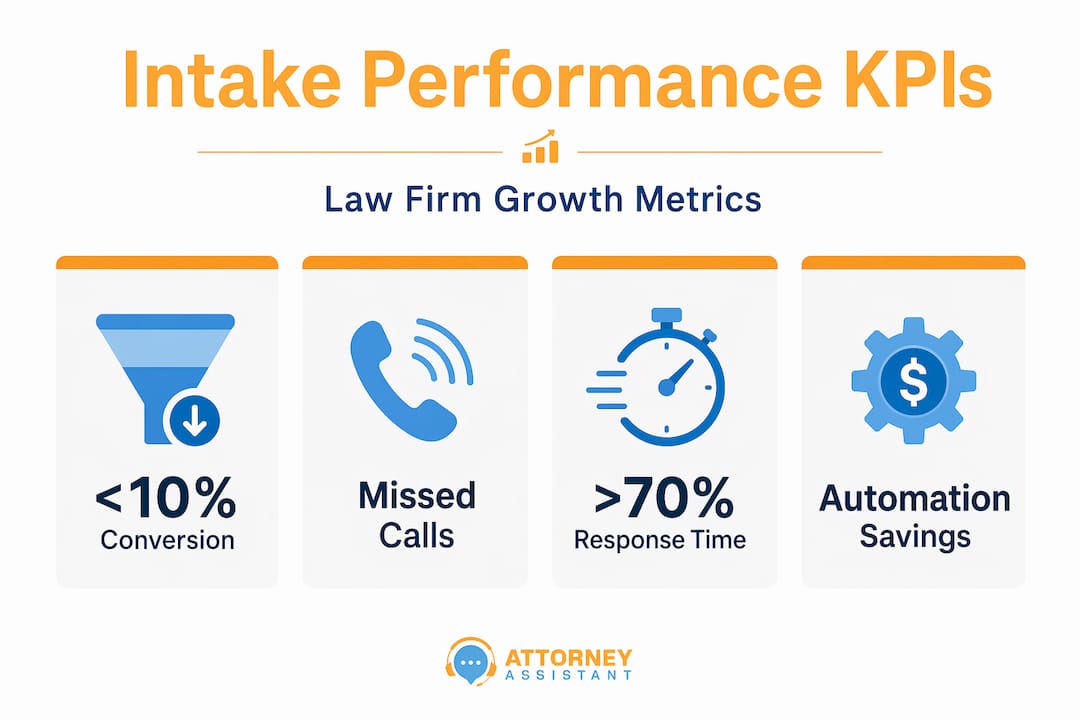
We’ve seen firms spending $30,000 or more per month on lead generation while their intake process converts less than 10% of those leads. They respond to recommendations to fix intake with skepticism. “We just need better leads.” But better leads going into a broken intake process produce better-quality losses, not better results.
The firms that quietly outperform their competitors, often without significantly higher ad budgets, share a few traits. They treat intake like a revenue function, not an administrative one. They hold staff accountable to specific metrics. They review their funnel data regularly and make changes based on what the numbers say, not gut instinct. They know that a single percentage point improvement in consult-to-sign conversion across 100 leads per month can mean tens of thousands of dollars in additional revenue annually.
What separates these firms isn’t luck or location. It’s process discipline. They have documented SOPs. They use CRM systems consistently. They have someone responsible for intake metrics every week. The accountability structure is there.
The deeper point is this: buying more leads is addictive because it feels like action. It’s visible. It produces activity. But optimizing intake is where the real return on investment lives, because you’re converting assets you’ve already paid for. How intake shapes client onboarding is worth studying if you want to understand how the best-managed firms build repeatable growth from the inside out.
Start with operational discipline. Measure your stages. Fix the bottleneck. Then scale your lead volume. In that order.
Explore solutions to optimize your intake performance
Your intake process doesn’t have to run on guesswork, manual follow-up, and crossed fingers.
Attorney Assistant exists specifically to help personal injury firms stop losing signed cases to slow responses and broken follow-up systems. Whether you need help covering after-hours calls, building consistent follow-up cadences, or streamlining your administrative workflows, the tools and support are ready when you are. Explore our intake and reception solutions to see how we handle inbound coverage, or get started with lead follow-up support designed for PI practices. You can also check out our free intake tools to start assessing and improving your process today.
Frequently asked questions
What is intake performance and why does it matter for personal injury law firms?
Intake performance measures how efficiently a firm converts incoming leads into signed clients, making it the most direct driver of revenue growth. Intake is where leads are converted into signed cases, which means every gap in the process costs your firm real money.
Which metrics should I track to monitor intake performance?
Track response time, missed call rate, lead-to-consult conversion, after-hours coverage, and consult-to-sign rate to identify exactly where leads are dropping off. Benchmarks by stage, such as lead-to-consultation and consultation-to-signed, give you the most actionable view of where to improve.
How can my firm improve after-hours and missed call intake performance?
Implement 24/7 response systems and automation to ensure every inquiry gets an immediate touchpoint, regardless of when it arrives. After-hours inquiries and missed calls require deliberate follow-up processes, not just good intentions from your staff.
What tools can support better intake performance in law firms?
CRM software combined with automated follow-up platforms gives law firms the visibility and speed needed to capture and convert more leads. Logging every touchpoint in a CRM and using automation to trigger timely outreach consistently improves conversion rates across all funnel stages.
Recommended
- What is intake management? Streamline law firm client onboarding | Attorney Assistant
- Master legal intake to boost PI case conversions by 40% | Attorney Assistant
- Legal intake tips to boost case conversion in 2026 | Attorney Assistant
- Effective law firm intake process: boost client conversion | Attorney Assistant
Related Articles

Medical Records Coordinator: What the Role Actually Does
A medical records coordinator manages records retrieval, summaries, billing, and liens for law firms. Learn duties, KPIs, and when to outsource vs hire.

Macs for Lawyers: The Hardware and Compatibility Guide
A practical guide to Macs for lawyers covering hardware choices, software compatibility, security tradeoffs, and recommendations by firm size and workflow.

Business Telephone Answering Service for Law Firms
How a business telephone answering service works for law firms, including 24/7 intake, qualification, warm transfers, pricing models, and what