Why Track Follow-Up Calls: A Law Firm Leader's Guide

TL;DR:
- Tracking follow-up calls reveals where law firms lose qualified leads and improve response times. Responding within five minutes significantly increases lead qualification, but median response takes three days. Using key metrics and automation helps firms identify operational gaps and boost conversion rates efficiently.
Tracking follow-up calls is the single most reliable way for law firms to identify where qualified leads disappear before signing a retainer. Law firms responding within 5 minutes to client inquiries are 21 times more likely to qualify the lead. Yet the median law firm response time sits at 3 days. That gap is not a marketing problem. It is an operational one, and call tracking data is what makes it visible.
Why track follow-up calls in your law firm’s intake process
Call tracking, known in legal operations as intake performance monitoring, measures every touchpoint between a prospect’s first contact and a signed retainer. The core reason to track follow-up calls is simple: you cannot fix what you cannot see. Most firm leaders assume their intake team handles calls well. The data consistently proves otherwise.
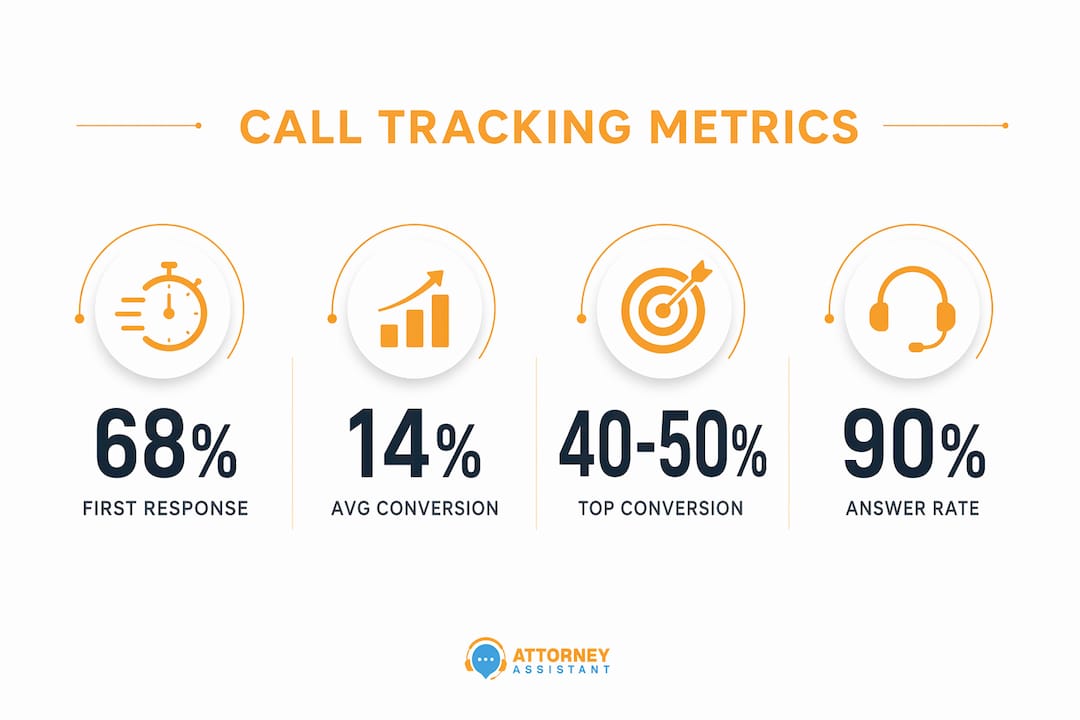
Firms that respond first secure 68% of cases from prospects who contacted multiple firms. That statistic means two out of three competitive leads go to whoever picks up first, not whoever has the best reputation. Call tracking tells you whether your team is that firm or the one losing those cases silently.
The average law firm converts only 14% of inquiries into signed clients. Top-performing firms reach 40–50% conversion. The difference between those two outcomes is almost always intake speed and follow-up consistency, both of which call tracking measures directly.
What metrics should law firms track in follow-up calls?
Stage-level metrics give firm leaders a precise picture of where the intake funnel breaks down. Tracking a single number like “calls received” tells you almost nothing. Tracking calls through each stage tells you exactly where prospects fall off.
The five metrics that matter most are:
- Answer rate: The percentage of inbound calls picked up by a live person. An answer rate below 90% is the largest single operational leak in most firms. Every missed call is a lead that may never call back.
- Qualified caller rate: The share of callers who match your practice area and case criteria. This metric separates real leads from wrong-number calls and filters your follow-up effort toward prospects worth pursuing.
- Consult-booked rate: The percentage of qualified callers who schedule a consultation. A low rate here signals a problem with how intake staff present the next step, not with lead quality.
- Consult-held rate: The percentage of booked consultations that actually happen. A gap between booked and held rates often reveals a follow-up failure between booking and appointment day.
- Retainer-signed rate: The share of held consultations that result in a signed agreement. This is the final conversion metric and the one most directly tied to revenue.
Pro Tip: Track the number of follow-up attempts made before contact is established. Most firms give up after one or two tries. Structured multi-touch sequences across several days consistently outperform single-attempt follow-ups.
Tracking these five metrics together gives firm leaders a stage-level view of intake performance. That view makes it possible to fix the right problem instead of guessing.
How call tracking reveals operational gaps in intake workflows
Call data exposes problems that internal reports and gut instinct miss entirely. The most common gap firms discover is coverage failure: calls going unanswered during lunch hours, early mornings, or after 5:00 PM. Those are not edge cases. Many prospects call outside standard business hours precisely because they are dealing with an urgent legal matter.
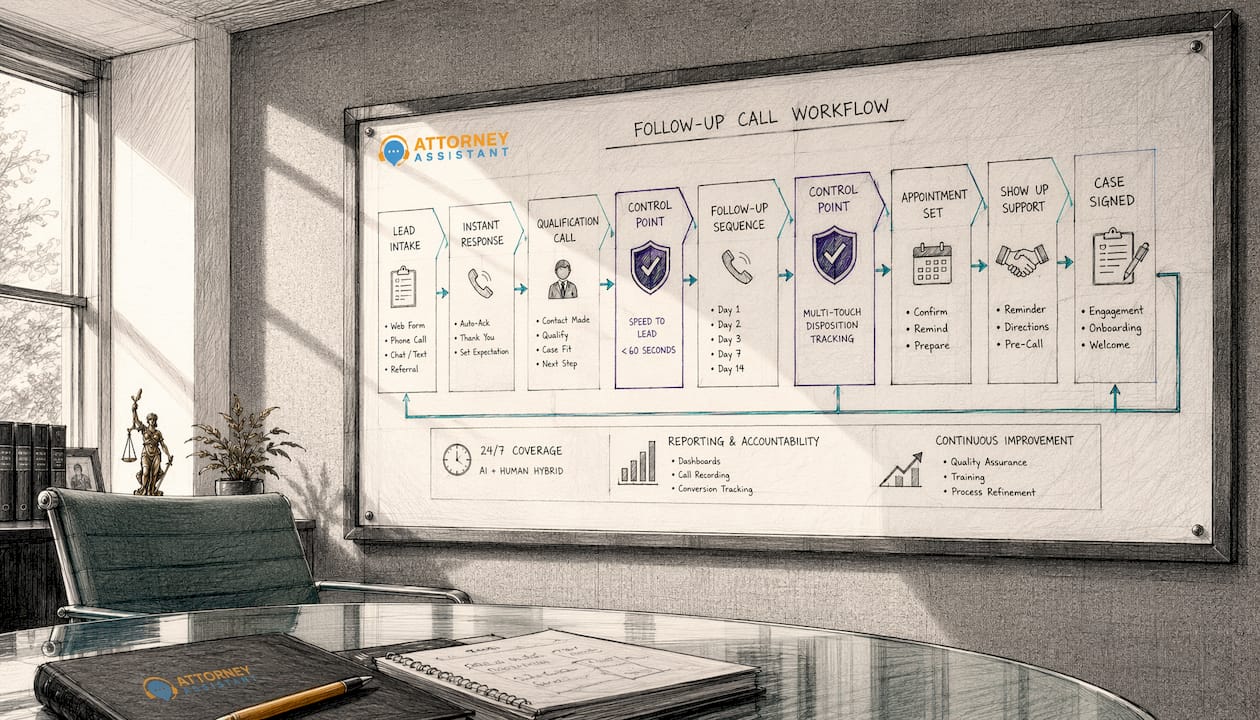
A second gap involves slow response to web form submissions and missed calls. Five-hour response delays cost the average firm roughly $200,000 in lost annual revenue. That number becomes real only when you have call data showing how long your team actually takes to return calls.
Tracking also prevents firms from relying on vanity metrics. Counting every call that rings, including calls under 5 seconds, inflates performance numbers without reflecting real engagement. Experts advise setting a minimum call duration threshold of 60–90 seconds to count a call as a qualified interaction. Anything shorter is likely a misdial or a hang-up before a conversation starts.
Here is a practical sequence for using call data to find and fix operational gaps:
- Pull your answer rate for the past 30 days, broken down by hour and day of week.
- Identify the time blocks with the lowest pickup rates and map them against your staffing schedule.
- Compare your consult-booked rate against your qualified caller rate to find intake script failures.
- Review the average number of follow-up attempts before contact and set a minimum standard.
- Segment call data by lead source and practice area to see which channels produce the highest-quality leads.
Pro Tip: Segmenting calls by lead source is one of the fastest ways to stop wasting marketing budget. If your Google Ads calls convert at 8% and your referral calls convert at 35%, that data should directly inform where you spend next month.
Best practices for tracking follow-up calls effectively
Setting up call tracking correctly takes time. Proper configuration requires 10–20 hours of initial setup, but the data it produces is foundational to every conversion improvement that follows. Cutting corners during setup produces misleading numbers that lead to bad decisions.
The most important configuration decisions are:
- Assign unique phone numbers to each marketing channel. Using the same number across Google Ads, your website, and a billboard makes it impossible to know which channel produced which call. Unique numbers preserve attribution clarity.
- Set minimum call duration thresholds. Configure your tracking platform to flag only calls lasting 60 seconds or longer as qualified leads. This removes noise from your data.
- Integrate call tracking with your CRM. A CRM integrated with call tracking creates a continuous record from first contact to retainer signing. Without that integration, intake data fragments across systems and opportunities disappear.
- Build automated alerts for missed calls. Set up immediate notifications when a call goes unanswered so a team member can return it within minutes, not hours.
- Use automation to enforce speed-to-lead without creating compliance risk. Top firms deploy automated first responses within 30 seconds, followed by conflicts checks and attorney notification before any substantive communication occurs. This approach maintains compliance with unauthorized practice of law (UPL) rules and TCPA requirements.
The ethical dimension of call tracking automation is real and manageable. Automation handles the speed problem. Attorneys handle the substance. Keeping those roles separate protects the firm and the client.
What financial and operational benefits does consistent tracking deliver?
The financial case for tracking follow-up calls is direct. Firms that move from a 14% conversion rate toward the 40–50% range that top performers achieve do not do it by buying more leads. They do it by converting the leads they already receive. Call tracking is the mechanism that makes that shift measurable and repeatable.
Slow follow-up does not just cost a case. It costs the relationship. Prospects who wait hours for a callback have already started calling the next firm on their list. Speed communicates competence before a single legal question is answered.
Lead response speed directly shapes client trust and first impressions. A firm that calls back within five minutes signals that it is organized and attentive. A firm that calls back the next day signals the opposite, regardless of how skilled its attorneys are.
Tracking also improves marketing ROI in a concrete way. When you know which channels produce calls that convert to signed retainers, you can calculate cost per signed case by channel. That calculation tells you where to increase spend and where to cut it. Firms that rely on marketing agency reports without internal call tracking data are measuring their own performance with someone else’s ruler.
The operational benefit compounds over time. Firms that track calls consistently build a feedback loop: data reveals a gap, the firm fixes it, the next month’s data confirms the improvement. That loop is how intake operations improve without hiring more staff.
Key Takeaways
Tracking follow-up calls is the foundation of intake improvement because it converts invisible revenue leaks into measurable, fixable problems.
| Point | Details |
|---|---|
| Speed determines case capture | Firms responding within 5 minutes are 21 times more likely to qualify a lead than slower competitors. |
| Five metrics reveal the full picture | Answer rate, qualified caller rate, consult-booked, consult-held, and retainer-signed rates together show exactly where leads are lost. |
| Vanity metrics distort performance | Set a 60–90 second minimum call duration threshold to count only genuine interactions as qualified leads. |
| Unique numbers protect attribution | Assigning a separate tracking number to each marketing channel is the only way to calculate true cost per signed case. |
| Automation must stay compliant | Automated first responses work within UPL and TCPA rules when attorneys handle all substantive client communication. |
The uncomfortable truth about law firm call tracking
Most firm leaders I speak with believe their intake is working because no one has told them otherwise. The calls come in, the team answers, consultations get booked. What they do not see is the 30% of calls that ring during lunch and go to voicemail, or the leads that booked a consult and never heard a reminder, or the Google Ads budget funding calls that convert at half the rate of organic search.
Call tracking does not create problems. It reveals problems that were already costing the firm money. The firms that resist tracking usually do so because the data is uncomfortable. The firms that embrace it treat that discomfort as a competitive advantage.
The compliance concern around automation is real but often overstated. Firms that design their automated sequences carefully, keeping substantive legal communication with a licensed attorney, can move fast without creating UPL exposure. The firms losing cases to competitors are not losing because of compliance risk. They are losing because they never called back.
My honest advice: start with answer rate. If your firm is not picking up 90% or more of inbound calls during business hours, fix that before touching anything else. Every other metric improvement is secondary to the basic act of answering the phone. Once that baseline is solid, layer in the stage-level tracking and attribution work. The data will tell you what to fix next.
For firms serious about improving intake response time, the path forward is clear. Measure first. Then fix.
— Nicole
How Attorney Assistant addresses follow-up gaps in law firm intake
Law firms that track their follow-up calls consistently find the same thing: the data is only useful if someone acts on it. Attorney Assistant handles the intake, follow-up, and administrative workflows that most firms leave to chance.
Attorney Assistant manages missed call follow-up, consultation reminders, and client communication so your team focuses on legal work instead of chasing leads. Firms working with Attorney Assistant respond faster, convert more inquiries into signed cases, and stop losing revenue to slow response times. If your intake process has gaps you have not been able to close, book a call with the Attorney Assistant team to see where the leaks are and what it takes to fix them.
FAQ
Why do follow-up calls matter more than lead volume?
Most law firms already receive enough leads to grow. The problem is conversion, not volume. Tracking follow-up calls reveals where qualified prospects drop out of the intake process before signing.
What is a good answer rate for a law firm?
An answer rate below 90% is considered a significant operational leak. Firms should aim to have a live person answer at least 9 out of every 10 inbound calls during business hours.
How many follow-up attempts should intake staff make?
Single-attempt follow-up is one of the most common intake failures. Multi-touch follow-up sequences spread across several days consistently outperform one-call approaches and recover leads that would otherwise go cold.
How does call tracking improve marketing ROI?
Assigning unique phone numbers to each marketing channel lets firms calculate which channels produce calls that convert to signed retainers. That data makes it possible to cut underperforming spend and increase budget where it produces real cases.
Is automated follow-up compliant with legal ethics rules?
Automated follow-up is compliant when designed correctly. Automation handles speed and scheduling while licensed attorneys handle all substantive communication, keeping the process within UPL and TCPA requirements.
Recommended
Related Articles

10 Business Finance Course Options for Law Firms
Compare 10 business finance course options by level, format, workload, and law-firm relevance, then choose the right fit for your role and goals.
10 Good VoIP App Options for Law Firms in 2026
Compare 10 good VoIP app options for small and mid-sized law firms, including security, integrations, pricing, mobile use, and desk-phone readiness.

10 Insurance Software Companies Worth Comparing
Compare 10 insurance software companies by features, use cases, trade-offs, and implementation fit for carriers, MGAs, brokers, and agencies.