What Is Intake Scheduling for Law Firms: 2026 Guide

TL;DR:
- Effective intake scheduling is a standardized workflow that turns qualified leads into confirmed appointments by utilizing timely, automated, and gated processes. It separates assessment from booking, automates confirmations, and requires dedicated process ownership to prevent delays and drop-offs. Implementing the right tools and maintaining consistent procedures significantly improve conversion rates and overall law firm productivity.
Intake scheduling is the standardized workflow law firms use to book a prospective client’s first appointment immediately after qualifying a lead and completing necessary prerequisites such as conflict checks and document collection. The term “intake scheduling” is the widely used operational phrase for what practice managers also call the appointment booking workflow or client onboarding scheduling process. Done correctly, it converts a qualified inquiry into a confirmed appointment before the lead loses interest. Done poorly, it creates delays that cost firms signed cases. This guide explains the full intake scheduling process, its benefits, common failure modes, and the tools that make it work.
What is intake scheduling in a legal practice?
Intake scheduling is the step in the intake management process that occurs after a lead has been screened and qualified but before the first substantive attorney consultation. It is not the same as the intake assessment itself. The assessment gathers facts and determines fit. Scheduling books the correct next step once that fit is confirmed.
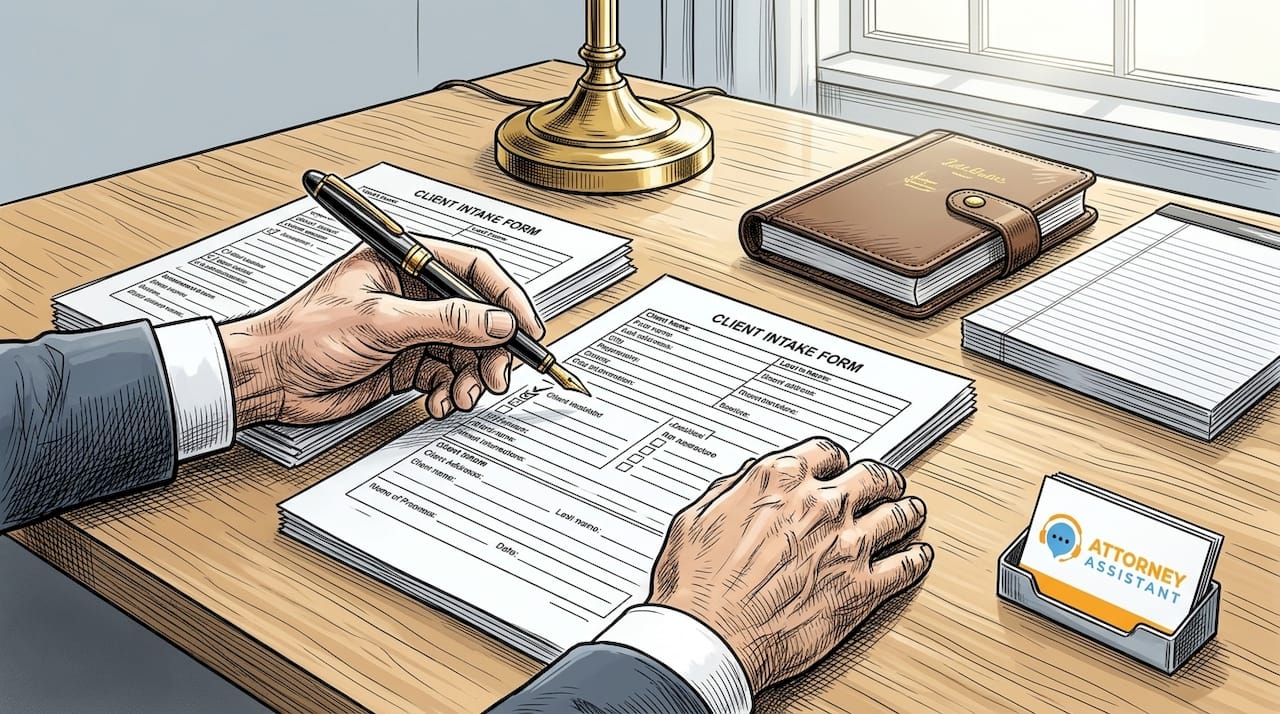
The distinction matters operationally. Separating intake assessment from ongoing service delivery clarifies workflow stages and prevents front-desk staff from conflating two different tasks. A receptionist who tries to assess eligibility and book an appointment in the same interaction often does neither well.
In legal practice, the intake scheduling process typically begins the moment a lead passes qualification criteria. That trigger can be manual, where a staff member reviews a form submission and sends a booking link, or automated, where software detects a qualifying response and fires a confirmation with an appointment link attached. The fastest workflows generate booking actions immediately once a lead qualifies, bundling appointment links, document uploads, and reminders in one confirmation to minimize lead drop-off.
What steps make up the intake scheduling process?
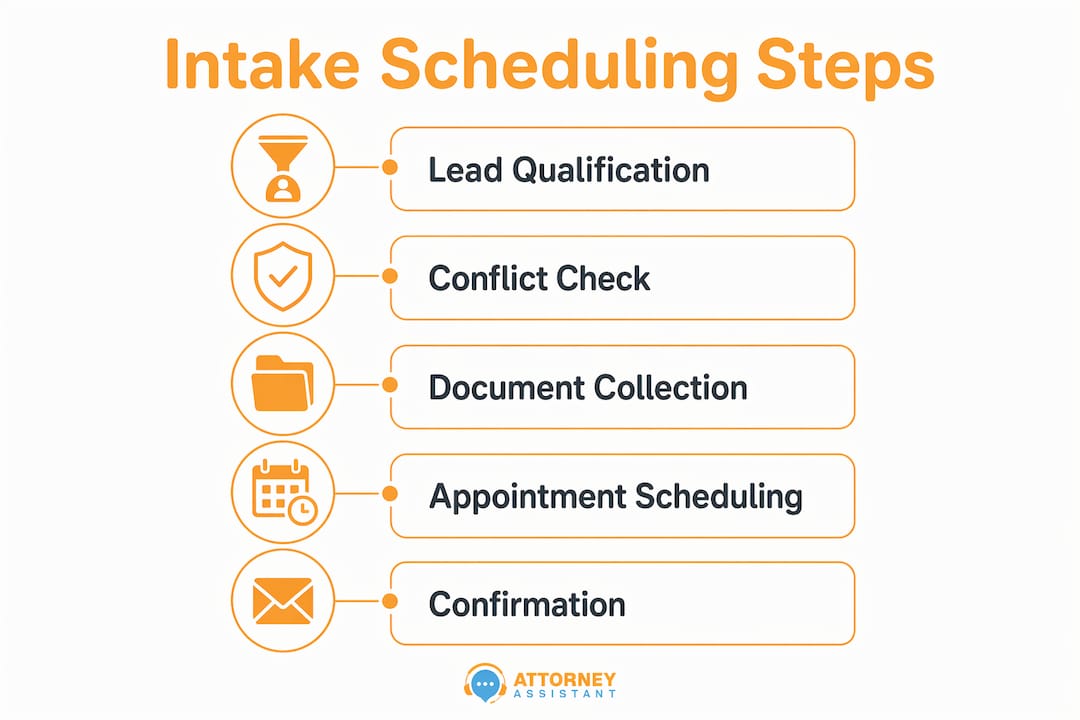
The intake scheduling process follows a defined sequence. Each step serves a specific operational purpose, and skipping any one of them creates downstream problems.
- Lead contact and initial screening. A prospective client submits a web form, calls the firm, or sends a message. The intake team or automated system captures the inquiry and applies basic screening criteria: practice area match, jurisdiction, and case type.
- Qualification and conflict check. Before any appointment is offered, the firm runs a conflict of interest check and confirms the lead meets the firm’s case acceptance criteria. This is the prerequisite gate. Scheduling works best as a gated workflow step after eligibility and prerequisite checks are complete, because without these gates, response speed becomes inconsistent and dependent on individual behavior.
- Appointment slot presentation. Once the lead clears prerequisites, the firm sends a scheduling link via tools like Calendly or Acuity, or a staff member offers specific time slots directly. The client selects a time without back-and-forth negotiation.
- Confirmation and document collection. The system sends an automated confirmation containing the appointment details, any required intake forms, and instructions for document submission. This step bundles scheduling with pre-appointment preparation.
- Reminders and no-show reduction. Automated reminders go out 24 to 48 hours before the appointment. This single step measurably reduces no-show rates and last-minute cancellations.
Pro Tip: Send the scheduling link within the same message that confirms qualification. Every hour between qualification and booking link delivery increases the chance the lead contacts a competing firm.
How does a standardized scheduling workflow improve conversion?
A standardized intake scheduling workflow removes the three biggest conversion killers: slow response, inconsistent process, and single-person dependencies.
Consider the bottleneck problem. Many firms route all scheduling through one receptionist or intake coordinator. When that person is on another call, out sick, or simply overwhelmed, leads wait. One behavioral health system cut intake wait times from 50 days to 7 by centralizing scheduling tasks and cross-training multiple front-desk staff. That result is not unique to healthcare. The same operational logic applies directly to law firm intake: removing the single-receptionist bottleneck increases both capacity and consistency.
The benefits of a standardized intake scheduling workflow include:
- Reduced scheduling latency. Centralized scheduling queues and automated booking links eliminate the lag between lead qualification and appointment confirmation.
- Consistent client experience. Every qualified lead receives the same sequence of communications, forms, and reminders regardless of which staff member handles the initial contact.
- Higher intake volume capacity. When scheduling is systematized, the firm can process more leads without adding headcount proportionally.
- Improved conversion rates. Speed-to-lead is one of the strongest predictors of case conversion. Firms that respond to leads faster convert at significantly higher rates than those that follow up hours or days later.
Standardizing scheduling processes across teams reduces friction and manual effort while improving visibility and compliance. For multi-attorney firms or those with multiple practice areas, this visibility is particularly valuable because it surfaces scheduling gaps before they become lost cases.
What are common pitfalls in intake scheduling?
Most intake scheduling failures fall into one of four categories. Recognizing them early prevents the operational debt that accumulates when workflows are built without discipline.
- Mixing intake forms with scheduling forms. Separating intake forms from booking forms or calendar links improves completion rates and operational clarity. When a client receives a single form that asks for case facts, personal information, and appointment preferences simultaneously, completion rates drop and staff spend time sorting incomplete submissions.
- Attempting to automate legal advice before automating scheduling. A common automation failure is building AI tools that try to answer legal questions before the firm has automated the simpler tasks of qualification, document collection, and appointment booking. This creates dead ends where the automation cannot proceed and no human picks up the thread.
- No prerequisite gate before scheduling. Offering appointment slots before a conflict check is complete wastes attorney time and creates liability exposure. Scheduling must be a downstream action, not a parallel one.
- Treating scheduling as an afterthought. Some firms collect a lead’s information thoroughly but then send a vague “we’ll be in touch” message. The lead cools. A confirmed appointment time is a commitment. A vague follow-up is not.
Pro Tip: Build your intake workflow in this order: qualify first, check conflicts second, collect documents third, then schedule. Any automation you add should follow the same sequence. Reversing the order creates confusion for clients and staff alike.
The deeper issue behind most of these failures is the absence of process ownership. Someone in the firm needs to own the intake scheduling workflow, monitor it for gaps, and update it when case types or staffing change. Without that ownership, the workflow drifts back toward ad hoc behavior within months.
Which tools enable effective intake scheduling in law firms?
The right technology stack for intake scheduling depends on firm size, practice area, and existing software infrastructure. The table below compares the primary tool categories.
| Tool category | Primary function | Examples | Best for |
|---|---|---|---|
| Scheduling platforms | Present available slots and capture bookings | Calendly, Acuity Scheduling | Eliminating back-and-forth on appointment times |
| Intake form software | Collect case facts and eligibility data | Clio Grow, Typeform, JotForm | Separating qualification from booking |
| CRM with intake modules | Track lead status and automate follow-up | Clio, Lawmatics, Filevine | Full pipeline visibility from lead to signed client |
| Workflow automation | Trigger actions based on form responses | Zapier, Make, native CRM automations | Connecting qualification triggers to scheduling links |
| Reminder and confirmation tools | Reduce no-shows with automated messages | Twilio, built-in CRM messaging | Maintaining appointment commitment after booking |
The most effective intake scheduling setups connect these layers. A lead submits a web form, the CRM scores the response against qualification criteria, a workflow automation fires a scheduling link via Calendly or Acuity, and a confirmation message goes out with the intake form and document upload instructions attached. The entire sequence can run without staff involvement for straightforward case types.
For firms using legal admin automation, the key integration point is between the intake form trigger and the scheduling action. When these two systems share data in real time, the firm can verify conflict clearance automatically before the scheduling link is delivered, which removes the manual review step for standard cases.
Real-time eligibility and conflict verification APIs are available through several legal-specific CRMs. They check a new lead’s name and contact details against the firm’s existing client database before any appointment is offered. This is the technical implementation of the prerequisite gate described earlier.
Key takeaways
Effective intake scheduling converts qualified leads into confirmed appointments through a gated, standardized workflow that separates assessment from booking and automates confirmation, reminders, and document collection.
| Point | Details |
|---|---|
| Define the process gate | Schedule only after conflict checks and qualification are complete, never before. |
| Separate forms from booking links | Intake forms collect case facts; scheduling links book time. Mixing them reduces completion rates. |
| Remove single-person bottlenecks | Cross-train staff and centralize scheduling queues to maintain capacity when individuals are unavailable. |
| Automate the confirmation bundle | Send appointment link, intake form, and reminders in one confirmation to reduce drop-off and no-shows. |
| Build in process ownership | Assign one person to monitor and maintain the intake scheduling workflow or it will drift back to ad hoc behavior. |
The part most firms skip entirely
I have reviewed intake workflows at firms of every size, and the pattern is consistent. Firms invest heavily in lead generation and almost nothing in what happens between the lead arriving and the first appointment being confirmed. That gap is where most revenue is lost.
The operational mindset shift that actually changes outcomes is treating scheduling as a process gate, not a courtesy. A scheduling link is not a nice thing to send. It is the mechanism that converts a qualified lead into a committed prospect. Every hour it is delayed is an hour the lead is still shopping.
Cross-training your intake team matters more than most practice managers realize. When only one person knows how to run the scheduling workflow, you have not built a process. You have built a dependency. I have seen firms where a single receptionist’s two-week absence caused a measurable drop in signed cases that month. That is an operational failure, not a staffing problem.
The other thing worth saying plainly: automation does not replace judgment in legal intake. It handles the mechanical steps so your staff can apply judgment where it counts. Qualification criteria, conflict checks, and case assessment still require human review for most practice areas. The goal is to automate the handoff between those human decisions, not the decisions themselves. Firms that understand this distinction build intake scheduling systems that actually hold up under volume.
— Nicole
How Attorneyassistant fixes intake scheduling gaps
Law firms that handle intake scheduling manually are leaving signed cases on the table every week. Attorneyassistant builds and manages the intake workflows that convert qualified leads into confirmed appointments without the delays, missed calls, and inconsistent follow-up that cost firms revenue.
Attorneyassistant handles the full intake scheduling process: lead qualification, conflict check coordination, scheduling link delivery, confirmation messaging, and follow-up for leads who do not book. The result is faster speed-to-lead, fewer no-shows, and more signed cases from the leads you already have. Explore Attorneyassistant’s intake solutions or book a call to see how the workflow applies to your firm’s practice areas and volume.
FAQ
What is intake scheduling in a law firm?
Intake scheduling is the workflow that books a prospective client’s first appointment after the firm has qualified the lead and completed prerequisite checks such as conflict of interest verification. It is the operational step between lead qualification and the first attorney consultation.
How is intake scheduling different from the intake process?
The intake process covers the full sequence from initial lead contact through assessment, document collection, and case acceptance. Intake scheduling is the specific step within that process where an appointment is confirmed, typically after qualification criteria are met.
What tools are used for intake appointment scheduling?
Law firms commonly use scheduling platforms like Calendly and Acuity Scheduling to present appointment slots, combined with CRM tools like Clio or Lawmatics to track lead status and trigger automated confirmations and reminders.
Why do intake scheduling workflows fail?
The most common failures are mixing intake qualification forms with booking forms, scheduling before prerequisite checks are complete, and routing all scheduling through a single staff member. Each of these creates delays or errors that reduce conversion rates.
How does intake scheduling affect case conversion?
Speed and consistency are the two conversion drivers. Firms that deliver a scheduling link immediately after qualification and follow up with automated reminders convert more leads than those that rely on manual follow-up. Reducing intake wait times through centralized scheduling and cross-trained staff directly increases the number of leads that reach a signed engagement.
Recommended
Related Articles

Macs for Lawyers: The Hardware and Compatibility Guide
A practical guide to Macs for lawyers covering hardware choices, software compatibility, security tradeoffs, and recommendations by firm size and workflow.

Business Telephone Answering Service for Law Firms
How a business telephone answering service works for law firms, including 24/7 intake, qualification, warm transfers, pricing models, and what

Call Flow Customer Service for Law Firms: A Practical Guide
Design a call flow customer service system for your law firm that captures leads, qualifies matters, and signs cases. Practical guide