Why Case Intake Is Critical for Law Firm Growth

TL;DR:
- Most law firms lose clients due to poor intake processes rather than a lead-generation issue.
- Fast, quality intake responses build trust, directly increasing client conversion and revenue.
Most law firms losing revenue don’t have a lead problem. They have an intake problem. Why case intake is critical comes down to one brutal truth: the moment a potential client reaches out, a clock starts. If your firm answers slowly, responds inconsistently, or fails to follow up at all, that person signs with someone else. They were ready. You just weren’t. This article breaks down the full scope of intake’s role in your firm’s financial health, where most firms go wrong, and what a well-built intake process actually looks like in practice.
Table of Contents
- Key Takeaways
- Why case intake is critical, not just clerical
- How intake speed and quality directly affect revenue
- Common intake failures that cost firms clients
- Best practices for designing an effective intake process
- How intake quality shapes downstream case outcomes
- My honest take on why firms still get this wrong
- How Attorneyassistant helps firms fix intake and convert more leads
- FAQ
Key Takeaways
| Point | Details |
|---|---|
| Speed determines conversion | Firms responding within 5 minutes capture dramatically more leads than those responding the next day. |
| Intake is a revenue function | Treating intake as clerical work costs firms signed cases and measurable revenue every week. |
| Failures happen at predictable points | Untrained staff, missing follow-up, and poor data handoff are the most common and fixable intake breakdowns. |
| Structure and empathy both matter | Effective intake combines a documented process with human connection, not one or the other. |
| Intake quality affects the whole case | What gets captured at intake shapes case scope, client expectations, and attorney efficiency downstream. |
Why case intake is critical, not just clerical
Most attorneys think of intake as paperwork. It is not. Legal intake is a structured process that involves client qualification, risk assessment, capacity planning, and setting the engagement path. It is the first live interaction your firm has with a prospective client, and it shapes everything that follows.
When a prospect calls your firm, they are not just submitting information. They are making a judgment call. They are deciding whether your firm sounds competent, whether they feel heard, and whether they trust you enough to hand over their legal matter. Intake is where trust forms, and firms that treat it as a data-collection exercise consistently lose clients who were ready to retain.
Here is what a properly functioning case intake process actually covers:
- Qualification: Determining whether the prospect’s matter fits your practice areas, jurisdiction, and capacity
- Risk assessment: Identifying early red flags that could affect case viability or firm exposure
- Capacity planning: Matching incoming cases to the right attorneys and timelines
- Expectation setting: Communicating what working with your firm looks like before a retainer is signed
- Engagement path: Guiding the prospect through the next steps clearly and without friction
Intake ends where onboarding begins. Once a client has signed and your firm has formally taken the matter, that is onboarding. Intake is everything before that signature. Confusing the two creates gaps where leads fall through and signed clients feel lost before the work even starts. Understanding intake versus onboarding helps firms build processes that cover both without overlap or gaps.
How intake speed and quality directly affect revenue
This is where the numbers get uncomfortable. Firms responding within 5 minutes capture approximately 67% of leads. Firms that wait until the next business day capture about 7%. The average firm takes 2.3 business days to respond. Do the math on how many cases that gap costs per month.

Speed alone does not close a case. The quality of that first conversation matters just as much. A fast response delivered by an untrained staff member who sounds distracted or reads from a rigid script will not convert. Prospects are evaluating your firm in real time. Tone, pace, empathy, and the questions you ask all signal whether your firm is worth trusting.
After-hours capacity compounds this problem. A large share of legal inquiries come in outside of 9-to-5 business hours. If those calls go to voicemail and sit until morning, your firm has already lost to the competitor who answered. Intake delays of even 48 hours are enough to cost you ready-to-retain clients, particularly in practice areas where urgency is high, such as personal injury or criminal defense.
The downstream financial effects go further than just one lost case. Clients who had a strong intake experience refer others. They cooperate more throughout the matter. They leave positive reviews. The impact of case intake extends through a client’s entire lifetime value to your firm, not just the initial retainer.
Pro Tip: Set a firm-wide speed-to-lead goal of five minutes or less for initial response during business hours, and build an after-hours coverage plan before assuming a voicemail is good enough.
Common intake failures that cost firms clients
Intake problems follow predictable patterns. Recognizing them is the first step to fixing them.
-
Using untrained or distracted staff for intake. Intake is often assigned to whoever is available, which means a receptionist juggling five other tasks or a paralegal pulled from active case work. This dilutes both quality and consistency. Prospects sense it immediately.
-
No documented intake process. If your intake depends on whoever answers the phone having a good day, you do not have a process. You have luck. Without a defined call guide, qualification criteria, and follow-up protocol, performance varies wildly across staff and shifts.
-
Slow or missing follow-up. Intake failures often trace back to insufficient follow-up, not just slow initial response. Leads that do not convert on first contact often need one or two follow-ups to close. Firms without a structured follow-up system abandon those leads entirely.
-
Not qualifying clients or assessing fit. Intake without qualification means your attorneys spend time on consultations that should never have been scheduled. It wastes attorney time, inflates non-billable hours, and leads to cases that are poor fits for the firm.
-
Failing to track intake metrics. You cannot fix what you do not measure. Firms that do not track conversion rates, response times, and drop-off points cannot identify where leads are being lost. This leaves revenue leaks invisible and unaddressed.
-
Poor data handoff to case management. When intake data is incomplete or inconsistently captured, attorneys re-ask questions that should already be answered. Intake errors force attorneys to backtrack during early case work, damaging credibility and burning billable time.
Best practices for designing an effective intake process
Building a process that consistently converts requires decisions across staffing, technology, and measurement. The table below contrasts weak versus strong intake practices at the operational level.
| Area | Weak intake practice | Strong intake practice |
|---|---|---|
| Staffing | Any available staff member handles calls | Dedicated intake roles with specific training and accountability |
| Call structure | Improvised conversations | Documented call guides with qualification criteria and empathy cues |
| Response time | Replies within 24-48 hours | Initial contact within 5 minutes during business hours |
| After-hours coverage | Voicemail only | Live coverage or automated response with rapid morning follow-up |
| Follow-up | One attempt, then move on | Structured multi-touch follow-up sequence for unconverted leads |
| Data capture | Inconsistent notes across staff | Standardized intake forms feeding directly into case management |
| Performance tracking | No metrics reviewed | Weekly review of conversion rates, response times, and drop-off points |
Assigning specialized intake representatives rather than routing calls to whoever is free is the single highest-leverage change most firms can make. These roles exist to qualify leads, build rapport, and move prospects toward a signed retainer. That requires different skills than paralegal or receptionist work.
Technology can support intake without replacing the human element. Automation works well for immediate acknowledgment, appointment scheduling, and follow-up reminders. But the core intake conversation, the one where a prospect decides whether your firm feels right, requires a trained person on the other end. Automation should complement human intake, not substitute for it at critical touchpoints.
Treating intake as a revenue funnel stage with measurable steps, lead to response, response to consultation, consultation to engagement, gives you the data to improve it. Firms that track and review these numbers consistently outperform those running on intuition.
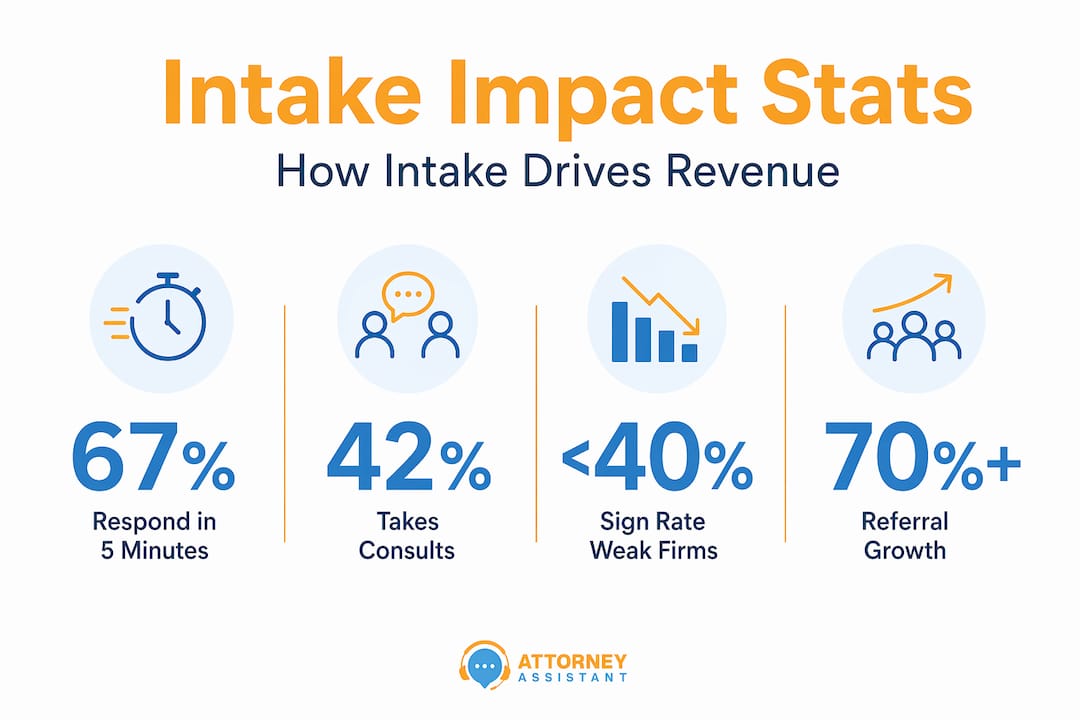
Pro Tip: Review your intake conversion rate monthly. If fewer than 40% of qualified leads are signing, the problem is almost always response speed, follow-up gaps, or the quality of the intake conversation itself.
How intake quality shapes downstream case outcomes
The role of case intake does not end when the retainer is signed. What gets captured during intake, and how accurately, determines what the attorney has to work with at the start of the matter.
Consider what strong intake delivers to your case management workflow:
- Accurate scope definition: Clear intake notes prevent attorneys from underestimating case complexity or making scope assumptions that lead to unbillable overruns
- Reduced client complaints: Clients who had their expectations properly set during intake are less likely to call with confusion about timelines, fees, or next steps
- Better conflict checks: Thorough intake data makes conflict-of-interest reviews faster and more reliable
- Smoother contract management: When intake captures the right details upfront, engagement letters and retainer agreements reflect the actual matter rather than guesswork
- Higher-quality client cooperation: Clients who felt respected and clearly informed during intake tend to respond faster to attorney requests and stay engaged throughout the matter
Poor intake quality creates bad data that flows downstream into every part of the case. An attorney who has to re-ask a client for information they should have provided during intake looks disorganized. That erodes trust before the substantive work even begins. How intake shapes onboarding and early case management is a practical area where small improvements in intake process produce visible gains in attorney efficiency and client satisfaction.
My honest take on why firms still get this wrong
In my experience watching firms operate, the most common mistake is not technical. It is perceptual. Firm owners see intake as overhead rather than as a revenue-generating function. They staff it accordingly, which means they under-invest in training, skip documentation, and treat poor intake conversion rates as a marketing problem rather than an operational one.
I have seen firms spend thousands of dollars per month on paid advertising while their intake process was hemorrhaging leads. The math never makes sense when you look at it clearly. Spending more on lead generation while intake is broken is like filling a bucket with a hole in the bottom.
The resistance to investing in specialized intake roles is real. Many firm owners believe any reasonably organized staff member can handle it. What I have found is that intake requires a distinct skill set: the ability to ask qualifying questions without sounding cold, to move a conversation forward while making a distressed prospect feel genuinely heard, and to do that consistently at volume. That is not a generic administrative skill.
Firms that treat intake as a strategic, measurable business function consistently convert more leads, waste fewer attorney hours, and build stronger client relationships. The ones that keep treating it as a phone-answering task keep wondering why their lead volume never seems to translate into revenue.
— Nicole
How Attorneyassistant helps firms fix intake and convert more leads
If what you have read here sounds familiar, you are not alone. Most firms we work with at Attorneyassistant were not struggling with lead generation. They were losing leads they had already paid for, because no one answered fast enough, no one followed up consistently, or the intake conversation itself was not converting.
Attorneyassistant handles intake, lead follow-up, and administrative workflows so your firm responds faster and converts more of the leads already coming in. Whether you need professional lead follow-up to recover warm leads sitting in your pipeline, or a full intake and reception service to handle inbound calls with trained specialists, we build the operational layer that most firms are missing. Start by attending one of our free virtual webinars to see exactly where your intake process is costing you, or book a call to walk through your current process and identify the gaps.
FAQ
Why is case intake critical for law firms?
Case intake is the first point of contact between your firm and a prospective client, and it directly determines whether that person signs with you or a competitor. Firms that respond within 5 minutes capture approximately 67% of leads, compared to 7% for firms that wait until the next business day.
What are the biggest intake mistakes law firms make?
The most damaging intake failures include slow initial response, missing follow-up sequences, and using untrained staff for intake calls. Intake failures also commonly involve insufficient client qualification and poor data handoff into case management systems.
How does intake quality affect case management?
Strong intake captures accurate scope, client expectations, and matter details that attorneys rely on from day one. Intake errors force attorneys to re-ask questions already answered, which wastes time and damages the client relationship before substantive work begins.
Should law firms use automation for intake?
Automation works well for immediate acknowledgment, scheduling, and follow-up reminders, but the core intake conversation requires a trained human. Automation should support human intake, not replace it at the points where trust is being built.
What metrics should law firms track for intake performance?
Track conversion rates at each stage of the intake funnel, average response time, and lead drop-off points. Treating intake as a revenue funnel with measurable steps allows firms to identify and fix exactly where leads are being lost.
Recommended
Related Articles

Call Flow Customer Service for Law Firms: A Practical Guide
Design a call flow customer service system for your law firm that captures leads, qualifies matters, and signs cases. Practical guide

Fear of Talking on Phone: 7 Practical Confidence Tips
Overcome fear of talking on phone with practical scripts, role-play, exposure exercises, and intake tools built for legal teams.

Appointment Setting Online: A Law Firm Guide
Master appointment setting online for law firms with proven strategies that turn leads into booked consultations and grow your practice.