Why Prompt Follow-Up Boosts Cases for Injury Firms
TL;DR:
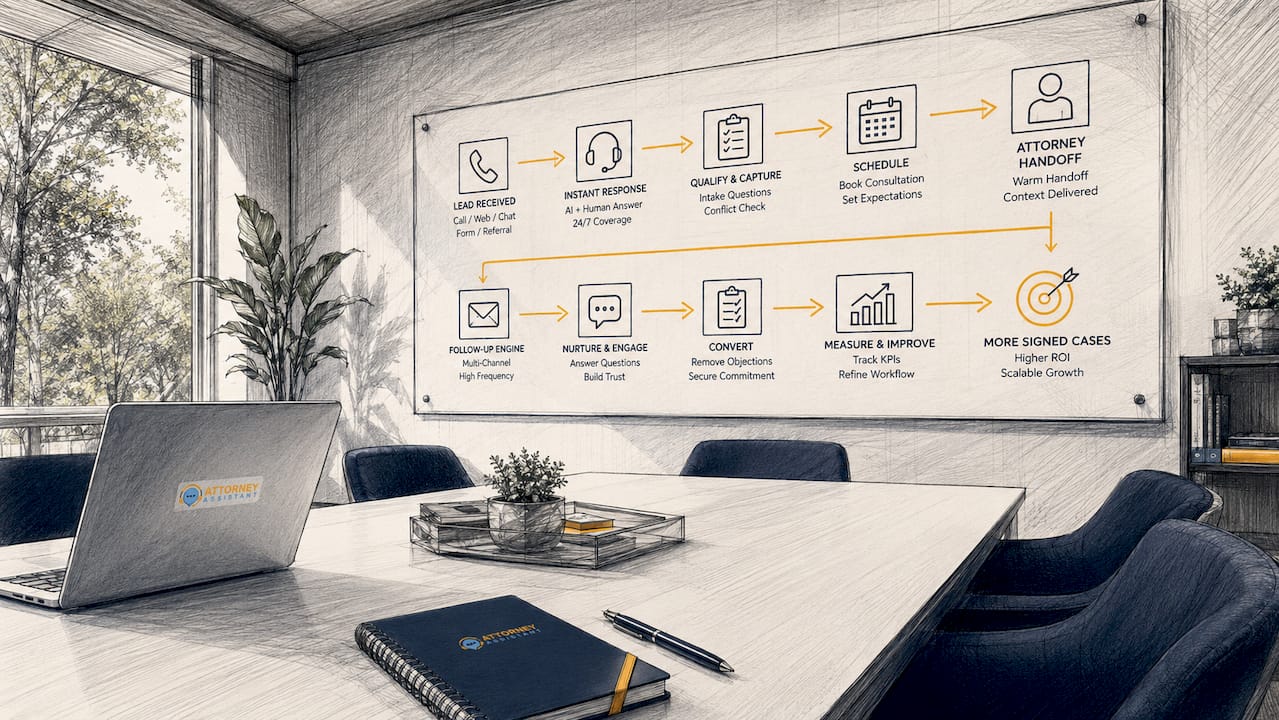
- Prompt follow-up is crucial for personal injury firms to convert leads into cases, especially with rapid response times increasing qualification chances. Consistent persistence and well-designed automated systems significantly improve contact and conversion rates, while disorganized follow-up damages trust and results. Implementing structured workflows and delegation helps firms retain more leads without needing more marketing, leading to higher case signings.
Prompt follow-up is the single operational factor that most directly determines whether a personal injury firm converts a lead into a signed case. Firms that respond within one hour are 7 times more likely to qualify a lead than firms that wait 24 hours. That gap is not a marketing problem. It is an intake problem. Most personal injury attorneys already have enough leads. The revenue leak comes from slow responses, inconsistent follow-up, and no system to catch leads that fall through the cracks. Understanding why prompt follow-up boosts cases is the first step toward fixing it.
Why prompt follow-up boosts cases: what the research shows
Speed-to-lead is the industry term for how quickly a firm responds after a potential client makes contact. The research on speed-to-lead in legal intake is unambiguous. Responding within 5 minutes makes a firm 21 times more likely to qualify a lead compared to responding in 30 minutes. That multiplier collapses fast as time passes.
The current median response time across law firms sits around three days. Three days is not a slow response. It is effectively no response. By the time a firm calls back, the potential client has already spoken to two or three other attorneys and signed with one of them.
“Roughly 40–71% of legal inquiries never receive a meaningful response, causing direct lost revenue for the firm.”
That range is wide, but even the low end is alarming. Four out of ten people who reach out to a law firm never hear back in a useful way. For personal injury cases, where clients are often in pain, confused, and under time pressure, silence reads as indifference.
| Response time | Impact on lead qualification |
|---|---|
| Within 5 minutes | 21x more likely to qualify the lead |
| Within 1 hour | 7x more likely to qualify the lead |
| After 24 hours | Qualification likelihood drops sharply |
| Around 3 days | Current law firm median; most leads are already lost |
The data makes the impact of follow-up on cases clear. Speed is not a courtesy. It is a conversion mechanism.
How persistence in follow-up increases contact rates
Speed matters for the first contact. Persistence matters for everything after. 93% of converted leads are reached by the sixth contact attempt. Most firms give up after one.
A single follow-up email after no response can increase reply rates by 40% to 65.8%. That number reflects a basic truth about how people behave. They get busy. They forget. They are not ignoring the firm on purpose. A second or third message, sent at the right interval, is often all it takes to restart the conversation.
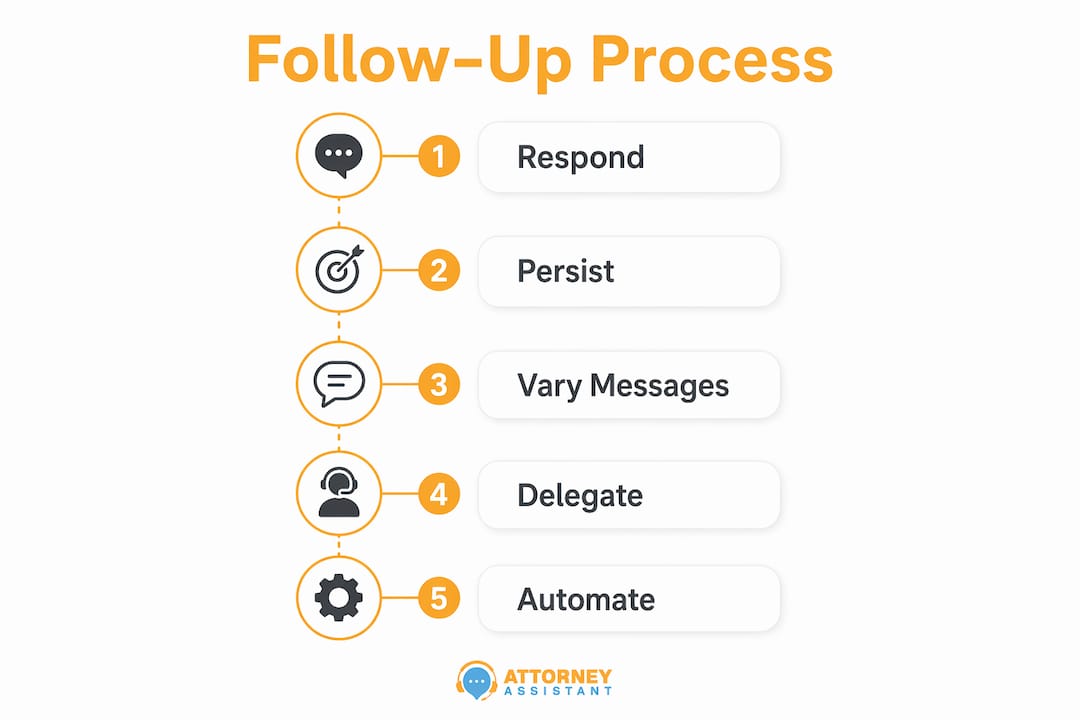
The benefits of immediate follow-up compound when paired with a structured sequence. Here is what an effective follow-up cadence looks like for personal injury intake:
- First contact: Respond within 5 minutes of the inquiry, by phone or automated text acknowledgment.
- Second attempt: Follow up within 24 hours if no response, using a different channel (email if the first was phone, or vice versa).
- Third attempt: Send a brief, value-focused message at 48–72 hours. Reference the type of case and what the firm can do.
- Fourth through sixth attempts: Space these out over the next two weeks. Vary the message angle each time.
- After six attempts: Move the lead to a long-term nurture list rather than dropping it entirely.
Pro Tip: Vary the message angle with each follow-up. One message can address the legal process, the next can explain what to expect at a consultation, and the next can share a brief outcome example. This keeps the conversation useful rather than repetitive.
A well-designed follow-up sequence uses different message angles and includes one clear call to action per message. Stacking multiple asks in a single message reduces response rates. Keep each message focused on one next step.
Why law firms lose cases through poor follow-up
Most personal injury firms lose cases not because of weak legal skills but because their follow-up is inconsistent, transactional, or nonexistent. The operational failure is predictable. Attorneys and staff feel uncomfortable making repeated contact. It feels pushy. So they stop after one attempt and tell themselves the lead was not serious.
That reasoning is expensive. The leads that do not respond immediately are often the most valuable ones. They are comparing firms, gathering information, or simply overwhelmed by their situation. A firm that stays in contact with a clear, calm message stands out from the ones that went silent.
“Follow-up communication is perceived as a proxy for case management quality. Chaotic or pushy follow-ups reduce trust and signal unreliability before the engagement even begins.”
This is the perception problem that most firms miss. How a firm follows up tells a potential client how the firm will handle their case. Disorganized, aggressive, or inconsistent follow-up signals that the firm will be disorganized, aggressive, or inconsistent when managing their claim.
Three specific patterns cause the most damage:
- Transactional messaging. Messages that only ask “Are you ready to sign?” with no added value push clients away. Every message should give the client something useful, even if it is just a brief explanation of the next step in the process.
- Inconsistent timing. Calling once, then waiting a week, then calling twice in one day creates confusion and signals that the firm has no system. Clients notice the pattern.
- Single-channel dependency. Relying only on phone calls misses clients who prefer text or email. A firm that uses only one channel cuts its contact rate significantly.
The signs of ineffective client intake almost always include at least one of these three patterns. Fixing them does not require more staff. It requires a system.
What operational systems actually fix the follow-up gap
The most effective fix for slow or inconsistent follow-up is removing the human decision point from the first response. Lead response automation can reduce response time from hours to under 5 minutes and increase sales-qualified leads by 25%. That is not a technology claim. It is an operational one. When the first acknowledgment is automatic, the firm never misses the critical first window.

Automate the first response
An automated text or email sent within seconds of an inquiry does three things. It confirms the firm received the message. It sets an expectation for when a human will follow up. It keeps the lead warm while staff prepares for the call. This first automated message does not replace the attorney. It buys time and signals responsiveness.
Use self-scheduling to reduce friction
Self-scheduled consultations show 23% higher booking rates than consultations scheduled manually by staff. Real-time calendar integration lets the client pick a time immediately, which locks in commitment before doubt sets in. For personal injury clients who are managing medical appointments and insurance calls, removing one more scheduling friction point matters.
Delegate or outsource follow-up execution
Emotional friction is the primary reason attorneys and staff avoid consistent follow-up. Delegating follow-up to a trained intake team or outsourcing it entirely removes that friction without removing quality. The follow-up still happens. The attorney does not have to feel like they are chasing someone.
Pro Tip: Treat follow-up as a continuous client narrative rather than a series of check-ins. Each message should move the story forward by adding one new piece of relevant information about the case process, the firm’s experience, or what the client can expect next.
| Approach | Typical outcome |
|---|---|
| No system, manual follow-up | Inconsistent contact, high lead drop-off |
| Automated first response only | Faster acknowledgment, but follow-up still gaps |
| Full automated sequence with human handoff | Consistent contact, higher consultation bookings |
| Delegated intake team with structured workflow | Highest conversion, lowest emotional friction for attorneys |
Attorney Assistant builds these systems for personal injury firms. The goal is not to add more technology. It is to close the gap between a lead arriving and a case getting signed.
Key Takeaways
Prompt follow-up is the most direct lever personal injury firms have to increase case conversions, and the data shows that speed, persistence, and system design each play a distinct role.
| Point | Details |
|---|---|
| Speed is a conversion multiplier | Responding within 5 minutes makes qualification 21 times more likely than responding in 30 minutes. |
| Persistence recovers most leads | 93% of converted leads are reached by the sixth attempt; most firms stop after one. |
| Follow-up style signals firm quality | Disorganized or pushy follow-up tells clients how the firm will handle their case. |
| Automation closes the first-response gap | Automated acknowledgment within seconds keeps leads warm and prevents the critical first window from closing. |
| Delegation removes emotional friction | Outsourcing follow-up execution produces more consistent contact without burdening attorneys. |
The follow-up discipline most firms underestimate
I have seen firms spend significant money on advertising and SEO while their intake team sends one email and calls it done. The math never works in their favor. You can generate a hundred leads a month and still lose money if your follow-up process converts only a fraction of them.
What I find most interesting is that attorneys who are meticulous in court are often the least systematic about follow-up. They treat it as a soft skill rather than an operational process. That framing costs them cases. The firms that convert the most leads treat follow-up the same way they treat case preparation: with a defined sequence, clear ownership, and accountability for each step.
The other mistake I see constantly is the “one and done” approach. A firm calls once, leaves a voicemail, and waits. When the client does not call back, the firm assumes the lead was low quality. In reality, structured follow-up in high-value professional services communicates competence. It tells the client that the firm is organized, attentive, and worth trusting with a serious legal matter.
Persistence, done calmly and with value in each message, builds confidence. It does not feel pushy to the client. It feels professional. The firms that understand this distinction sign more cases from the same lead volume, without spending more on marketing.
— Nicole
How Attorney Assistant helps firms stop losing leads
Personal injury firms that fix their follow-up process do not need more leads. They need a system that captures the ones they already have.
Attorney Assistant handles intake, follow-up, and administrative workflows so firms respond faster and convert more leads into signed cases. The free intake audit identifies exactly where leads are falling out of your process and what it is costing the firm in lost revenue. For firms with a backlog of unconverted leads, the lead recovery service re-engages those contacts with structured, professional outreach. If you want to see how the system works before committing, the intake follow-up process guide is a practical starting point. Book a call to talk through what your firm’s numbers look like.
FAQ
Why does response time matter so much for personal injury leads?
Personal injury clients are often in crisis and comparing multiple firms at once. A firm that responds within one hour is 7 times more likely to qualify the lead than one that waits a day.
How many follow-up attempts should a law firm make?
Research shows that 93% of converted leads are reached by the sixth attempt. Firms should plan a structured sequence of at least five to six contacts before moving a lead to a long-term nurture list.
Does automated follow-up feel impersonal to potential clients?
Automated first responses set expectations and keep leads warm. When paired with a human follow-up call, automation improves the client experience rather than replacing it. The key is transitioning to a personal conversation quickly.
What is the biggest reason law firms fail at follow-up?
Emotional friction is the primary barrier. Attorneys and staff avoid repeated contact because it feels uncomfortable. Delegating follow-up to a trained intake team removes that friction and produces more consistent results.
How does follow-up quality affect a firm’s reputation?
Potential clients interpret follow-up behavior as a preview of how the firm will manage their case. Disorganized or inconsistent follow-up signals unreliability before the engagement begins, which reduces trust and conversion rates.
Recommended
Related Articles
Business Telephone Answering Service for Law Firms
How a business telephone answering service works for law firms, including 24/7 intake, qualification, warm transfers, pricing models, and what

Call Flow Customer Service for Law Firms: A Practical Guide
Design a call flow customer service system for your law firm that captures leads, qualifies matters, and signs cases. Practical guide
Fear of Talking on Phone: 7 Practical Confidence Tips
Overcome fear of talking on phone with practical scripts, role-play, exposure exercises, and intake tools built for legal teams.