How to Increase Case Conversions for PI Attorneys
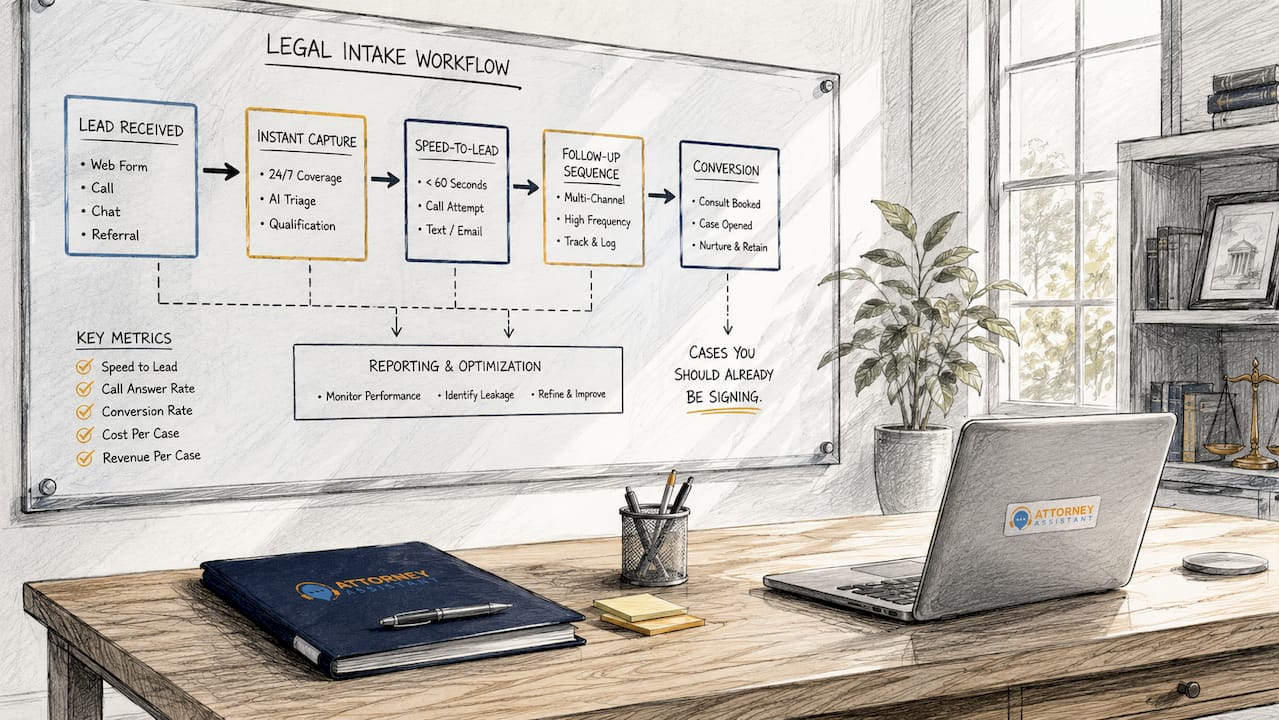
TL;DR:
- Most personal injury firms fail to track key conversion metrics, which hinders operational improvements.
- Optimizing response time, follow-up, and intake forms significantly increases case signings without extra marketing.
Increasing case conversions is defined as the process of turning more inbound leads into signed clients through faster response, structured intake, and persistent follow-up. Most personal injury firms focus on buying more leads when the real problem is operational. Top PI firms achieve 60–70% lead-to-consultation rates and 65–75% consultation-to-retainer rates using 6–8-touch automated follow-up sequences. That gap between average and top-quartile performance is not a marketing problem. It is a systems problem. Firms that fix their intake and follow-up processes consistently outperform firms that simply spend more on advertising.
How to increase case conversions: metrics and tools that matter
You cannot fix what you do not measure. The two most important conversion metrics for personal injury firms are the lead-to-consultation rate and the consultation-to-retainer rate. Top firms hit 60–70% on the first and 65–75% on the second. Most firms do not track either number, which means they have no idea where leads are falling out of the process.
Three additional metrics belong on every firm’s dashboard:
- Response time: How many minutes pass between a lead submitting a form or calling and receiving a reply?
- Follow-up attempts: How many times does your team contact a lead before giving up?
- Abandonment rate: What percentage of leads stop responding before signing?
Integrated CRM dashboards tracking response time, form completion, and lead status improve conversion rates by enforcing accountability. Without a CRM, follow-up depends on memory and sticky notes. Both fail.
| Metric | What it tells you |
|---|---|
| Lead-to-consultation rate | How well your intake process captures interested leads |
| Consultation-to-retainer rate | How well your attorneys close during the consultation |
| Average response time | Whether speed-to-lead is costing you signed cases |
| Follow-up attempt count | Whether your team quits too early in the contact sequence |
| Form abandonment rate | Whether your intake form is creating friction before first contact |
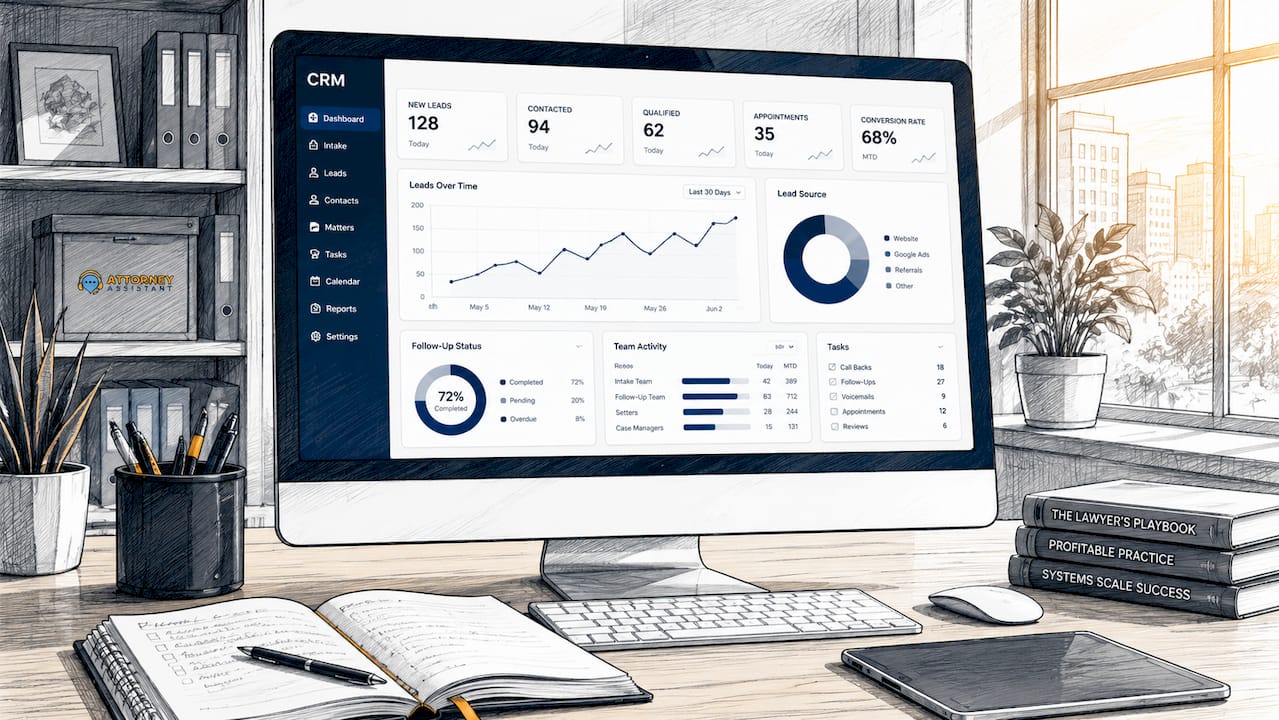
Automation workflows inside a CRM enforce consistency. They send SMS reminders, schedule callbacks, and flag leads that have gone cold. Consistency is what separates firms that convert at 70% from firms that convert at 30%.
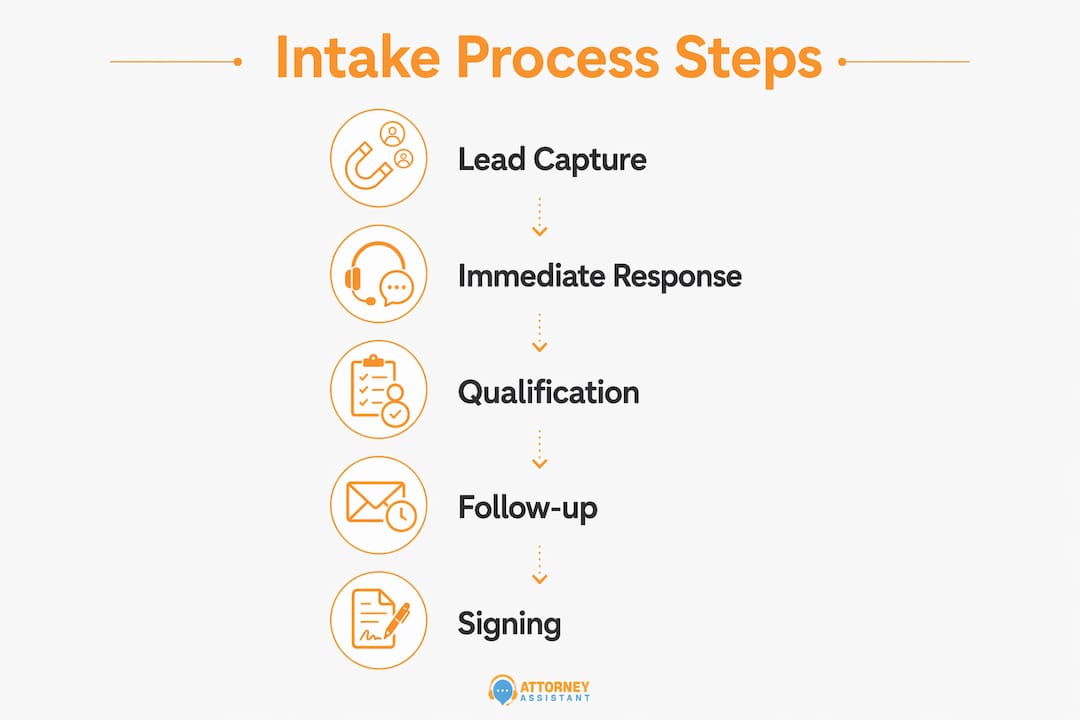
How to optimize the intake process to maximize lead conversion
Intake is a sales function, not an administrative one. The moment a lead submits a form or calls your office, the clock starts. Every minute of delay reduces the probability of signing that case.
Reducing intake web forms to four essential fields produces a 120% lift in conversion rates. Those four fields are name, phone number, email address, and a brief case description. Anything beyond that belongs in the consultation, not the intake form. Firms that ask for accident reports, insurance details, and medical records upfront are training leads to abandon the process before it starts.
Website speed is equally critical. Sites loading under 2 seconds convert three times more visitors than sites loading over 5 seconds. A slow website is invisible friction. Leads do not wait. They click away and call the next firm on the list.
The goal of the intake form is not to gather information. The goal is to secure a brief discovery call. Everything else follows from there.
- Keep forms short: Name, phone, email, and case description only.
- Prioritize mobile: Most PI leads submit forms from a phone, often at the scene of an accident or shortly after.
- Add a video introduction: Attorney video introductions on landing pages increase conversion by 86%. A 60–90 second message from the attorney explaining who they are, what cases they handle, and what happens next builds immediate trust.
- Use empathetic language: Leads are often scared, in pain, or confused. Your intake copy should reflect that.
- Avoid legal jargon: Plain language reduces anxiety and increases form completion.
Pro Tip: Set up a dedicated intake specialist role separate from your attorneys. Attorney involvement in initial intake slows response time and reduces rapport. Attorneys are often too technical for first contact. A trained intake specialist responds faster and connects better with leads who are still deciding whether to call you back.
Transparency during intake also matters. Leads who receive clear information about your contingency fee structure, what the process looks like, and how long cases typically take are less anxious. Less anxiety means fewer drop-offs before the consultation.
What follow-up strategies reliably boost personal injury case signings?
Most firms give up too early. 80% of conversions occur between the 5th and 12th contact attempts. Firms that stop after one or two tries lose the majority of their potential revenue. That is not a lead quality problem. That is a follow-up discipline problem.
A structured multi-touch follow-up sequence looks like this:
- Immediate response (within 5 minutes): Call the lead the moment they submit a form. Responding within 5 minutes increases conversion eightfold compared to a 30-minute delay. Set up automated SMS as a backup if the call goes unanswered.
- Day 1, second attempt: Send a text message with a brief, value-first message. Confirm you received their inquiry and explain the next step.
- Day 2, phone call: A second call attempt with a voicemail that includes your name, firm name, and a clear callback number.
- Day 3, email: A short email summarizing how your firm handles cases like theirs and what a free consultation includes.
- Day 5, SMS follow-up: A brief check-in text. Keep it conversational, not formal.
- Day 7, phone call: Third call attempt. Reference the previous contacts to show you have been consistent, not random.
- Day 10–14, final sequence: One additional call and one final email. If no response, move the lead to a cold nurture sequence rather than deleting it entirely.
Persistent multi-channel follow-up involving at least 7 attempts over two weeks increases contact rates and signed cases. The combination of SMS, phone, and email reaches leads through different channels at different times of day.
Pro Tip: Text messages outperform email for initial contact in personal injury cases. Leads who are injured or dealing with insurance companies check texts faster than email. Build SMS into every step of your follow-up sequence, not just the first touch.
78% of PI cases go to the first attorney who returns the call. Speed is the single biggest competitive advantage available to your firm right now, and it costs nothing to fix operationally. You can also review law firm follow-up best practices to build a sequence that holds up under real caseload pressure.
How to qualify leads efficiently and increase consultation-to-retainer rates
Qualifying leads early saves time and improves the consultation-to-retainer rate. The goal is to assess case viability quickly, set accurate expectations, and move the right leads to a signed retainer without wasting attorney time on cases that do not fit.
A basic qualification script covers four areas:
- Incident type and date: What happened, and when? Statute of limitations issues surface immediately.
- Liability clarity: Is there a clear at-fault party? Cases with disputed liability require more attorney evaluation before committing.
- Injury severity: What medical treatment has the lead received or is currently receiving? This determines case value range.
- Insurance status: Does the at-fault party have insurance? Uninsured motorist cases require a different intake path.
Transparent discussion about fees, contingency structures, communication timelines, and realistic case outcomes during intake reduces prospect anxiety and improves retention. Leads who feel informed are far more likely to sign. Leads who feel confused or pressured call another firm.
Train your intake specialists to address the three most common client fears directly: “How much will this cost me?” (nothing upfront on contingency), “How long will this take?” (give a realistic range, not a promise), and “Will I have to go to court?” (most cases settle, but explain the process honestly).
Building trust during the qualification call is not soft work. It is the primary driver of your consultation-to-retainer rate. Attorneys who treat the consultation as a legal evaluation rather than a trust-building conversation consistently underperform on retainer rates. You can find personal injury intake tips that address these gaps in detail.
The legal consultation workflow for personal injury claims also highlights how setting clear expectations early reduces the number of leads who go silent after the first call. Clarity converts. Ambiguity loses cases.
Key Takeaways
The fastest way to increase case conversions is to fix your intake speed, follow-up consistency, and qualification process before spending another dollar on lead generation.
| Point | Details |
|---|---|
| Speed to lead is decisive | Responding within 5 minutes increases conversion eightfold; 78% of cases go to the first caller. |
| Follow-up requires persistence | 80% of conversions happen between the 5th and 12th contact attempts; stopping early loses most revenue. |
| Short intake forms convert better | Cutting forms to 4 fields produces a 120% lift in conversion rates. |
| Transparency builds retainer rates | Clear fee and process communication during intake reduces anxiety and increases case signings. |
| Dedicated intake specialists outperform attorneys | Trained specialists respond faster and build better rapport than attorneys handling first contact. |
Why intake is the most underrated growth lever in PI law
Personal injury firms spend heavily on Google Ads, SEO, and billboard campaigns. Most of them have no idea what happens to a lead after it hits their website. That gap is where revenue disappears.
I have seen firms with strong lead volume signing fewer cases than smaller firms with half the marketing budget. The difference is always operational. The smaller firm answers the phone faster, follows up more times, and runs a qualification call that actually builds trust. The larger firm assumes volume solves everything.
Intake deserves the same attention as trial preparation. A structured intake process with a trained specialist, a CRM-enforced follow-up sequence, and a transparent qualification script is not overhead. It is your highest-return investment. The firms that treat intake as a sales function, not a clerical one, consistently outperform their peers on case signings without increasing their marketing spend.
The uncomfortable truth is that most PI firms are not losing cases to better attorneys. They are losing cases to faster ones.
— Nicole
How Attorney Assistant helps you sign more cases
Attorney Assistant handles the intake and follow-up work that most firms let fall through the cracks. Missed calls, slow responses, and inconsistent follow-up are operational problems with operational solutions.
Our dedicated intake and reception team answers calls, qualifies leads, and moves prospects toward a signed retainer without pulling your attorneys away from casework. Our lead follow-up service runs structured multi-touch sequences via phone, SMS, and email so no lead goes cold from neglect. If you want to see exactly how this works before committing, our free tools for law firms give you a starting point. You can also book a call to walk through your current intake process and find where cases are slipping out.
FAQ
What is a good lead-to-consultation rate for PI firms?
Top personal injury firms achieve a 60–70% lead-to-consultation rate using structured intake and automated follow-up sequences. Most firms fall well below this benchmark due to slow response times and inconsistent follow-up.
How quickly should a PI firm respond to a new lead?
Responding within 5 minutes increases conversion eightfold compared to a 30-minute delay. Speed is the single most impactful variable in lead conversion for personal injury firms.
How many follow-up attempts should a firm make before giving up?
Firms should make at least 7 contact attempts over two weeks before moving a lead to a cold nurture sequence. 80% of conversions happen between the 5th and 12th contact attempts.
Does intake form length really affect conversion rates?
Reducing an intake form to four fields, name, phone, email, and case description, produces a 120% lift in conversion rates. Every additional field increases the probability that a lead abandons the process before first contact.
Should attorneys handle initial intake calls?
Dedicated intake specialists outperform attorneys on first contact because they respond faster and communicate with more empathy. Attorneys are often too technical for early-stage conversations where trust-building matters most.
Recommended
Related Articles

Litigation Support Services: What Law Firms Need to Know
Discover how litigation support services streamline discovery, reduce costs, and improve case outcomes. Learn what to look for in a provider.
Keep the Conversation Going: 8 Intake Follow-Up Tactics
Learn how to keep the conversation going with law prospects using eight practical intake and follow-up tactics, from speed-to-lead to attorney handoffs.
Preferred Method of Contact for Law Firm Intake
Discover how to capture and use the preferred method of contact in legal intake to improve conversions, ensure compliance, and streamline law firm operations.