Types of Lead Nurturing Strategies for Law Firms in 2026
TL;DR:
- Effective lead nurturing in law firms relies on fast personal contact combined with automated follow-up to convert prospects. Multi-channel strategies and precise segmentation improve engagement and qualification, reducing wasted effort. Consistent, behavior-triggered sequences and timely responses boost long-term client acquisition and revenue.
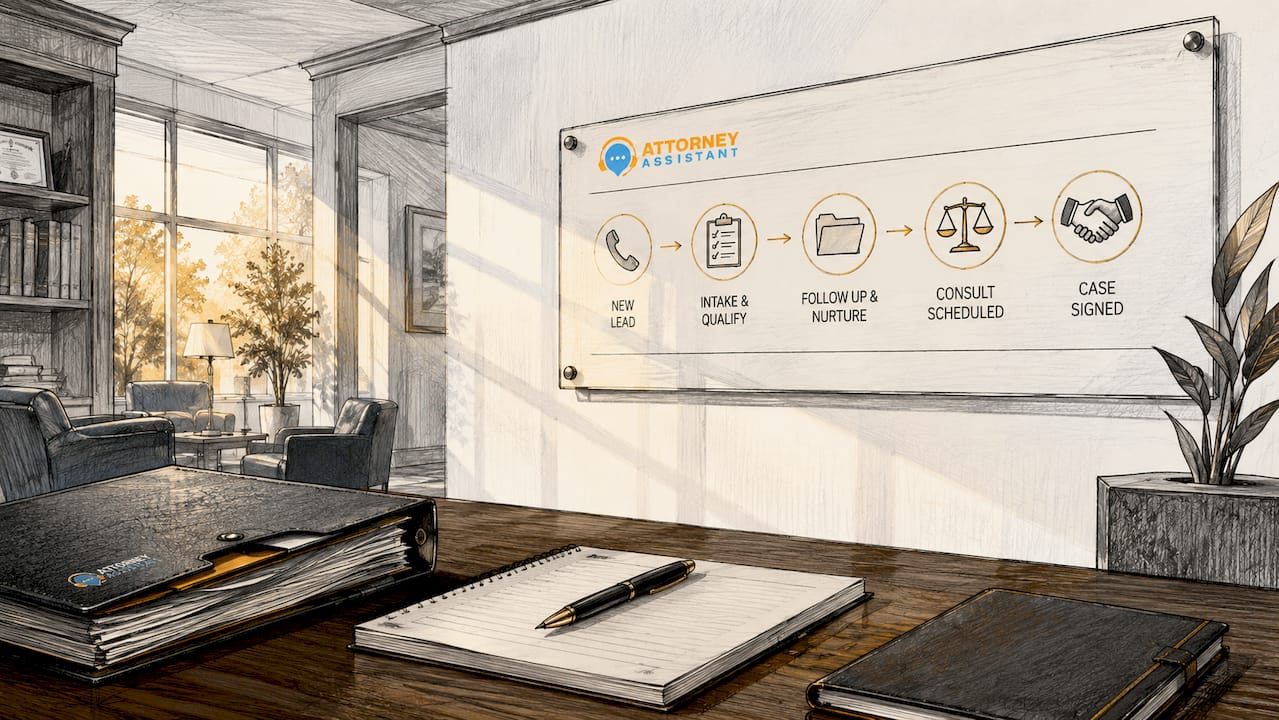
Lead nurturing strategies are structured methods used to engage prospective clients through targeted, timely, and relevant communications that move them steadily toward becoming paying clients. For law firms, selecting the right types of lead nurturing strategies is the difference between a full caseload and a pipeline full of leads that quietly go cold. Responding within the first hour multiplies your chances of qualifying a lead by 7x. That single fact explains why most firms lose revenue not from a lack of leads, but from slow, inconsistent follow-up. Attorney Assistant was built specifically to fix that problem, handling intake, follow-up, and administrative workflows so firms convert more of the leads they already have.
What are the primary types of lead nurturing strategies?
Lead nurturing is a strategic framework with distinct stages that build on each other. It is not a batch of scheduled emails. The main categories each serve a different purpose in moving a prospect from first contact to signed client.
- Email sequences: The most common form. These include educational drips that build awareness, consideration sequences that present your firm’s value, and re-engagement campaigns for leads that have gone quiet.
- Behavior-triggered nurturing: Sequences that fire based on what a prospect does, such as visiting your pricing page, downloading a guide, or clicking a specific link. These outperform fixed-schedule drips because they respond to real intent signals.
- Multi-channel nurturing: Combining email with social media, retargeting ads, LinkedIn outreach, and phone calls. Multi-channel layering improves engagement and moves leads through the pipeline faster than email alone.
- Segmentation-based nurturing: Fitting your messaging to where a lead sits in the decision process, what practice area they need, and how engaged they have been. Generic messaging kills conversion.
- Personalized direct outreach: Phone calls and personal emails from a real person, used after initial digital touchpoints to build trust and accelerate decisions.
Pro Tip: Start every new lead with a personal human touch within the first hour, then hand off to automated sequences. That combination produces the highest qualification rates.
How to implement effective email nurturing strategies for law firms
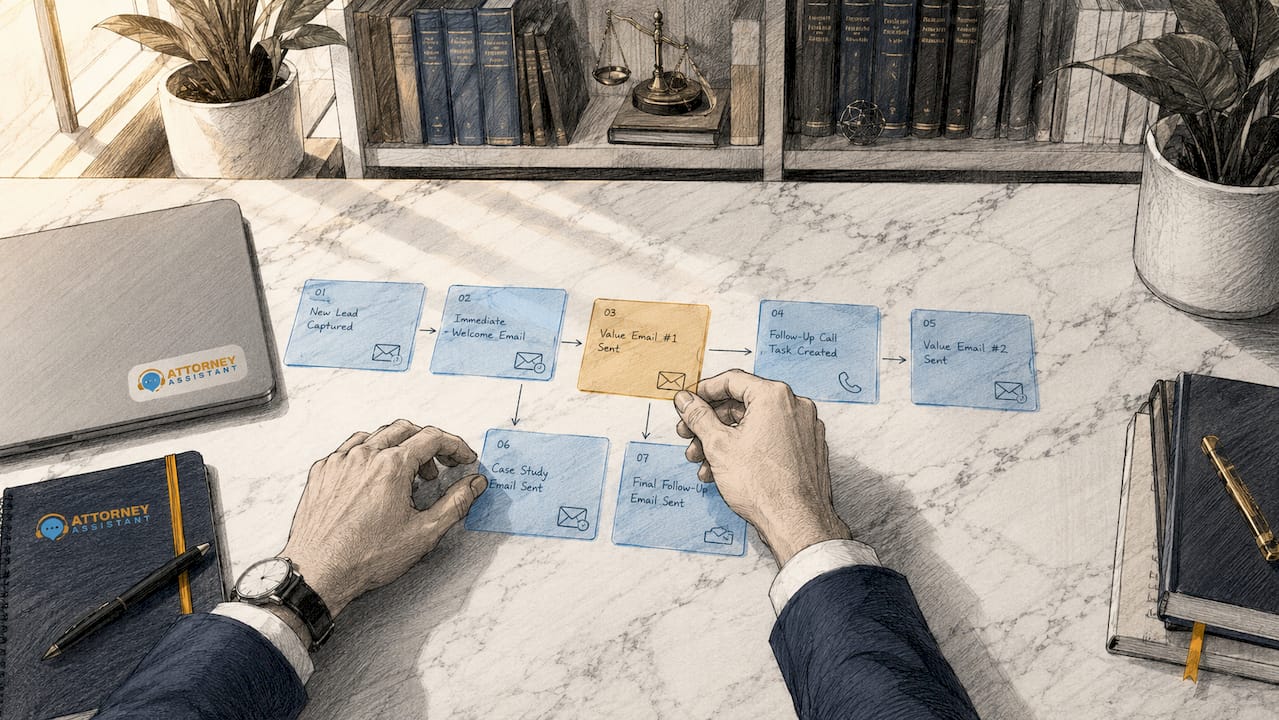
Email remains the backbone of any nurturing program for legal marketing teams. The structure of your sequences matters as much as the content inside them.
1. Front-load your cadence
Send 3–5 emails in the first two weeks after a lead enters your pipeline. Front-loaded email cadences capture attention while your firm is still fresh in the prospect’s mind. After the first two weeks, taper to weekly, then monthly.
2. Build sequences with at least six emails
A single email does not nurture anyone. At least six emails per sequence are recommended across awareness, consideration, and re-engagement tracks. Each email should move the lead one step forward, not repeat the same message.
3. Progress your content logically
Start with education. Explain the legal issue the prospect faces and why it matters. Then introduce proof: case outcomes, client stories, and your firm’s specific approach. Save direct calls to action for later in the sequence, once trust is established.
4. Use behavioral data to adjust sequences
If a lead opens every email but never clicks, your content is interesting but not compelling enough. If they click but do not book, your landing page or intake process has a gap. Track behavior at each step and adjust the next touchpoint accordingly.
5. Combine automation with personal touches
Automated emails handle consistency. Personal emails and calls handle conversion. The two work together. A personal check-in after the third automated email in a sequence consistently outperforms a fully automated track.
Pro Tip: Write your automated emails in a plain-text style with a personal sender name. Emails that look like they came from a real person get higher open and reply rates than branded HTML templates.
Leveraging multi-channel strategies beyond email
Email alone leaves significant engagement on the table. Legal services lead nurturing works best when multiple channels reinforce the same message without overwhelming the prospect.
- Social media posts and ads: Prospects who see your firm’s content on LinkedIn or Facebook between emails stay warmer. Passive visibility builds familiarity before they are ready to decide.
- Retargeting ads: A lead who visited your website but did not convert can be followed with targeted display ads. This keeps your firm visible during the research phase without requiring any action from your team.
- LinkedIn outreach: For commercial litigation, business law, or employment matters, LinkedIn connection requests and direct messages from an attorney or marketing contact add a professional layer of trust that email cannot replicate.
- Phone calls: A well-timed call after two or three digital touchpoints converts at a higher rate than a cold call. The lead already knows who you are. The call feels like a natural next step, not an interruption.
- Coordinated timing: The most effective multi-channel programs sequence touchpoints deliberately. An email on Monday, a retargeting ad impression midweek, and a phone call on Friday create a consistent presence without feeling like a campaign.
The goal is not to be everywhere at once. The goal is to stay visible and relevant until the prospect is ready to act.
How to segment and score law firm leads for tailored nurturing
Segmentation is where most law firm marketing programs break down. Firms either treat every lead the same or create so many segments that the system becomes unmanageable.
The most effective approach separates two distinct scores. Separating lead fit from lead engagement improves qualification accuracy and prevents wasted effort. Fit measures whether the lead matches your ideal client profile: practice area, case type, geography, and budget. Engagement measures behavior: email opens, website visits, form fills, and call history.
A lead with high fit but low engagement needs more nurturing. A lead with low fit but high engagement needs to be redirected or declined. Gating leads against your ideal client profile before they enter a nurture sequence saves your team’s time and your marketing budget.
Design four core nurture tracks based on these criteria:
| Track | Audience | Goal |
|---|---|---|
| New lead onboarding | First-time inquiries | Build awareness and trust |
| Marketing qualified leads | High fit, moderate engagement | Move toward consultation |
| Re-engagement | Cold leads, no activity in 60+ days | Revive interest with new content |
| Lost deal recovery | Leads that chose another firm | Stay visible for future needs |
Pro Tip: Keep separate CRM fields for fit score and engagement score. Combining them into one number hides the real story and leads to poor prioritization decisions.
How to maintain long-term engagement without nurture fatigue
Legal decisions often take weeks or months. A prospect researching a personal injury case or a business dispute may not be ready to hire for 60 to 90 days. Top-of-mind awareness is the primary goal during these extended decision cycles. The challenge is staying present without becoming annoying.
Behavior-triggered sequences solve this problem better than fixed-schedule drips. When a lead revisits your website or re-opens an old email, that signal triggers a new touchpoint. When a lead goes quiet, the system slows down rather than continuing to send at the same pace.
Practical tactics for avoiding fatigue:
- Send one clear call to action per email. Multiple asks confuse leads and reduce response rates.
- Vary content format. Alternate between short articles, client stories, FAQ answers, and brief video links to prevent repetition.
- Adjust frequency based on engagement. Active leads get more frequent contact. Quiet leads get a slower cadence with higher-value content.
- Use re-engagement campaigns after 45 to 60 days of inactivity. A single email asking “Is this still relevant to you?” often reactivates leads that would otherwise be lost.
- Respect the lead’s pace. Effective lead nurturing builds relationships over time. Pushing too hard too fast signals desperation, not competence.
The firms that win long-cycle leads are the ones that stay consistent without being intrusive.
Key takeaways
The most effective lead nurturing programs for law firms combine fast initial response, behavior-triggered sequences, multi-channel visibility, and precise segmentation to convert more leads without increasing marketing spend.
| Point | Details |
|---|---|
| Speed determines qualification | Responding within the first hour increases lead qualification rates by 7x. |
| Email sequences need structure | Use at least six emails per track, front-loaded in the first two weeks. |
| Multi-channel beats email alone | Combine email with retargeting, LinkedIn, and phone calls for higher conversion. |
| Segment fit and engagement separately | Mixing both scores into one number hides which leads deserve priority attention. |
| Behavior triggers outperform fixed drips | Sequences tied to prospect actions produce higher engagement than calendar-based sends. |
What I’ve learned about lead nurturing in law firms
The most common mistake I see law firms make is treating lead nurturing as a volume problem. They add more leads to the top of the funnel while the bottom leaks. The real issue is almost always response time and follow-up consistency, not lead quantity.
The firms that convert best do one thing differently: they make a personal human contact within the first hour, then hand the lead to an automated sequence. Automating after that initial touch keeps the relationship moving without requiring a staff member to manually track every prospect. That combination is not complicated. Most firms just never build it.
Multi-channel nurturing sounds expensive, but the basics cost very little. A LinkedIn connection request from the managing partner, a retargeting ad that runs on a modest budget, and a well-timed phone call do more than a sophisticated email platform used poorly. The channel matters less than the timing and the message.
The hardest part of lead qualification in law is accepting that not every lead deserves equal attention. Firms that gate leads against their ideal client profile before nurturing them save significant time and close at higher rates. Nurturing the wrong leads is not just wasteful. It crowds out the right ones.
— Nicole
Attorney Assistant helps law firms close the follow-up gap
Most law firms have a follow-up problem, not a lead problem. Leads come in, responses go out late or not at all, and cases walk to the next firm that picked up the phone.
Attorney Assistant handles lead follow-up and intake workflows so your firm responds faster and converts more of the leads already in your pipeline. From first contact to signed case, we fix the operational gaps that cost firms revenue every week. Access free tools for law firms to start identifying where your intake process is losing cases, or book a call to see how Attorney Assistant can build a follow-up system that works.
FAQ
What is lead nurturing in a law firm context?
Lead nurturing is the process of building relationships with prospective clients through consistent, relevant communication until they are ready to hire. For law firms, it covers every touchpoint from first inquiry to signed engagement.
How many emails should a law firm send in a nurture sequence?
A minimum of six emails per sequence is recommended, with three to five sent in the first two weeks and the remainder tapering to weekly and monthly cadences.
What is the most effective type of lead nurturing strategy?
Behavior-triggered sequences consistently outperform fixed-schedule drips because they respond to real prospect intent signals rather than arbitrary calendar dates.
How should law firms segment their leads for nurturing?
Separate lead fit (practice area match, geography, case type) from lead engagement (email opens, site visits, calls) and maintain both as distinct scores in your CRM.
Why do most lead nurturing programs fail?
Most failures come from nurture fatigue caused by generic, fixed-schedule content that ignores what the lead is actually doing. Switching to behavior-triggered sequences and varying content format solves the majority of drop-off issues.
Recommended
- The Power of Lead Nurturing in Legal Marketing - Attorney Assistant | Attorney Assistant
- Law firm lead management: convert more clients in 2026 | Attorney Assistant
- Lead Management Best Practices for Law Firms in 2026 | Attorney Assistant
- What Is Lead Follow-Up for Law Firms: 2026 Guide | Attorney Assistant
Related Articles
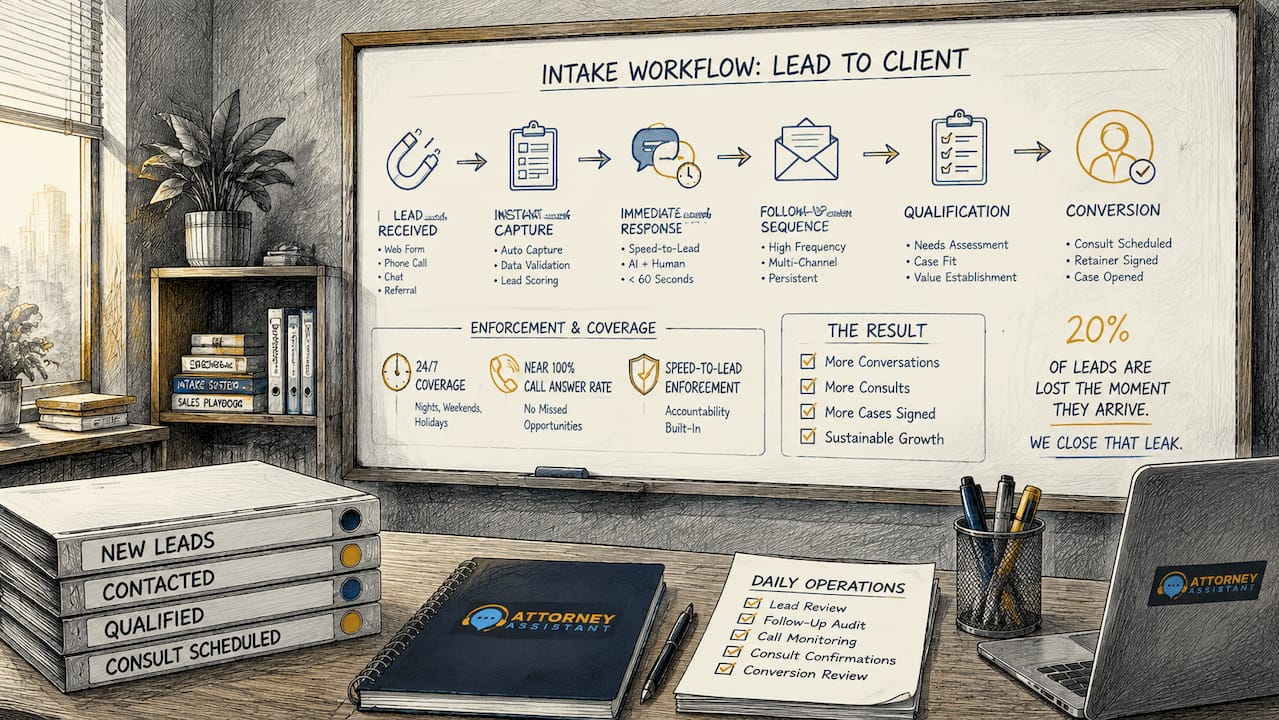
Lead Conversion Workflow for Law Firms: 2026 Guide
Discover effective lead conversion workflow strategies for law firms. Boost your client retention and increase revenue with our 2026 guide.

Convert more leads into signed cases for injury firms
Learn how to convert leads into clients for your injury firm. Boost your revenue by optimizing intake processes and following up effectively!

White Glove Support for Law Firms
Discover how white glove support transforms law firm intake and operations. Learn the metrics, staffing models, and workflows that actually sign cases.