What Is Streamlined Intake for Law Firms in 2026

TL;DR:
- Most law firms lose signed cases due to fragmented intake processes, not a lack of leads.
- Implementing a centralized, automated “single front door” intake boosts efficiency, response times, and conversions.
Streamlined intake is defined as a single, automated, centralized system that receives, routes, and processes every client request from first contact through to case opening. In law firms, this is also called a structured legal intake process or a “single front door” model. Most firms lose signed cases not because they lack leads, but because their intake is fragmented across phone calls, emails, web forms, and staff who each handle requests differently. A properly built intake system fixes that. It captures the right information once, routes it automatically, and keeps the client moving forward without friction or delay.
What is a streamlined intake process in a law firm?
A streamlined intake process is a structured workflow where every prospective client enters through one defined channel, provides a minimum set of information, and receives a consistent, timely response. The industry term for this architecture is “single front door” intake, and it is the foundation of every high-converting legal intake operation.
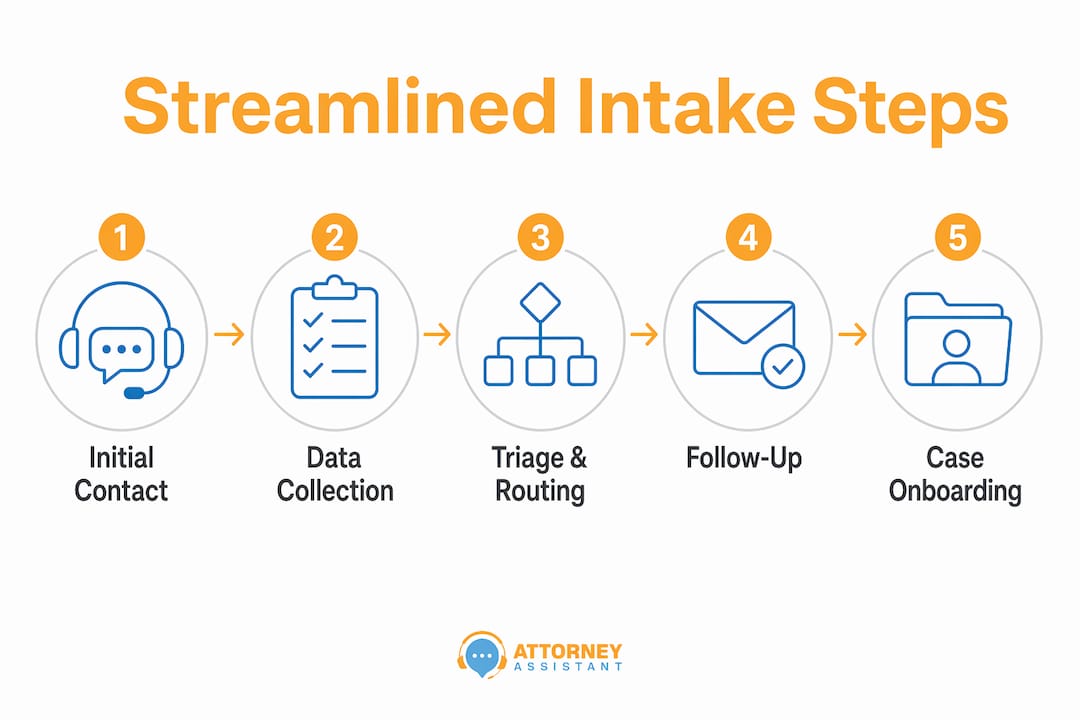
The workflow typically follows these steps:
- A prospect contacts the firm through one primary channel, whether phone, web form, or chat. All other channels redirect to this single point of entry.
- An intake record is created automatically, capturing only the minimum dataset needed for the next decision. This prevents the firm from asking the same questions twice and reduces mid-intake drop-off.
- Automated routing runs in parallel. Conflict checks, practice area assignment, and staff notifications happen simultaneously. End-to-end intake can run in about 15 minutes for standard matters when parallel processing is active.
- A human makes first contact. Automation handles logistics, but a real person responds to the client at the first critical touchpoint. This is where trust is built and drop-off is prevented.
- The record flows into the firm’s CRM or case management system without manual re-entry. The file is ready for the attorney before the first consultation.
Triage decisions in this model use predefined criteria such as urgency, practice area fit, and completeness to route matters consistently. Many firms target a one to two day turnaround for standard matters, while simple requests can be routed within minutes.
Pro Tip: Map your current intake on paper before touching any software. You will almost always find three to five redundant steps that exist only because “that’s how we’ve always done it.”
In 2026, common tools in legal intake workflows include Clio Grow, Lawmatics, and MyCase for CRM and intake form management, alongside AI-powered phone answering services that capture structured data from live calls. The specific tool matters less than whether the data it collects flows directly into the systems your staff actually use.

What are the benefits of adopting a streamlined intake process?
The operational and client-facing benefits of a structured intake process are measurable and significant. Firms that consolidate legal intake report response time improvements of 40 to 60 percent, which directly increases the number of leads that convert to signed cases. That is not a marginal gain. It is the difference between a firm that grows and one that stays flat despite spending on marketing.
The core benefits break down into three categories:
- Operational efficiency. Legal teams using structured intake spend less time on administrative tasks and more time on billable work without increasing headcount. Fewer handoffs mean fewer errors. Fewer errors mean fewer callbacks and corrections.
- Client experience. Prospects who move through a clean intake process feel heard and organized from the first interaction. Firms that reduce intake friction see measurably lower drop-off rates before the retainer is signed.
- Data and visibility. A centralized intake system generates the KPIs that most firms currently lack. Key metrics include time-to-first review, total processing time, and intake completion rate. These numbers tell you exactly where prospects are abandoning the process and why.
“A consolidated legal intake process reduces email chaos and improves service delivery visibility.” — LawVu
The resource allocation benefit is often underestimated. When intake is structured, staff know exactly what to do with each request. There is no guessing, no asking a partner, and no letting a lead sit in an inbox over the weekend. Workload balances across the team because the routing rules are defined in advance, not decided case by case.
For firm growth, the math is straightforward. If your firm spends $300 per lead and converts 20 percent of them, fixing intake to convert 30 percent is worth more than buying 50 percent more leads. Case intake is where marketing spend either pays off or disappears.
How to implement a streamlined intake process in your firm
Implementation does not require a complete technology overhaul. It requires discipline, clear ownership, and a willingness to redesign the workflow before selecting tools.
- Audit every current intake channel. List every way a prospect can reach your firm today: phone, email, web form, social media, referral. Then decide which one becomes the primary channel and how all others redirect to it.
- Define your minimum dataset. Ask only what you need to make the next decision. For most firms, that is name, contact information, matter type, and a brief description of the situation. Avoid adding nice-to-have fields that cause prospects to abandon the form before submitting.
- Use conditional logic in intake forms. A personal injury intake should not ask the same questions as a business contract dispute. Conditional questions keep the form short for every prospect while still capturing the right information for each matter type.
- Integrate automation for repetitive tasks. Conflict checks, CRM entry, calendar reminders, and follow-up emails should all run without staff intervention. If your digital intake tools do not connect directly to your case management system, you are creating manual re-entry work that erases the efficiency gains.
- Assign intake ownership. One person or role must own the intake process. That person is responsible for monitoring completion rates, flagging drop-offs, and updating the workflow when problems appear.
- Train staff and measure outcomes. Track completion rate and time-to-first-contact weekly for the first 90 days. Adjust based on what the data shows, not on what feels right.
Pro Tip: Run a 30-day pilot with one practice area before rolling out firm-wide. You will catch integration problems and staff resistance early, when they are still cheap to fix.
Common challenges and pitfalls when improving intake
Most intake improvement projects fail not because the technology is wrong, but because the underlying workflow was never redesigned. Automation layered on old workflows often slows intake down rather than speeding it up, because staff still perform manual steps that the system was supposed to eliminate.
The most common pitfalls are:
- Data entry duplication. When a digital intake form outputs a PDF that staff then type into a separate system, the firm has added a step rather than removed one. Manual re-entry introduces transcription errors and delays that negate the original benefit.
- Asking for too much information too soon. Long intake forms with 20 or more fields have significantly lower completion rates than short forms. Collect only what you need to qualify the lead and schedule the consultation.
- Resistance to protocol exceptions. Every firm has staff who route certain clients differently because of a relationship or a preference. These exceptions break the single front door model and create invisible gaps in tracking.
- Poor integration with existing legal systems. If your intake tool does not connect to Clio, MyCase, or whatever platform your attorneys use daily, the data will not follow the client through the process.
- No defined ownership or governance. Without one person accountable for intake performance, the process drifts back to informal habits within weeks of launch.
The fix for most of these problems is the same: redesign the workflow first, then select and configure the tools to match it. Successful intake depends on both technology and adoption by the legal and administrative teams who use it every day.
Key takeaways
A streamlined intake process is the single highest-leverage operational change a law firm can make to convert more leads without spending more on marketing.
| Point | Details |
|---|---|
| Single front door model | All prospects enter through one defined channel to prevent tracking gaps and inconsistent handling. |
| Minimum dataset design | Collect only what is needed for the next decision to keep completion rates high and drop-off low. |
| Automation plus human contact | Automate routing and data capture, but keep a real person at the first client touchpoint. |
| Measure intake KPIs | Track time-to-first-contact and completion rate weekly to identify and fix bottlenecks fast. |
| Redesign before you automate | Layering tools on a broken workflow creates more problems than it solves. Fix the process first. |
Why intake is the most underrated lever in a law firm
I have worked with enough law firms to say this plainly: most of them have a conversion problem, not a lead problem. They spend real money on Google Ads, SEO, and referral networks, and then let those leads sit in an email inbox over the weekend because no one owns the intake process.
What surprises me every time is how simple the fix usually is. It is not about buying the most expensive intake software. It is about deciding who answers the phone, what they ask, where they log it, and what happens next. That decision tree, written down and enforced, is worth more than any platform subscription.
The firms I have seen grow fastest are not the ones with the most sophisticated tech stack. They are the ones with the most disciplined intake process. They respond within minutes, not days. They ask the right questions the first time. They do not let a prospect fall through the cracks because two staff members assumed the other one followed up.
If you are a firm owner reading this, the question is not whether you need a better intake process. The question is how much revenue you have already lost by not having one. Start with intake optimization basics and build from there. The operational discipline you build around intake will pay dividends in every other part of the firm.
— Nicole
How Attorneyassistant helps law firms fix intake
Attorneyassistant is built specifically for law firms that are losing revenue from the leads they already have. Missed calls, slow follow-up, and inconsistent intake are operational problems, and they have operational solutions.
Attorneyassistant handles intake, follow-up, and administrative workflows so your firm responds faster and converts more leads into signed cases. Whether you need a fully managed intake process or support filling specific gaps, the team at Attorneyassistant works inside your existing systems to reduce chaos and improve results. Explore Attorneyassistant’s intake services to see exactly how the process works, or book a call to talk through what your firm needs.
FAQ
What is streamlined intake in a law firm?
Streamlined intake is a centralized, automated process where every prospective client enters through a single channel, provides a minimum set of information, and receives a consistent, timely response. It replaces fragmented, informal intake with a defined workflow that routes requests, runs conflict checks, and creates case records without manual intervention.
How does a streamlined intake process improve lead conversion?
Firms using structured intake report response time improvements of 40 to 60 percent, which directly increases the percentage of leads that sign retainers. Faster, more consistent follow-up is the primary driver of higher conversion rates.
What is the minimum dataset in legal intake?
The minimum dataset is the smallest set of information needed to make the next intake decision, typically name, contact details, matter type, and a brief situation description. Collecting only this information keeps completion rates high and prevents prospects from abandoning the intake form before submitting.
What are the most common intake pitfalls for law firms?
The most common pitfalls are automating without redesigning the workflow, asking for too much information too soon, and failing to integrate intake tools with existing case management systems. Each of these creates manual rework that cancels out the efficiency gains from any technology investment.
How long does it take to process a streamlined intake request?
With parallel processing of conflict checks, routing, and notifications, standard intake matters can be completed in approximately 15 minutes. Simple requests can be routed within minutes when the workflow and automation are properly configured.
Recommended
Related Articles

Tips for Improving Case Intake at Your Law Firm
Discover essential tips for improving case intake at your law firm. Boost conversion rates and secure more clients with effective strategies.

How to Enhance Intake Efficiency at Your Law Firm
Learn how to enhance intake efficiency at your law firm. Boost client conversions with actionable strategies and streamlined processes.

Intake Process Best Practices for Personal Injury Firms
Discover essential intake process best practices for personal injury firms. Boost your case wins by optimizing every step from call to closure!