Boost case conversion: Legal intake trends shaping 2026

TL;DR:
- Effective intake processes are now the key revenue drivers, not just lead volume.
- AI-driven systems boost conversion rates and save substantial administrative hours through automation.
- Hybrid models combining AI speed with human empathy maximize client trust and case signings.
Most personal injury firms believe their growth problem is a lead volume problem. It is not. AI-driven intake systems are now driving major conversion improvements for PI firms, yet most managing partners are still pouring budget into marketing while their intake process quietly leaks signed cases every single week. The real gap is not at the top of the funnel. It is in the window between a prospect’s first call and a signed retainer. In 2026, the firms pulling ahead are not the ones with the biggest ad spend. They are the ones who engineered intake into a revenue machine.
Table of Contents
- Why legal intake is the new revenue engine
- AI-driven intake systems: Speed, scale, and smarter workflows
- Human touch matters: Scripting, empathy, and hybrid models
- Mastering multi-channel follow-up and nurturing leads
- Our perspective: The uncomfortable truth about legal intake automation
- Take your intake strategy to the next level
- Frequently asked questions
Key Takeaways
| Point | Details |
|---|---|
| AI-driven intake dominance | AI-powered systems now handle most legal intake with higher conversion and efficiency. |
| Early qualification crucial | Screen leads early to protect attorney time and boost case quality. |
| Empathy differentiates | Despite AI gains, empathy and personalized follow-up remain key to client trust and retention. |
| Multi-channel follow-up wins | Quick, persistent follow-up multiplies conversion rates compared to slower firms. |
| Hybrid approach prevails | Blending AI efficiency with human insight delivers the best results for PI law firms in 2026. |
Why legal intake is the new revenue engine
For years, intake was treated as a clerical function. Someone answered the phone, collected basic information, and passed it along. If a lead slipped through, it was unfortunate but not tracked, not analyzed, and certainly not treated as lost revenue. That mindset is now a competitive liability.
Every inbound call, web form submission, or chat message represents a real case opportunity. When you treat intake as an administrative cost center, you underfund it, understaff it, and under-optimize it. When you treat it as a revenue lever, everything changes. You start measuring response times, tracking conversion rates, and building structured workflows that protect your pipeline.
Firms that qualify early and treat intake as revenue rather than admin see transformative results. Early qualification is especially important in personal injury because not every caller has a viable case. Without a structured triage process, your attorneys spend time on unqualified leads while strong cases wait too long and go elsewhere.
Here is what a modern, revenue-focused intake function looks like:
- Immediate response protocols that reach leads within minutes, not hours
- Structured qualification scripts that identify case strength early in the conversation
- Nurture sequences for leads who are not ready to sign but may be within 30 to 90 days
- HIPAA-compliant data handling for all medical and injury-related information collected during intake
- Conversion tracking so you know exactly where leads drop off and why
“Intake is not a support function. It is the first and most critical sales conversation your firm has with a potential client.”
Nurturing not-yet-ready leads is one of the most underused tactics in PI intake. A prospect who was in an accident last week may not be ready to commit today, but a consistent, empathetic follow-up sequence can turn that lead into a signed case 60 days from now. Building effective intake processes that include nurture workflows is no longer optional if you want to maximize the value of every lead your marketing generates.
Pro Tip: Assign a dedicated intake coordinator whose sole performance metric is conversion rate from first contact to signed retainer. When intake has an owner, results improve fast.
AI-driven intake systems: Speed, scale, and smarter workflows
The 2026 intake landscape looks nothing like it did three years ago. AI platforms now manage the entire workflow from the moment a lead enters your system to the point a retainer is signed, often without a human ever getting involved.
The numbers are striking. Conversion rates jumping from 8% to 29% and signed cases doubling are now documented outcomes for firms deploying AI intake systems. Even more remarkable, 95% of clients complete the intake process without needing human escalation at all. That is not a minor efficiency gain. That is a structural change in how law firms operate.
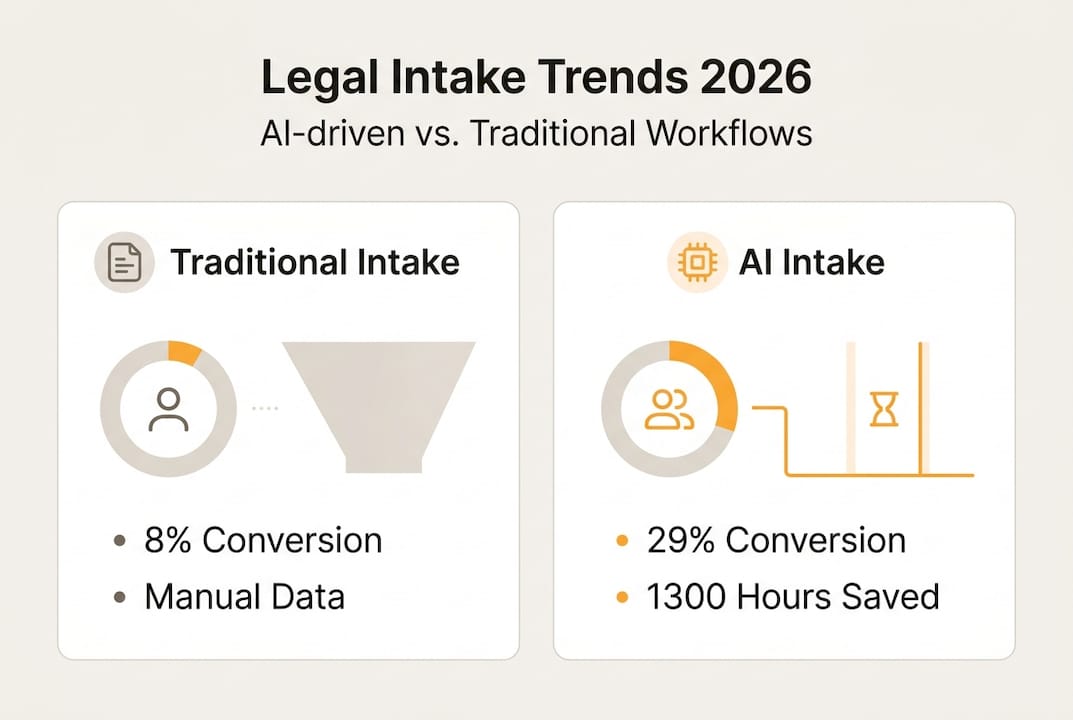
| Metric | Traditional intake | AI-driven intake |
|---|---|---|
| Conversion rate | ~8% | Up to 29% |
| Admin hours saved per year | Baseline | 1,300+ hours |
| Intake completion without human | Low | 95% of cases |
| Signed cases | Baseline | Up to 2x increase |
Mid-size firms are realizing over 1,300 saved admin hours per year by automating intake workflows. That is time your staff can redirect toward case management, client communication, and the work that actually requires human judgment.
One emerging role worth noting is the “AI Manager,” a team member responsible for tuning and monitoring AI intake platforms. This person ensures the system balances efficiency with empathy, adjusts scripts based on conversion data, and flags cases that need human review. It is a hybrid role that did not exist five years ago and is now becoming standard at forward-thinking firms.
Understanding the AI impact in law firms goes beyond just intake speed. AI platforms also reduce errors in data collection, ensure consistent compliance with intake protocols, and integrate directly with case management systems. For firms evaluating options, managing legal risks with AI is a critical consideration before deployment.
If your firm has not yet explored intake solutions built for 2026, you are likely leaving signed cases on the table every month.
Human touch matters: Scripting, empathy, and hybrid models
AI handles the volume. Humans handle the moments that matter. That distinction is the foundation of every high-performing intake operation in 2026.

Personal injury clients are often calling your firm on one of the worst days of their lives. They are in pain, confused, and scared about their financial future. An AI system can collect their information efficiently, but a trained human intake specialist can make them feel heard, build trust, and dramatically increase the likelihood they sign with your firm instead of the competitor they called an hour later.
Hybrid intake models are now the preferred structure: AI handles the routine, repetitive, and after-hours intake tasks, while humans step in at key emotional decision points. Here is how to structure that handoff effectively:
- AI handles initial contact and collects basic case facts, injury details, and contact information
- Automated qualification scoring routes strong cases to a human specialist immediately
- Human specialist takes over for the empathy-driven conversation that leads to a signed retainer
- AI manages follow-up for leads that did not convert on the first contact
- Human reviews and adjusts scripts and workflows monthly based on conversion data
The importance of intake specialists cannot be overstated in this model. These are not receptionists. They are trained conversion professionals who understand PI law, know how to handle emotional conversations, and follow structured scripts that keep every call compliant and on-brand.
Unified scripts are a non-negotiable component of this system. When every intake conversation follows a proven framework, you eliminate the variability that kills conversion rates. Explore communication strategies for intake and review streamlining intake scripts to build a consistent process your whole team can execute.
Pro Tip: Review intake script examples built specifically for PI firms. A well-tested script is the single fastest way to lift your conversion rate without adding headcount.
| Factor | AI-only intake | Hybrid intake |
|---|---|---|
| Speed of response | Instant | Instant (AI first) |
| Empathy and trust-building | Limited | High (human at key points) |
| Scalability | Very high | High |
| Conversion on complex cases | Moderate | Highest |
Mastering multi-channel follow-up and nurturing leads
You can have the best intake script in the country and still lose cases because your follow-up is too slow or too sparse. Follow-up is where most PI firms leak the most revenue, and the data is clear about what works.
Responding within 5 minutes quadruples your conversion rate compared to responding within 30 minutes or longer. That is not a marginal improvement. That is the difference between a signed case and a lead who called your competitor next. Speed is the single most controllable variable in your intake process.
But speed alone is not enough. Consistency across multiple touches is what converts hesitant leads into clients. The optimal follow-up sequence looks like this:
- First contact within 5 minutes via phone call
- Text message follow-up within 15 minutes if the call goes unanswered
- Email follow-up with case evaluation information within 1 hour
- Second call attempt within 4 hours of initial contact
- 3 to 8 total touches spread across the first 48 to 72 hours
Multi-touch follow-up sequences in that 48 to 72 hour window yield 300 to 391% more conversions than single-touch attempts. That number should make every managing partner rethink how their follow-up is currently structured.
“Most firms make one or two attempts and move on. The firms winning in 2026 make eight touches in three days and have a nurture sequence that runs for 90 days after that.”
Nurture sequences for not-yet-ready leads are equally important. A prospect who was injured last week, is still in the hospital, or is waiting on a police report is not ready to sign today. But a structured email and text sequence that checks in, provides helpful information, and keeps your firm top of mind will convert a significant percentage of those leads within 30 to 90 days. Missed follow-up is not just a process failure. It is a direct revenue loss that compounds over time.
Our perspective: The uncomfortable truth about legal intake automation
Here is something the AI vendors will not tell you: automation does not fix a broken process. It amplifies it. If your intake is slow, disorganized, or impersonal, adding an AI layer will just make it faster at being slow, disorganized, and impersonal.
We have seen firms spend tens of thousands on intake technology and see zero improvement in signed cases. The reason is almost always the same. They treated intake as an admin problem and bought a tech solution for it. Intake is a revenue problem, and it requires a revenue mindset to solve.
The firms that actually win are the ones that invest in real-world intake best practices first: clear scripts, empathy training, rapid response protocols, and a blended team structure. Then they layer technology on top of that foundation. The result is a system that scales without losing the human connection that converts PI clients.
In 2026, the best intake operations are not the most automated ones. They are the most intentional ones.
Take your intake strategy to the next level
The trends covered in this article are not theoretical. They are the exact frameworks that high-converting PI firms are deploying right now to sign more cases from the same lead volume they already have.
Attorney Assistant gives you the tools and the team to execute. Join our intake masterclass webinar to see live intake optimization strategies in action. Activate automated lead follow-up to ensure no lead goes cold after hours or on weekends. Or explore our 24/7 intake solutions built specifically for personal injury firms that want to stop leaking revenue and start converting more of what they already have.
Frequently asked questions
What is the top legal intake trend for personal injury firms in 2026?
AI-driven intake systems that combine automation with selective human interaction are leading in 2026, delivering higher conversion rates and dramatically reduced manual workload for PI firms.
How much can response time impact intake conversions?
Responding within 5 minutes can quadruple your intake conversion rate compared to slower response times, making speed the most controllable and highest-impact variable in your intake process.
Do clients prefer talking to AI or humans during intake?
Most clients are comfortable starting with AI for efficiency, but hybrid intake models show that clients expect and respond better to human empathy at key emotional decision points during the intake process.
Are there compliance risks with automated legal intake systems?
Yes, any intake system collecting medical or injury-related data must ensure HIPAA compliance and robust data security protocols, particularly for personal injury cases involving sensitive health information.
How can smaller firms compete with large firms using advanced intake tech?
Mid-sized firms deploying AI and hybrid intake solutions are saving over 1,300 admin hours yearly and doubling signed cases, making advanced intake technology a genuine equalizer against larger competitors.
Recommended
- Legal assistants in PI intake: boost conversions fast | Attorney Assistant
- Optimize law firm intake and convert 80% more leads | Attorney Assistant
- Master legal intake to boost PI case conversions by 40% | Attorney Assistant
- Law firm lead management: convert more clients in 2026 | Attorney Assistant
Related Articles

Top 6 alertcommunications.com Alternatives 2026
Discover 6 alertcommunications.com alternatives for law firms to improve client intake and boost lead conversion effectively.

How to optimize legal practice workflow for PI firms
Learn how PI law firms can optimize legal practice workflow to cut admin time, speed up intake, and convert more leads into signed cases with proven strategies.

Optimize law firm intake and convert 80% more leads
Learn how PI firms can optimize intake and follow-up to convert more leads into signed cases, reduce revenue loss, and build a scalable growth process.