Inbound Calls Management for Law Firms: 2026 Guide

TL;DR:
- Effective inbound call management increases law firm conversions and prevents revenue loss from missed calls.
- Implementing strategic routing, automation, and analytics significantly improves call handling and client satisfaction.
Inbound calls management is the strategic system that governs how a law firm receives, routes, and resolves every incoming call to protect client acquisition and reduce revenue loss. The industry term is “inbound call management,” and it covers everything from IVR menus and call routing logic to CRM integration, agent workflows, and post-call follow-up. Law firms that treat phone calls as a passive function lose cases before they ever open a file. The firms that treat call management as an operational discipline convert more leads, retain more clients, and run leaner intake teams.
What is inbound calls management in a law firm?
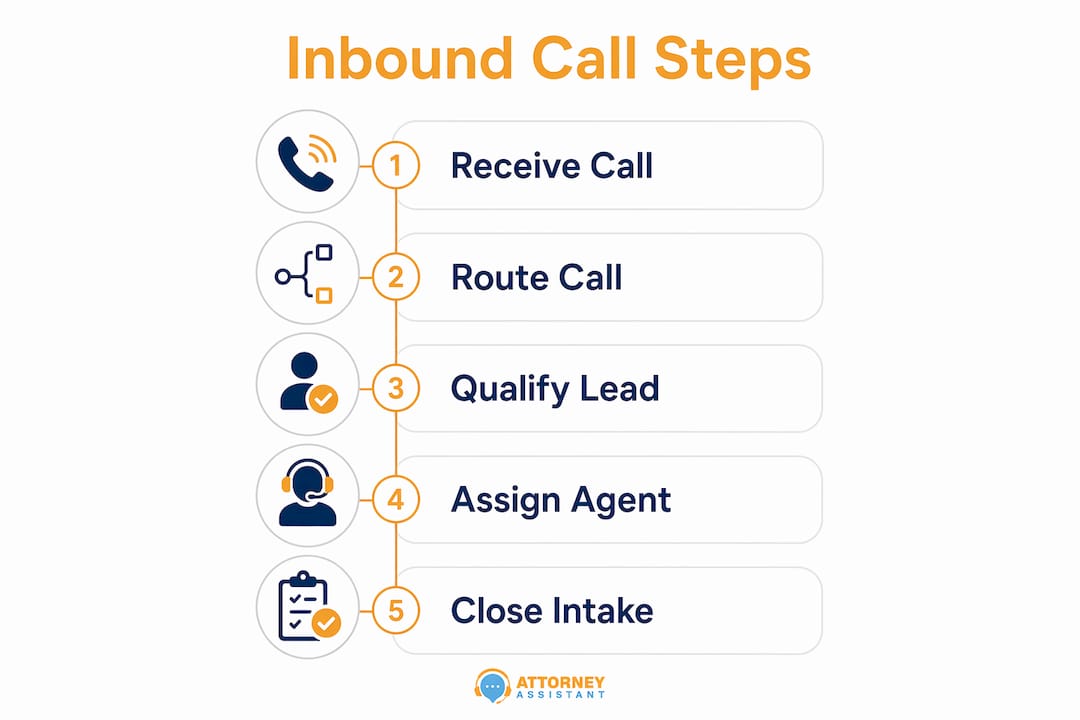
Inbound call management is the end-to-end system a firm uses to handle every call from the moment it rings to the moment it closes. It is not just answering the phone. It is the architecture behind who answers, how fast they answer, what information they have when they pick up, and what happens after the call ends.
The system has five core components:
- Call routing: Directs each caller to the right person or team based on intent, case type, or availability. Skill-based routing sends calls to the most qualified agent. Intent-based routing goes further by matching the caller’s stated need to the correct workflow before a human even picks up.
- IVR (Interactive Voice Response): The automated menu that captures caller intent before connection. A well-designed IVR reduces transfers and cuts wait time. A poorly designed one drives callers to hang up.
- Queue management: Controls how callers wait. Firms with no queue strategy lose callers after 90 seconds. Call-back options and estimated wait messaging reduce abandonment significantly.
- Agent workflows: The process an intake specialist follows once connected. This includes greeting scripts, qualification questions, CRM data entry, and escalation paths for complex cases.
- Call analytics: Tracks speed to answer, call duration, abandonment rate, and first-call resolution. These metrics tell you where the system is breaking down.
Inbound call management is the strategy; inbound call handling is the tactical execution by the agent after the call connects. Confusing the two is a common mistake. Firms that only train agents without fixing the routing and queue logic will keep losing calls at the system level, regardless of how skilled their staff is.
Why does inbound call management matter for law firms?
The financial stakes are direct and measurable. Law firms can lose up to $126,000 annually from missed calls and poor lead qualification. That number is not a worst-case scenario. It reflects the compounding effect of missed calls, slow responses, and callers who never call back.
“Law firms don’t lose cases because they lack talent. They lose cases because the phone rang and nobody answered it the right way.”
The industry benchmark is 80% of calls answered within 20 seconds. The actual average is 28 seconds. That gap matters because legal callers are often in distress. They are calling about an accident, a custody dispute, or a criminal charge. A 30-second wait feels much longer when the stakes are personal.
62% of law firm calls go unanswered due to insufficient staffing or after-hours gaps. Each missed call can cost between $100 and $1,200 in lost revenue depending on the case type. A personal injury firm missing five calls a day at $500 per missed opportunity is losing $2,500 daily before lunch.
Client expectations compound the problem. 73% of callers say their time is the most important factor when judging service quality. A caller who waits too long, gets transferred twice, or has to repeat their story will not sign a retainer. They will call the next firm on their list.
78% of callers expect complex issues to be resolved in a single call. For legal intake, that means the first call must qualify the lead, gather key facts, and set a clear next step. Firms that treat the first call as a message-taking exercise lose those leads permanently.
The signs of ineffective intake are often invisible until you measure them. High call abandonment rates, low conversion from inquiry to consultation, and repeat callers are all symptoms of a broken call management system.
How does technology improve inbound call management?
The technology gap between firms that convert calls and firms that miss them is widening. The tools available in 2026 make it possible for a small team to handle a high call volume without sacrificing quality.

| Technology | Primary function | Key benefit for law firms |
|---|---|---|
| AI voice agents | Answer and qualify calls 24/7 | Cost 87–97% less than human receptionists per interaction |
| CRM integration | Surface caller history at connection | Reduces dead air and repeat questioning |
| Intent-based routing | Match caller need to correct workflow | Fewer transfers, faster resolution |
| Real-time analytics dashboards | Track KPIs live | Identify bottlenecks before they compound |
| Call-back systems | Hold caller’s place in queue | Reduces abandonment without adding staff |
AI voice agents are the most significant shift in inbound call handling in the past five years. They operate around the clock, handle unlimited simultaneous calls, and reduce contact center costs by up to 30% while improving client satisfaction by 15–20%. They do not replace human agents for complex or emotional calls. They handle routine intake questions, collect basic case information, and escalate appropriately.
CRM integration with caller ID allows an intake specialist to see the caller’s name, prior contact history, and case type before saying hello. That context eliminates the frustrating experience of repeating information and positions the agent to ask better questions from the first sentence.
Pro Tip: Set your AI voice agent to collect three pieces of information before escalating: the caller’s name, the type of legal matter, and their preferred callback time. This gives your intake team everything they need to open the conversation with confidence.
Real-time analytics dashboards give practice managers visibility into what is happening on the phones right now, not in a weekly report. When abandonment rates spike on Monday mornings, you can adjust staffing or queue messaging before the week compounds the problem.
What are the best practices for managing inbound calls at a law firm?
Effective call management at a law firm is an operational discipline, not a staffing decision. The following practices separate firms that convert calls from firms that lose them.
-
Design intent-based routing from the start. Standard skill-based routing is insufficient for legal intake. Route calls by the caller’s stated intent, such as new injury claim, existing client follow-up, or billing question, not just by agent availability. This reduces transfers and gets callers to the right person faster.
-
Train intake specialists on first-call resolution. Every intake call should end with a clear next step: a scheduled consultation, a signed retainer, or a confirmed callback. Agents who close calls with “someone will be in touch” are leaving leads open to competitor contact.
-
Use call-back options for every queue. Callers who are offered a call-back instead of hold music stay in the queue at a much higher rate. This is a low-cost change with a direct impact on abandonment rates.
-
Measure four KPIs every week: speed to answer, first-call resolution rate, call abandonment rate, and lead-to-consultation conversion rate. These four numbers tell you the health of your entire intake operation. If you are not measuring them, you are managing by assumption.
-
Build post-call follow-up into the workflow. A caller who does not sign on the first call is not a lost lead. A structured follow-up sequence, whether by text, email, or a second call, recovers a meaningful portion of warm leads. Legal intake tips consistently show that follow-up timing is as important as the quality of the first call.
-
Audit your after-hours coverage. Most firms lose the highest volume of calls between 5 PM and 9 AM. If your phones go to voicemail after hours, you are handing those leads to competitors who answer.
Pro Tip: Record and review five intake calls per week. Listen specifically for moments where the agent asks the caller to repeat information, transfers the call unnecessarily, or ends without a confirmed next step. Those three patterns account for the majority of lost leads in legal intake.
Common pitfalls include over-relying on voicemail, using generic IVR menus that do not reflect actual case types, and failing to track which call sources convert at the highest rate. Avoiding critical intake mistakes requires reviewing real call data, not assumptions about how the phones are being handled.
Key Takeaways
Inbound call management is the single operational system that determines whether a law firm converts its existing leads or loses them to competitors who answer faster.
| Point | Details |
|---|---|
| Define the system clearly | Inbound call management covers routing, IVR, queue logic, agent workflows, and analytics together. |
| Measure the financial cost | Missed calls cost law firms up to $126,000 annually and up to $1,200 per unanswered call. |
| Apply intent-based routing | Route calls by caller intent, not just agent availability, to reduce transfers and improve resolution. |
| Use AI for after-hours coverage | AI voice agents handle calls 24/7 at 87–97% lower cost and escalate complex cases to human agents. |
| Track four core KPIs | Monitor speed to answer, first-call resolution, abandonment rate, and lead-to-consultation conversion weekly. |
What I have learned from watching firms fix their intake
Law firm leaders consistently underestimate how much revenue is sitting in their existing call volume. The reflex is to buy more leads, run more ads, or hire another associate. The actual problem is almost always upstream: calls are being missed, mishandled, or left without follow-up.
The firms that fix this fastest are not the ones that hire more staff. They are the ones that build a system first. They map every call type, design routing that reflects real caller intent, and measure outcomes at every stage. Staff come after the system, not before it.
AI and CRM integration have changed what a small team can handle. A two-person intake team with the right tools can outperform a five-person team operating without structure. The technology is not the point. The discipline of measuring, adjusting, and following up is the point.
The hardest part for most practice owners is accepting that the phone is not just a communication tool. It is the primary revenue channel for most law firms. Treating it like one changes everything about how you staff it, measure it, and invest in it.
— Nicole
How Attorneyassistant helps law firms capture every call
Law firms that recognize the cost of missed calls and inconsistent intake often face the same challenge: fixing the system takes time they do not have.
Attorneyassistant handles intake, follow-up, and call management workflows so firms stop losing leads they already paid to generate. The 24/7 intake service covers after-hours and overflow calls with trained intake specialists, not voicemail. The lead recovery service identifies and re-engages leads that went cold after a missed or mishandled call. For firms that want to see exactly where their intake is breaking down, the free intake audit uses a secret shopper test to surface gaps in real time. Book a call to see where your firm is losing revenue on calls it is already receiving.
FAQ
What is inbound call management?
Inbound call management is the strategic system that governs how a business or law firm receives, routes, queues, and resolves incoming calls. It includes IVR design, call routing logic, agent workflows, and performance analytics.
How is inbound call management different from inbound call handling?
Call management is the strategy and system design. Call handling is the tactical execution by the agent after the call connects. Both are required, but fixing the system produces faster results than training agents alone.
What KPIs should law firms track for inbound calls?
The four most important KPIs are speed to answer, first-call resolution rate, call abandonment rate, and lead-to-consultation conversion rate. These four metrics reveal the health of the entire intake operation.
How much does poor call management cost a law firm?
Poor inbound call handling costs law firms up to $126,000 annually. Individual missed calls can cost between $100 and $1,200 depending on the case type and firm practice area.
Can AI replace human intake specialists for law firm calls?
AI voice agents handle routine inquiries, collect intake information, and operate 24/7 at a fraction of the cost of human receptionists. Complex or emotionally sensitive calls should still escalate to a trained human intake specialist for best results.
Recommended
Related Articles

Lead Management Best Practices for Law Firms in 2026
Discover effective lead management best practices for law firms in 2026. Improve client conversion and maximize your marketing spend.

How to Reduce Intake Errors at Your Law Firm
Learn how to reduce intake errors at your law firm. Discover steps and tools to enhance client data accuracy and streamline your processes.

Why Client Retention Is Important for Law Firm Growth
Discover why client retention is important for law firm growth. Learn how it boosts profits, lowers costs, and enhances stability today!